Researchers in the Behavioral Science Institute at Radboud University Nijmegen in the Netherlands produced evidence that movies like Fast and the Furious influence the driving of young people.


"It’s long been known that kids can learn unhealthy behaviors from watching movies," writes Tom Jacobs. "But along with cigarette smoking, heavy drinking, and the rest, we can now add another: Reckless driving."
The study, "Exposure to Movie Reckless Driving in Early Adolescence Predicts Reckless, but Not Inattentive Driving," was published in the online journal PLoS One, finds young people who watched movies featuring reckless behind-the-wheel behavior were more likely to engage in similarly dangerous driving years later."
According to Jacobs, "[the] researchers found 'a direct long-term relation between early exposure to reckless driving in movies, and reckless driving behaviors among U.S. adolescents with driving experience.'"
Read the full story: Should Movies Be Rated RD for Reckless Driving?

The unsung bureaucrat: Planners in film and TV
Is there anything sexy about urban planning?
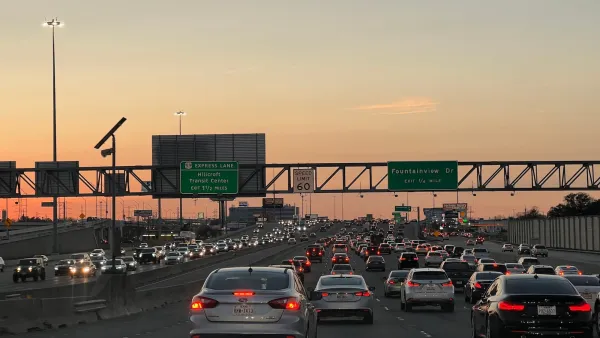
US Traffic Patterns are Shifting, but Car-centric Development Persists
Los Angeles, Honolulu, and San Francisco ranked among the nation’s most congested cities, while New York reduced traffic and increased transit speed and ridership thanks to its congestion pricing program.

Megalopolis: An Urban Planner’s Review
The sprawling film offers a bleak vision of city-building that minimizes the impacts of top-down development on everyday citizens.

Desperate measures: Advocates weigh draining Lake Powell to fill Colorado River
Draining the reservoir could reduce evaporation losses by a couple hundred thousand acre-feet.

Eastern Nebraska is running out of electricity
Data centers and electrification are straining eastern Nebraska’s grid, throttling economic development.

Malls are becoming the midtowns of the future
Mall and office park redevelopments are a generational opportunity to create new nodes of urbanity.

NYC breaks ground on anti-flooding infrastructure project
New York City's new system will reduce stormwater flows to local sewers by 90%.

One Kentucky town’s secret to affordable housing
The Smoketown Community Land Trust has already built seven affordable homes for community members.

Houston gains petal-shaped cooling infrastructure to make streets more ‘delightful’
The city has installed the pavilions along 15 blocks in Houston.

FREE Course: Walkable City 1: Why Walkability?
After describing his path towards focusing on walkability as the essence of good planning, Jeff Speck marches through his five principal reasons for making more walkable places.
Reinventing Malls: Planning Alchemy—Turning Gray Fields Into Gold
The course focuses on the opportunities and imperatives that shape reinvention of mall sites.

City of Rosemead
Rutgers University, Edward J. Bloustein School of Planning and Public Policy
One Hundred Miles
University of Michigan School for Environment and Sustainability (SEAS)
Hunter College, City University of New York (CUNY)
The Architects Foundation
City of Cambridge
Montrose County
The Pocatello Development Authority