After its 2013 announcement of support for the first 33 of the 100 resilient cities, the Rockefeller Foundation has announced its next round of member cities: 35 cities, including six from the United States.


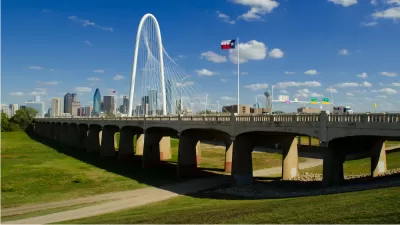
Michael Berkowtiz announces the next round of member cities in a post on the 100 Resilient Cities website: "the second group of cities selected to join 100 Resilient Cities – cities who have demonstrated a commitment to building their own capacities to navigate the shocks and stresses of an increasingly complex 21st Century."
"Each city was asked to present a clear and compelling description of their major resilience challenges, how they are approaching and planning for resilience to decrease vulnerabilities, and how they plan to partner with us."
U.S. cities on the list: Boston, Chicago, Dallas, Pittsburgh, St. Louis, and Tulsa. Montreal is the new Canadian member.
Read the full story: Announcing Our Next Round of Resilient Cities!


Bolstering Urban Resilience in Chicago
The city’s resilience plan seeks to identify shocks and stresses while fostering equity and community.
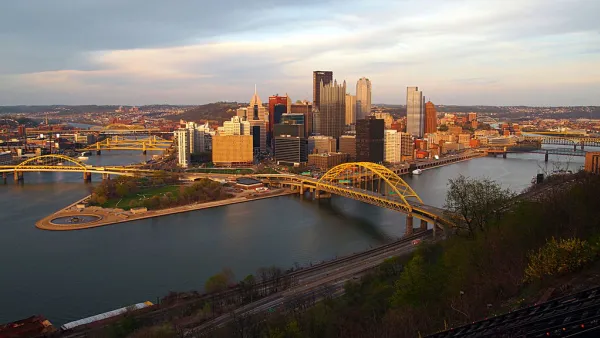
Pittsburgh Moves Forward on Resilience
Building on support from the Rockefeller Foundation, Pittsburgh has released a framework for its future resilience efforts. Concrete details are still to come.
Op-Ed: Talking Resilience Isn't the Same as Being Resilient
Resilience, as such, isn't a problem. But Alex Beam takes issue with the current flood of resilience-related jargon. Can you blame him?

Planetizen Federal Action Tracker
A weekly monitor of how Trump’s orders and actions are impacting planners and planning in America.

Amtrak, CN end decades-long dispute with eight-year agreement
The new operating agreement establishes an updated framework for the companies to work together, including processes to resolve disputes.

Judges permit Denver to divert 77,000 acre feet from the Colorado River for reservoir expansion
Overuse and climate change have caused the Colorado River’s water levels to plummet.

San Diego may kill one-third of its bus routes as budget crisis looms
Under the city's proposed plan, 21% of Metropolitan Transit System riders would lose access to transit services.

Philadelphia to invest $2 billion into upgrading city airports as PHL places last in customer satisfaction
Modernizations to Philadelphia's airports will include baggage system upgrades and a new automated parking garage guidance system.

The LA housing policies making developers turn away from the city
Despite LA’s housing shortage, developers say the city’s "mansion-tax" and pandemic-era policies make it an unappealing place to build housing.

FREE Course: Walkable City 1: Why Walkability?
After describing his path towards focusing on walkability as the essence of good planning, Jeff Speck marches through his five principal reasons for making more walkable places.
Reinventing Malls: Planning Alchemy—Turning Gray Fields Into Gold
The course focuses on the opportunities and imperatives that shape reinvention of mall sites.

City of Wisconsin Rapids
Harvard University Graduate School of Design
KFH Group Inc.
The Architects Foundation
University of Cincinnati Online
The Pocatello Development Authority
The Urban Renewal Agency of the City of Pocatello