Christopher Swope writes of the emergence of the word "trust" in the buzzy lexicon of urbanism.


Christopher Swope notes that "trust has always been a social dynamic in cities"—and so has mistrust, exemplified by recent events in Ferguson, Missouri. But "[today], some combination of technology, austerity and social transformation, seems to be changing the conversation. The rise of mobile apps, social media and other web-enabled forms of communication are a big part of what’s going on. These platforms don’t create trust, but they do create new ways for us to discover trust and put it to work in cities."
Swope goes on to list, in detail, four of the ways "trust" was invoked at the CityLab event in Los Angeles held at the end of September, such as "Enabling sharing," "Foiling corruption," "Strengthening social networks," and "Reducing suspicion."
Read the full story: Four ways to look at “trust” in our changing cities
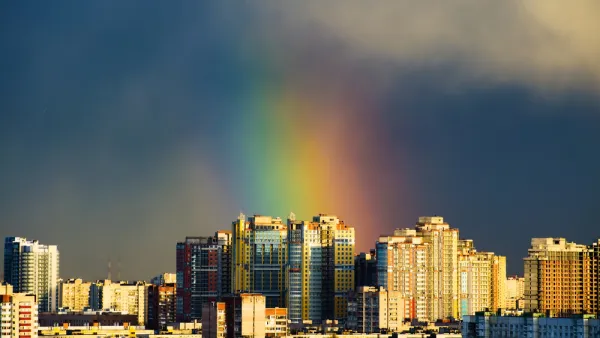
Make Your City a Treasure Hunt
Do you remember going on a treasure hunt as a child? Treasure hunts are becoming increasingly popular with adults, as well as children. Technology has enabled mobile treasure hunts with cities across the world hosting hunts.
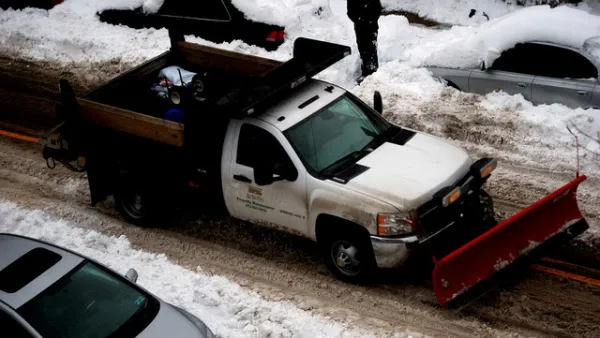
Pittsburgh Launches GPS-Enabled Snow Plow Tracker
Pittsburgh has a new web-based portal for residents to track snow removal operations as they happen. It's the latest example of a city allowing public access to the details of city operations during snowstorms.
Why Smart Cities Must be Sharing Cities
Julian Agyeman and Duncan McLaren make the case that the only smart city is a shareable city.

Planetizen Federal Action Tracker
A weekly monitor of how Trump’s orders and actions are impacting planners and planning in America.

California plans to bury El Niño’s downpour
If the state plays its cards right, it may be able to store a billion acre-feet of El Niño’s water in aquifers.

Desperate measures: Advocates weigh draining Lake Powell to fill Colorado River
Draining the reservoir could reduce evaporation losses by a couple hundred thousand acre-feet.

In Texas, data centers are swallowing promised parkland
Residents who moved to Taylor, Texas for a rural community now have to contend with three data centers in their backyard.

How a Chicago-sized wind farm beat the odds and powered on
The project spanned five presidential administrations and a standoff with a U.S. military base.

MTA gives itself 30 days to transform pit into basketball court
The site has been under construction since 2022; the city originally estimated it would finish the court in 2024.

FREE Course: Walkable City 1: Why Walkability?
After describing his path towards focusing on walkability as the essence of good planning, Jeff Speck marches through his five principal reasons for making more walkable places.
Reinventing Malls: Planning Alchemy—Turning Gray Fields Into Gold
The course focuses on the opportunities and imperatives that shape reinvention of mall sites.

City of Rosemead
Rutgers University, Edward J. Bloustein School of Planning and Public Policy
One Hundred Miles
Hunter College, City University of New York (CUNY)
The Architects Foundation
University of Cincinnati Online
City of Cambridge
Montrose County
The Pocatello Development Authority