A redevelopment project in Doraville, outside of Atlanta, is touted as potentially of catalytic significance for the region, thanks in part to the location of a MARTA station next door.


"Egbert Perry and his development group plan to begin demolishing the former Doraville General Motors plant within the next month — eventually turning 162 acres just north of Atlanta into 20 blocks of office buildings, housing, stores and restaurants," report Maria Saporta and Douglas Sams.
"Over time, Perry believes the GM redevelopment has the potential to knit Atlanta’s politically and geographically tattered region together."
The development cleared a major stumbling block recently when it entered the Environmental Protection Agency’s Brownfield program. As the article notes, that "designation removes environmental liability from the site’s future buyers." The developers are still, however looking for a master planner for the development.
Along the lines of additional planning interest in this development, Robert Steuteville wrote earlier in September of the form-based code approved recently for the project area: "Funded by the Atlanta Regional Commission (ARC) as part of its Livable Centers Initiative program, the new zoning, known as the Livable Community Code, was created by TSW, an Atlanta-based planning, architecture and landscape architecture firm, in partnership with the City of Doraville."
H/T ATL Urbanist.
Read the full story: A green light for GM plant project
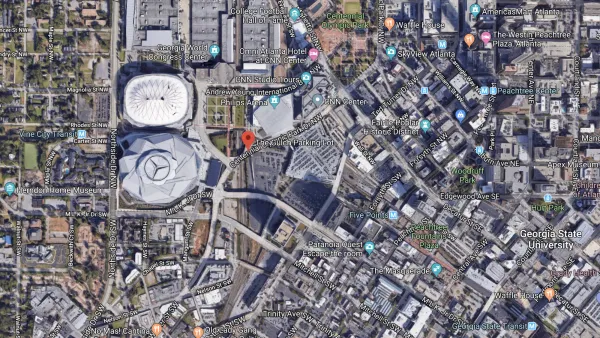
$1.9 Billion Public Financing Plan for Atlanta Mega-Project Headed to Appeal
The sage over The Gulch development project—soon to be renamed Centennial Yards—will continue after project opponents filed an appeal of a June court decision upholding public financing for the project.

Court Ruling Clears $1.9 Billion in Public Money for Atlanta Mega-Project
A $5 billion redevelopment project in Atlanta, named Centennial Yards, will receive substantial public support.
Mega Project in Suburban Atlanta Gets Final Public Financing Piece: Value Capture
School advocates don't like the idea of a tax allocation district for the redevelopment of the former GM plant in Doraville.

Planetizen Federal Action Tracker
A weekly monitor of how Trump’s orders and actions are impacting planners and planning in America.

California plans to bury El Niño’s downpour
If the state plays its cards right, it may be able to store a billion acre-feet of El Niño’s water in aquifers.

Desperate measures: Advocates weigh draining Lake Powell to fill Colorado River
Draining the reservoir could reduce evaporation losses by a couple hundred thousand acre-feet.

Los Angeles just elected an urban planner as its mayor
Transportation analysts are optimistic that Raman will be more aggressive in addressing transit issues than Bass.

Mamdani’s pied-à-terre tax survives legal challenge
A panel of judges found that the plaintiffs failed to demonstrate injury as a result of New York City's implementation of the tax.

Eastern Nebraska is running out of electricity
Data centers and electrification are straining eastern Nebraska’s grid, throttling economic development.

FREE Course: Walkable City 1: Why Walkability?
After describing his path towards focusing on walkability as the essence of good planning, Jeff Speck marches through his five principal reasons for making more walkable places.
Reinventing Malls: Planning Alchemy—Turning Gray Fields Into Gold
The course focuses on the opportunities and imperatives that shape reinvention of mall sites.

City of Rosemead
Rutgers University, Edward J. Bloustein School of Planning and Public Policy
One Hundred Miles
University of Michigan School for Environment and Sustainability (SEAS)
Hunter College, City University of New York (CUNY)
The Architects Foundation
City of Cambridge
Montrose County
The Pocatello Development Authority