In both a literal and figurative sign of the times, the Chinese city of Chongqing recently installed signage and marking to segregate pedestrian traffic between smartphone users and those walking free of such technological distractions.


"On a 165-foot pavement stretch in the city of Chongqing, pedestrians can choose between a normal lane and an exclusive one reserved for heavy users of mobile devices," reports Rick Noack.
As noted by Noack, the problems posed by distracted pedestrians are not unique to China: "According to the University of Washington, one in three Americans is busy dealing with a smartphone or other device at risky road crossings. It can lead to dangerous situations: The U.S. Department of Transportation recently established a connection between the increase in pedestrian deaths and such habits."
Read the full story: A Chinese city is asking smartphone users to walk in their own sidewalk lane
Cell Phones Fail the Eyeball Test for Public Safety
Citing anecdotal evidence from Montgomery County, the Governors Highway Safety Association, and China, a Washington Post article argues that cell phones are creating public safety concerns.
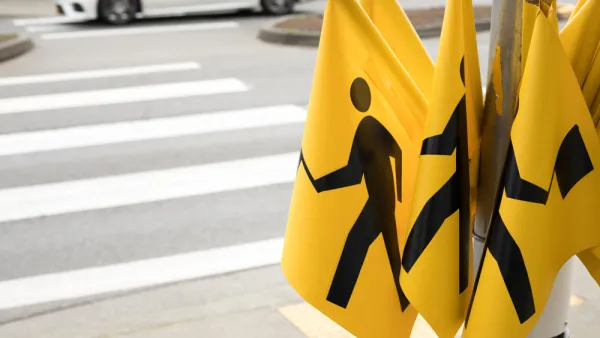
Against Victim Blaming
One common scapegoat for rising pedestrian death rates is "distracted walking." But there is little reason to believe that smartphone-wielding pedestrians are a major cause of roadway carnage.

The number of kids walking to school dropped from over 50% to 11% since the 1960s
Unsafe pedestrian infrastructure makes walking to school dangerous or impossible for a growing number of American students.

Planetizen Federal Action Tracker
A weekly monitor of how Trump’s orders and actions are impacting planners and planning in America.

California plans to bury El Niño’s downpour
If the state plays its cards right, it may be able to store a billion acre-feet of El Niño’s water in aquifers.

Desperate measures: Advocates weigh draining Lake Powell to fill Colorado River
Draining the reservoir could reduce evaporation losses by a couple hundred thousand acre-feet.

Mamdani’s pied-à-terre tax survives legal challenge
A panel of judges found that the plaintiffs failed to demonstrate injury as a result of New York City's implementation of the tax.

Eastern Nebraska is running out of electricity
Data centers and electrification are straining eastern Nebraska’s grid, throttling economic development.

Seattle passes record-breaking transit services expansion
Proposition 1 will double the city’s transit tax to add 95,000 more bus trips and preserve 180,000 bus trips annually.

FREE Course: Walkable City 1: Why Walkability?
After describing his path towards focusing on walkability as the essence of good planning, Jeff Speck marches through his five principal reasons for making more walkable places.
Reinventing Malls: Planning Alchemy—Turning Gray Fields Into Gold
The course focuses on the opportunities and imperatives that shape reinvention of mall sites.

City of Rosemead
Rutgers University, Edward J. Bloustein School of Planning and Public Policy
One Hundred Miles
University of Michigan School for Environment and Sustainability (SEAS)
Hunter College, City University of New York (CUNY)
The Architects Foundation
City of Cambridge
Montrose County
The Pocatello Development Authority