A new post by Danielle Kurtzleben explains the complicated mix of infrastructure considerations that must be in place for transportation to benefit economic mobility.


Writing for the explainer site Vox, Danielle Kurtzleben sets the context for a discussion of some of the expanding body of research into the connections between physical mobility and economic mobility:
"There's an array of economic literature out there connecting the two, showing that places with plenty of opportunities for geographic mobility have more economic mobility as well. But for a city to boost opportunity by boosting transit, the answer is a complicated mix that also includes zoning and picking the right type of transit — perhaps at the risk of displeasing its wealthier residents."
To provide readers with insight into the complicated, and controversial, mix of land use and transit mode choices that can impact economic mobility, Kurtzleben explores findings under the following subheadings:
- It's often easier to move people to jobs than vice versa
- Mode of transportation matters
- Breaking down the walls between rich and poor
- The link to zoning
Read the full story: Suburban sprawl and bad transit can crush opportunity for the poor

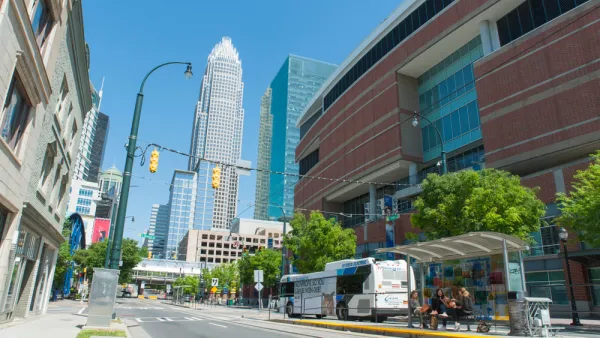
Charlotte Mobility Plan Centers Improved Multimodal Options and Economic Mobility
The city’s newly approved Strategic Mobility Plan highlights the need for better options when it comes to walking, biking, and public transit, setting a goal to reduce driving to half of total trips.

Americans Find it Increasingly Difficult To Move
High housing costs and low supply are making it harder for American families to move as household dynamics and job opportunities change.
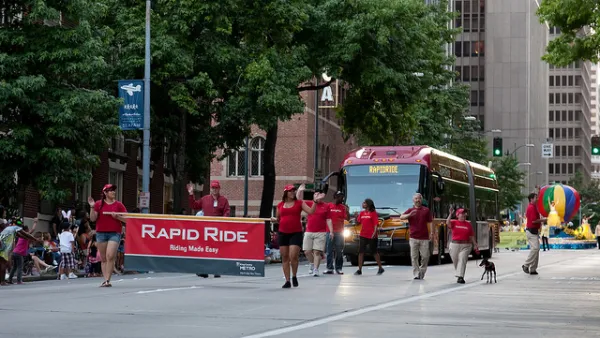
Giving Thanks for Public Transit
When going around the Thanksgiving table today, giving thanks for our friends and family to hear, don't forget to mention the environmental, social, and economic benefits of public transit.

Planetizen Federal Action Tracker
A weekly monitor of how Trump’s orders and actions are impacting planners and planning in America.

California plans to bury El Niño’s downpour
If the state plays its cards right, it may be able to store a billion acre-feet of El Niño’s water in aquifers.

Chicago breaks ground on $3 billion megadevelopment
The new neighborhood, titled Foundry Park, will one day host 3,700 residences.

Want to study the Missouri River? Soon, you may need unanimous approval from 10 states
Legislation would require 10 governors’ permission to study or build projects moving water outside the basin.

Desperate measures: Advocates weigh draining Lake Powell to fill Colorado River
Draining the reservoir could reduce evaporation losses by a couple hundred thousand acre-feet.

This road in NYC is infamously dangerous — and Mamdani can't fix it
New York City's Ocean Parkway is known for reckless driving, but the power to implement safety measures lies with the state rather than the city.

FREE Course: Walkable City 1: Why Walkability?
After describing his path towards focusing on walkability as the essence of good planning, Jeff Speck marches through his five principal reasons for making more walkable places.
Reinventing Malls: Planning Alchemy—Turning Gray Fields Into Gold
The course focuses on the opportunities and imperatives that shape reinvention of mall sites.

City of Rosemead
Rutgers University, Edward J. Bloustein School of Planning and Public Policy
One Hundred Miles
Hunter College, City University of New York (CUNY)
The Architects Foundation
University of Cincinnati Online
City of Cambridge
Montrose County
The Pocatello Development Authority