Kevin Roose wonders whether "choosing to live outside a major city is tantamount to opting to live in the past."


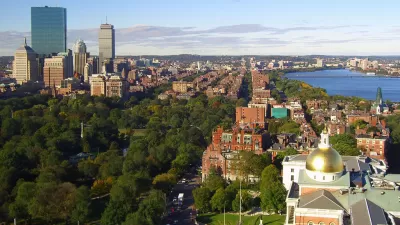
According to Roose, "new research shows that cities are much more likely to benefit from today's massive wave of consumer tech investment — think delivery drones, self-driving cars, and green-energy innovations. The fact that many of these technologies are being developed and deployed first in densely populated urban zones, rather than in the countryside, means that in the future, cities are going to pull further away from rural and suburban areas economically, and carry a much higher quality-of-life premium than smaller towns."
For the "5 Reasons Cities are Getting Better, and Everywhere Else is Getting Worse" sold provocatively by the article's title, Roose cites the report on innovation districts released by the Brookings Institution earlier this week. Among the five reasons are physical assets are density as service.
Read the full story: 5 Reasons Cities Are Getting Better, and Everywhere Else Is Getting Worse

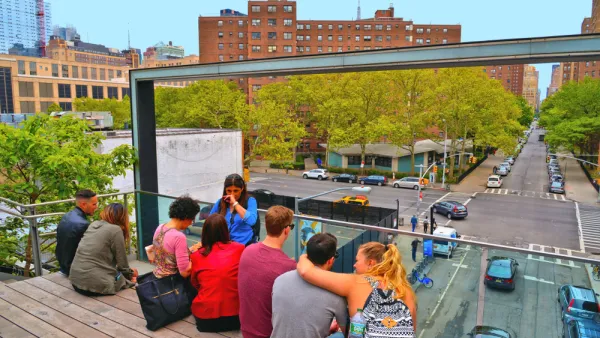
Cities Are Back (At Least They Were Before COVID)
The 2020 Census results show that central cities were gaining population to a much greater extent than earlier Census estimates had suggested.

Election 2019: Changing Demographics Explain Democrats' Victory in Virginia
It's not suburbs vs. cities but inner vs. outer suburbs that determined the outcome of elections in Virginia last Tuesday that flipped the General Assembly from red to blue.
The View from Hudson Street—With Thoughts on Science and Orthodoxy
Anecdotal evidence isn't enough to make claims about the connection between density and crime, but the planning orthodoxy does so anyway.

Planetizen Federal Action Tracker
A weekly monitor of how Trump’s orders and actions are impacting planners and planning in America.

Northwest rail fans eager for Sept. 30 debut of Amtrak’s Airo fleet
Get ready for that new train smell and more seats. But they won’t go faster or run more frequently on the Cascades route in Washington and Oregon.

Trump is considering data centers on 6 states' public land — some state officials say they had no idea
If the administration approves the proposed projects, data center and data center-related developments will cover 17,600 acres of public land.

After decades of planning, Sacramento gains new light rail station
Trains will arrive every 15 minutes during peak hours and every 30 minutes during non-peak hours.

Massive tunnel-boring machine breaks ground on Gateway Project
The Trump administration revoked funding for the project in October 2025, and then restored it earlier this year.

Airo trainsets begin service on Amtrak Cascades route
The trains feature panoramic windows, complementary wifi and over 300 seats per train set.

FREE Course: Walkable City 1: Why Walkability?
After describing his path towards focusing on walkability as the essence of good planning, Jeff Speck marches through his five principal reasons for making more walkable places.
Reinventing Malls: Planning Alchemy—Turning Gray Fields Into Gold
The course focuses on the opportunities and imperatives that shape reinvention of mall sites.

City of Thousand Oaks
City of Wisconsin Rapids
Harvard University Graduate School of Design
The Architects Foundation
University of Cincinnati Online
Northern Illinois Transit Authority (NITA)
The Pocatello Development Authority
The Urban Renewal Agency of the City of Pocatello