Electric car companies such as Honda are creating smart homes by integrating built-in energy- and money-saving features.


Companies such as Tesla, Ford, and Honda are expanding their market beyond electric vehicles to home products. As Ben Schiller reports, Ford has built homes incorporating its electric cars and energy-saving features and Tesla has started making batteries that can be used not just for cars, but for homes as well. Schiller adds, the best example though, is Honda's collaborative efforts with University of California, Davis on their smart homes.
These smart homes feature solar panels with battery storage such that "the house produces more power than it consumes, which means its owner could actually make money from the power company." In addition to saving power and adding to your wallet, Honda's smart homes feature other "passive design" features such as rain gardens, radiant geothermal heating and cooling, electric vehicle charging station, and adaptive circadian LED lighting. On top of that, all the features of the smart home can be adjusted through a mobile app.
As Schiller writes, the benefits are multifold: "All in all, the house uses half the energy of a similar-sized abode in the area, Honda says. It is three times more water-efficient than a typical American home. And it saves 11 tons of CO2 a year, compared to an average dwelling and vehicle."
Though Honda has not listed a price tag for the homes, these smart homes are sure to be on demand and will continue to challenge the way we build homes.
FULL STORY: Honda Is Designing Houses, Because Cars And Homes Will All Be Part Of The Smart Grid

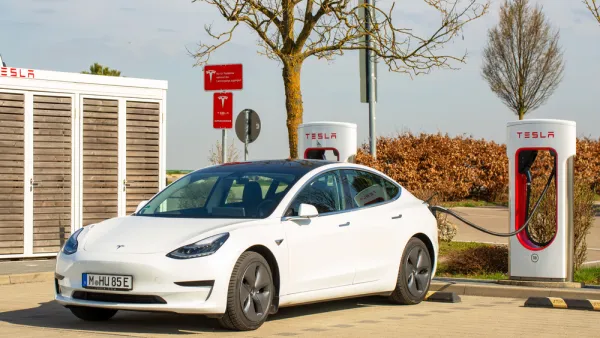
Tesla 3 Now the Best-Selling Car in Europe
For the first time ever, an electric vehicle was the most sold car in Europe—with Tesla's Model 3 outselling all other cars on the continent in the month of September.
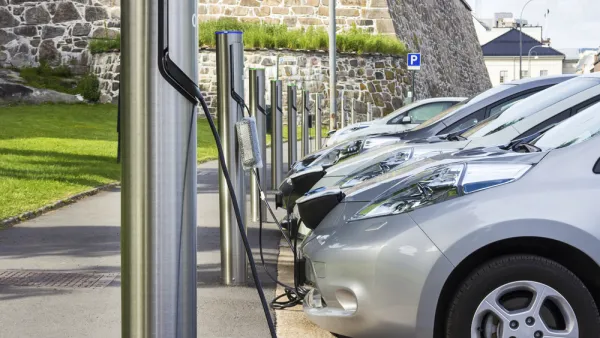
How Far, How Fast, Will Electric Car Policies Go?
The federal government, and even some automakers, seemed poised to nudge the country toward a future of electric vehicles. But the American preference for large trucks will be an obstacle to those plans.
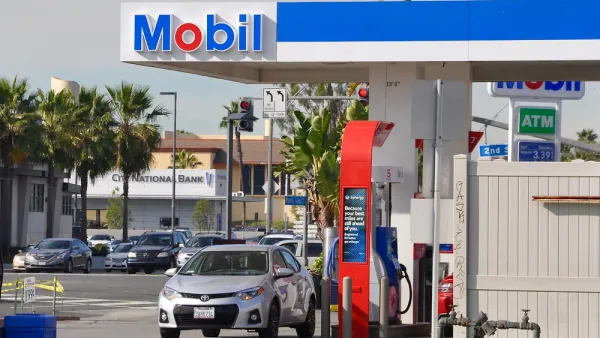
Gone by 2035: Gas-Powered Car Sales Have an Expiration Date in California
California Governor Gavin Newsom announced yesterday an executive order that would ban the sale of cars powered by internal combustion engines by 2035. California is the first state in the country to take such action.

Planetizen Federal Action Tracker
A weekly monitor of how Trump’s orders and actions are impacting planners and planning in America.

The state-sanctioned urbicide of Austin
People don’t kill cities. Freeways do.

US to reduce Colorado River water deliveries to Mexico
A new Colorado Treaty amendment reduces Mexico’s Colorado River water allocation by 250,000 acre feet.

5 New England states march closer to 800 megawatt wind energy project
Securing federal approval for the project may be complicated under the Trump administration, which has historically been hostile towards domestic wind power.

Baltimore to break ground on $50 million Transit Priority Project
The project will bring faster bus trips, safer streets and better bike connections to Baltimore.

Airbnb launches $250 million 'last-dollar financing' housing accelerator, makes first investment in Austin
The company will put $6.4 million towards affordable housing development in Texas’ capital.

FREE Course: Walkable City 1: Why Walkability?
After describing his path towards focusing on walkability as the essence of good planning, Jeff Speck marches through his five principal reasons for making more walkable places.
Reinventing Malls: Planning Alchemy—Turning Gray Fields Into Gold
The course focuses on the opportunities and imperatives that shape reinvention of mall sites.

Eagle County Government
Harvard University Graduate School of Design
Nashville Planning Department
The Architects Foundation
University of Cincinnati Online
The Pocatello Development Authority
The Urban Renewal Agency of the City of Pocatello
Journal of the American Planning Association