Robert Trigaux wonders if the Tampa Bay metro area will be wake up to the country’s changing demands of transportation and end “the parochial arm wrestling over what kind (if any) of mass transit lies in its future.”


A new column by Robert Trigaux provides a recap for those who haven’t heard the urban narrative, specifically how it applies to the Tampa Bay metro area: “More people are moving to walkable, less car-dependent downtowns like St. Petersburg — witness the apartment building boom under way.”
Trigaux laments the city’s recent mass-transit history (“including the rejected transit referendum in Hillsborough County and the November referendum in Pinellas County seeking funding for improved bus service and a 24-mile light-rail line”) and fears the consequences.
But Trigaux also sees a few bright spots for the technologically enhanced, multi-modal potential of the metro area, even if change is occurring slowly:
- Lyft and Uber began operating in Tampa: “While the Hillsborough County Public Transportation Commission has warned they do not meet the requirements to operate here legally, some state legislators are looking to amend those rules.”
- And, “a bike-sharing company called Coast Bike Share won a contract to provide Tampa with kiosks with bicycles that, also via a smartphone app, rent for $5 an hour. The goal is to provide the bikes across the metro area.”
Read the full story: As love affair with cars wanes, Tampa Bay stuck in slow lane of change
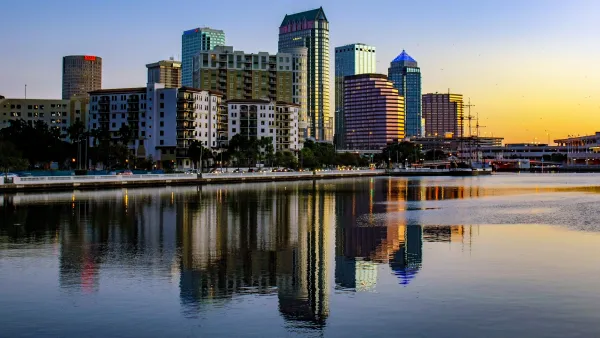
Luxury Housing Construction and Rents on the Rise in Tampa Bay
A majority of new construction permits in the region are for high-end housing, accompanied by an increase in average rents.

Double First: The First Station on Tampa Bay's First BRT Line Complete
The first of 15 bus rapid transit stations in St. Petersburg was unveiled last week.
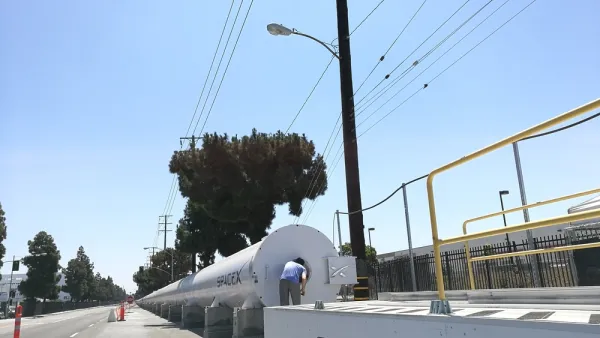
Tampa Area Spending $1 Million to Study the Hyperloop
Another regional transit authority isn't as skeptical about the Hyperloop as many critics in the transit and technology press.

Planetizen Federal Action Tracker
A weekly monitor of how Trump’s orders and actions are impacting planners and planning in America.

Eastern Nebraska is running out of electricity
Data centers and electrification are straining eastern Nebraska’s grid, throttling economic development.

Washington state to charge fee to drivers with fuel-efficient cars
Revenue from the fee will go towards supporting the state’s highways.

Instead of building new housing, LA developers are turning mansions into mega-mansions
In the richest areas, the number of houses valued at $30 million with demolition permits has skyrocketed since 2018.

Illinois considers spending $1 billion in taxpayer money on data center
A quantum computing campus and data center are currently under construction in Chicago.

As development costs rise, Boston moves to lessen affordable housing requirements
The Boston Zoning Commission and the City Council still need to approve Boston Mayor Michelle Wu’s proposed changes

FREE Course: Walkable City 1: Why Walkability?
After describing his path towards focusing on walkability as the essence of good planning, Jeff Speck marches through his five principal reasons for making more walkable places.
Reinventing Malls: Planning Alchemy—Turning Gray Fields Into Gold
The course focuses on the opportunities and imperatives that shape reinvention of mall sites.

City of Charlotte
City of Rosemead
Rutgers University, Edward J. Bloustein School of Planning and Public Policy
University of Michigan School for Environment and Sustainability (SEAS)
Hunter College, City University of New York (CUNY)
The Architects Foundation
University District Partnership
City of Cambridge
The Pocatello Development Authority