A recent editorial in Atlantic Cities laments the regulations and policies that have, according to the author, driven up the costs of infrastructure investments in the United States.


Scott Beyer launches his investigation into the high costs of infrastructure with an acknowledgement of the difficult partisanship that has crippled infrastructure development in recent decades. Beyer’s insight into the gridlock: the political discord comes down to a question of how to operate the infrastructure once it's been delivered.
The crux of Beyer’s examination is a list of policies, imposed by the federal government and, according to Beyer, strengthened by the Obama Administration. The list includes Davis-Bacon Laws, environmental reviews, and project labor agreements. After detailing the items on the list, Beyer poses the question of whether the secondary policy goals of employment and unionization should come at the expense of building or maintaining infrastructure.
Writing for The Week, Ryan Cooper recently provided another take on the high cost of infrastructure.
FULL STORY: 7 Reasons U.S. Infrastructure Projects Cost Way More Than They Should

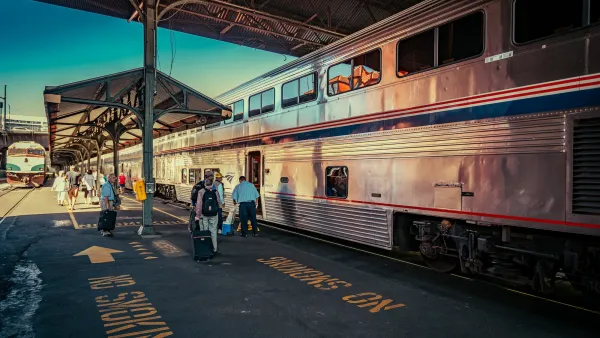
Amtrak unveils proposal to restructure, split into 3 divisions
Agency officials say the new structure would offer more transparency and accountability.
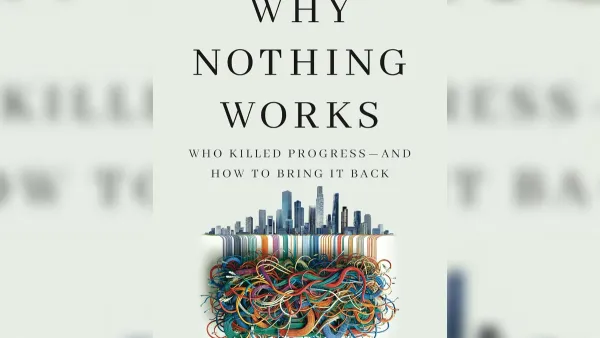
Review: Why Nothing Works
In “Why Nothing Works,” Marc Dunkelman argues that America’s political gridlock stems from an internal progressive conflict between Hamiltonian centralized efficiency and Jeffersonian individualized safeguards.

Plastic Bag Bans Actually Worked
U.S. coastal areas with plastic bag bans or fees saw significant reductions in plastic bag pollution — but plastic waste as a whole is growing.

Planetizen Federal Action Tracker
A weekly monitor of how Trump’s orders and actions are impacting planners and planning in America.

The state-sanctioned urbicide of Austin
People don’t kill cities. Freeways do.

US to reduce Colorado River water deliveries to Mexico
A new Colorado Treaty amendment reduces Mexico’s Colorado River water allocation by 250,000 acre feet.

5 New England states march closer to 800 megawatt wind energy project
Securing federal approval for the project may be complicated under the Trump administration, which has historically been hostile towards domestic wind power.

Baltimore to break ground on $50 million Transit Priority Project
The project will bring faster bus trips, safer streets and better bike connections to Baltimore.

Airbnb launches $250 million 'last-dollar financing' housing accelerator, makes first investment in Austin
The company will put $6.4 million towards affordable housing development in Texas’ capital.

FREE Course: Walkable City 1: Why Walkability?
After describing his path towards focusing on walkability as the essence of good planning, Jeff Speck marches through his five principal reasons for making more walkable places.
Reinventing Malls: Planning Alchemy—Turning Gray Fields Into Gold
The course focuses on the opportunities and imperatives that shape reinvention of mall sites.

Eagle County Government
Harvard University Graduate School of Design
Nashville Planning Department
The Architects Foundation
University of Cincinnati Online
The Pocatello Development Authority
The Urban Renewal Agency of the City of Pocatello
Journal of the American Planning Association