A post on the blog for Utile, a Boston-based architecture and urban planning firm, recommends the coffee cart as a bit of DIY urbanism for cities like Lawrence, Massachusetts.


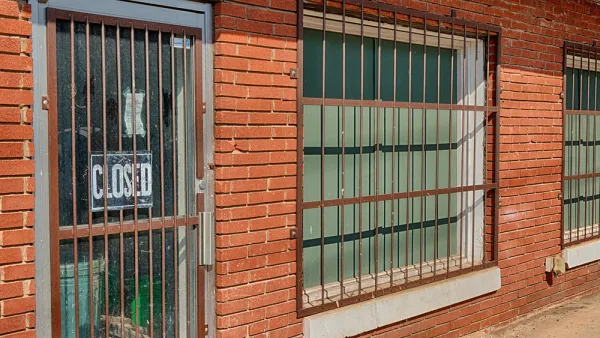
In examining the vacant storefronts of Lawrence, Massachusetts, architecture and planning firm Utile took to its blog to propose a potential, simple solution to activate storefronts and bring activity to the street: the coffee cart.
Utile presents the coffee cart as an example of DIY urbanism that works well within the temporary leasing arrangements some cities have explored in recent years. “One answer might be to borrow the entrepreneurial and life-style focused ethos of the coffee cart to attack the vacant storefronts directly. The key is to persuade often-absentee landlords to provide their ground-level space to business start-ups gratis or at very low cost.”
As for how to work with city officials to make sure such uses are up to code: “One solution might be a public policy that helps to pay for the minimum costs of getting potential coffee cart vendors into the buildings for test runs of six months or one year. These costs might include minimal electrical upgrades, new locks on doors, and an insurance policy that indemnifies building owners as much as possible.”
FULL STORY: Coffee Cart and Vacant Storefronts

Chicago Considering a 'Pop-Up' Storefront Program
The new program would allow short-term use of vacant properties, and provide new incubation capabilities to small, start-up businesses.
Upending Trickle-Down Techniques for Creating Public Space
Michael Kimmelman looks at the wave of 'cheap, quick, temporary and D.I.Y.-style approaches' that are introducing a more successful means of creating public space than traditional trickle-down techniques.
The Street Hacker Finds an Open Source Embrace in SF
Emily Badger tracks the hacking phenomenon as it migrates from the virtual to the physical world, and the official channels that are embracing and facilitating its emergence.

Planetizen Federal Action Tracker
A weekly monitor of how Trump’s orders and actions are impacting planners and planning in America.

The state-sanctioned urbicide of Austin
People don’t kill cities. Freeways do.

US to reduce Colorado River water deliveries to Mexico
A new Colorado Treaty amendment reduces Mexico’s Colorado River water allocation by 250,000 acre feet.

Mamdani overhauls NYC's Vision Zero plan with 100 new policy goals
The overhaul aims to reduce traffic deaths and make streets safer for pedestrians, cyclists and drivers through lower speed limits, new safety infrastructure and more.

Amtrak not solely to blame for New Jersey commuter rail's unreliability, report finds
A new study from the Garden State Initiative found that NJ Transit’s budget grew 20% across a 4 year period, but reliability declined significantly over the same period.

EPA erases limits on planet-warming pollution from power plants
Under Monday’s plan, power plants would still have some limits on how much mercury, arsenic and other contaminants they can emit.

FREE Course: Walkable City 1: Why Walkability?
After describing his path towards focusing on walkability as the essence of good planning, Jeff Speck marches through his five principal reasons for making more walkable places.
Reinventing Malls: Planning Alchemy—Turning Gray Fields Into Gold
The course focuses on the opportunities and imperatives that shape reinvention of mall sites.

Eagle County Government
Harvard University Graduate School of Design
Nashville Planning Department
The Architects Foundation
University of Cincinnati Online
The Pocatello Development Authority
The Urban Renewal Agency of the City of Pocatello
Journal of the American Planning Association