Following on the recent, promising news of increased transit ridership around the country, one writer calls for an end to the institutional bias toward cars. The key point of the appeal: public transit infrastructure benefits the middle class.


Following on the recent statistics that show transit ridership approaching record levels not seen since the 1950s, Jon Terbush follows up with an article detailing the positive benefits of investments in public transit—as compared to the status quo of political dominance by investments favoring the automobile and reductions in transit service.
“And just as improvements to public transit mostly impact the middle class, so, too, do negative service changes. Indeed, the erosion in the middle class' share of overall income correlates neatly with a reduction in federal infrastructure spending.”
“Moreover, the lion's share of economic activity created by pouring money into mass transit would go to the middle class. A 2012 Treasury report concluded that 80 percent of the jobs created by infrastructure investments — not only in public transit, though that would make up a great deal of the investment spending — would go to three sectors: construction, manufacturing, and retail trade. Of those jobs, 90 percent would be expected to offer middle-class wages.”
FULL STORY: How the U.S.'s obsession with cars is hurting the middle class

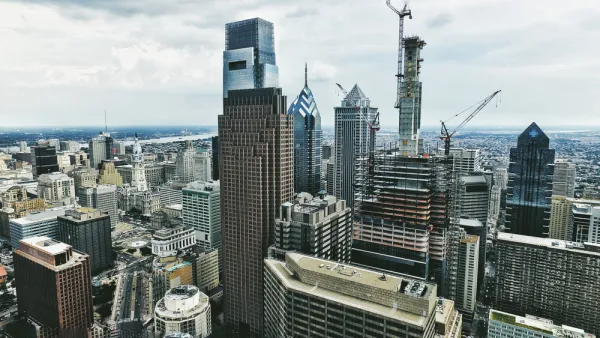
The Path to Hyperdensity
The federal government has an opportunity to make a generational investment in the country's infrastructure that could fundamentally shift the way we live and move around cities.
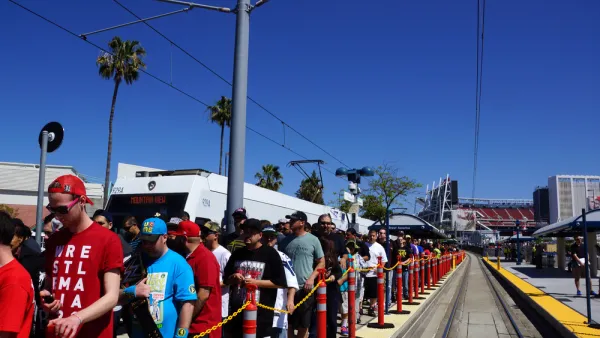
Guaranteed Transit Funding Lacking in New Infrastructure Bill
Lauded by the administration as a historic amount, the transit funding promised in the revised bill lags far behind projected needs.
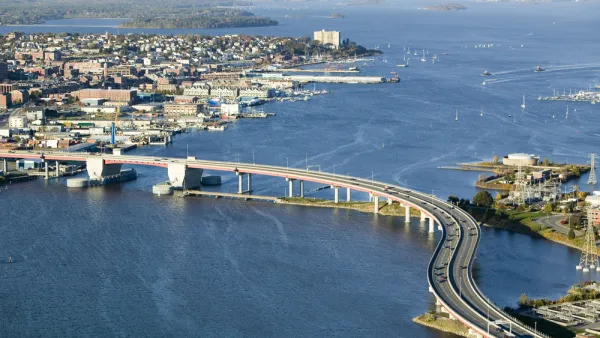
Opinion: It's the Perfect Time for More Trains in Maine
A more concerted effort could bring together the state's recent plans and federal infrastructure investment to link the region and reduce greenhouse gas emissions.

The state-sanctioned urbicide of Austin
People don’t kill cities. Freeways do.

US to reduce Colorado River water deliveries to Mexico
A new Colorado Treaty amendment reduces Mexico’s Colorado River water allocation by 250,000 acre feet.

New Jersey’s second-largest city bans standalone data centers
Jersey City will continue to allow co-location facilities, such as those meant for research institutions that store their own data.

Amtrak not solely to blame for New Jersey commuter rail's unreliability, report finds
A new study from the Garden State Initiative found that NJ Transit’s budget grew 20% across a 4 year period, but reliability declined significantly over the same period.

EPA erases limits on planet-warming pollution from power plants
Under Monday’s plan, power plants would still have some limits on how much mercury, arsenic and other contaminants they can emit.

Phoenix announces new on-demand transit service, more frequent RAPID buses
Both new services will launch in October, and are part of Phoenix's Project Effective Access Solutions for Easing Congestion.

FREE Course: Walkable City 1: Why Walkability?
After describing his path towards focusing on walkability as the essence of good planning, Jeff Speck marches through his five principal reasons for making more walkable places.
Reinventing Malls: Planning Alchemy—Turning Gray Fields Into Gold
The course focuses on the opportunities and imperatives that shape reinvention of mall sites.

Eagle County Government
Harvard University Graduate School of Design
Nashville Planning Department
The Architects Foundation
University of Cincinnati Online
The Pocatello Development Authority
The Urban Renewal Agency of the City of Pocatello
Journal of the American Planning Association