A new bill in Congress would create a new $11 million program amidst the $1 billion Transportation Infrastructure Finance and Innovation Act (TIFIA) loan program. But can it deliver more safety improvements to under-served populations?


“The New Opportunities for Bicycle and Pedestrian Infrastructure Financing Act of 2014 creates a low-interest, long-term loan program that communities around the USA can tap for small-scale biking and walking projects; It requires that 25% of the funds be spent in low-income communities,” reports Larry Copeland.
Copeland focuses his reportage on how low-income and less privileged populations have been left behind in the recent trend of multi-modal safety investments around the country. “A study last year by the League of American Bicyclists and the Sierra Club found that, while bike commuting rose 61% from 2000-2012, many under-served areas lack a safe infrastructure for biking. Consequently, the study found that fatality rates for African American and Hispanic bicyclists were 30% and 23% higher, respectively, than those of white bikers.”
"[HR 3978] will add another tool to help communities that want to do something to encourage biking, especially in communities that need it most," says Andy Clarke, president of the League of American Bicyclists, in the article. "These are communities where transportation costs are typically 30% or more of household budgets and good transportation options are limited."
Read the full story: Poor areas in the slow lane when it comes to biking

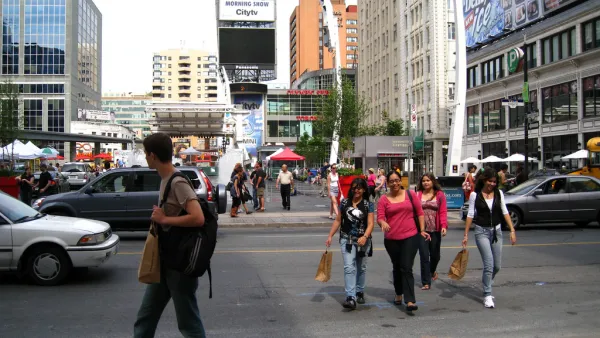
Pedestrian Safety Experts: Decriminalize Jaywalking
Angie Schmitt and Charles T. Brown make nine arguments against the criminalization of jaywalking.
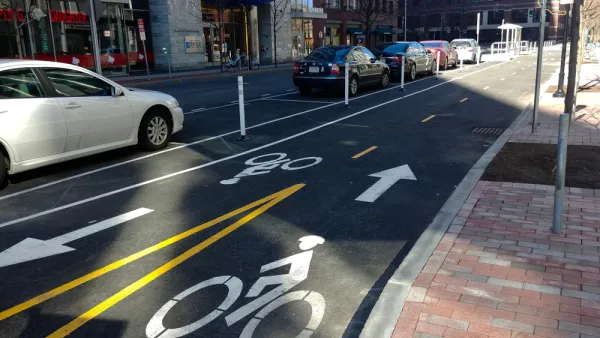
Nation's Top Safety Board Recommends Protected Bike Lanes
The NTSB chair issued a stark warning on Nov. 5: "If we do not improve roadway infrastructure for bicyclists, bicyclists will die who otherwise would not," stated Robert Sumwalt in introducing their first report in 47 years devoted to bike safety.
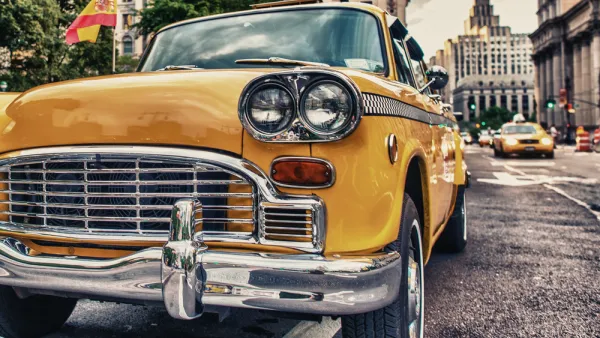
Uber Vehicles are Not Taxis, Even When They Want To Be
A June 16 vote by the San Francisco MTA to improve safety will allow taxis, along with bicycles and Muni buses, but not ride-hailing services to make turns onto the downtown's main thoroughfare, Market Street, has upset San Francisco-based Uber.

Planetizen Federal Action Tracker
A weekly monitor of how Trump’s orders and actions are impacting planners and planning in America.

Amtrak, CN end decades-long dispute with eight-year agreement
The new operating agreement establishes an updated framework for the companies to work together, including processes to resolve disputes.

Judges permit Denver to divert 77,000 acre feet from the Colorado River for reservoir expansion
Overuse and climate change have caused the Colorado River’s water levels to plummet.

NYC DOT wants faster, more permanent street upgrades
The city is examining ways to build more concrete infrastructure without getting entangled in 'decades-long' projects.

'Something we’ve never seen before:' rising utility rates could strain city finances nationwide
Data centers, climate change and other factors have caused utility rates in the United States to increase by 38% since 2020.

Trump to overrule local leaders, lease millions of acres of America’s Pacific Island territories’ seafloors to mining companies
International law says that the Indigenous people of America’s territories have a right to prior and informed consent regarding projects that impact their countries.

FREE Course: Walkable City 1: Why Walkability?
After describing his path towards focusing on walkability as the essence of good planning, Jeff Speck marches through his five principal reasons for making more walkable places.
Reinventing Malls: Planning Alchemy—Turning Gray Fields Into Gold
The course focuses on the opportunities and imperatives that shape reinvention of mall sites.

Harvard University Graduate School of Design
KFH Group Inc.
Greater Baltimore Committee
The Architects Foundation
University of Cincinnati Online
The Pocatello Development Authority
The Urban Renewal Agency of the City of Pocatello