The Alachua County Commission and the Gainesville City Commission are considering a countywide referendum to raise sales tax revenue for transportation projects. Road repair is an easy political win, but bus rapid transit...not so much.


Morgan Watkins shares news of a “push to get a transportation sales tax referendum on this fall's ballot” in Alachua County, Florida, which includes the city of Gainesville.
“[County Commissioners] were all in agreement that Alachua County government's share of the money will mostly be used to finance road repair projects, which will help reduce its $550 million backlog in such repairs,” writes Watkins.
However, “The possibility that the city of Gainesville will include a bus rapid transit system in its project list for the referendum proved divisive for the board.”
The County Commission’s hesitance results from a recent report that questioned a proposed BRT’s viability.
The City Commission also later delayed its decision on a proposed project list, according to a separate report from Christopher Curry.
FULL STORY: Bus rapid transit stalls county's move on tax referendum

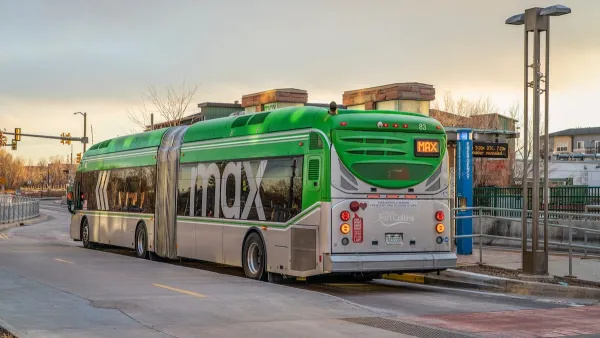
Colorado Lawmakers Move to Protect BRT Funding
In the face of potential federal funding cuts, CDOT leaders reasserted their commitment to planned bus rapid transit projects.
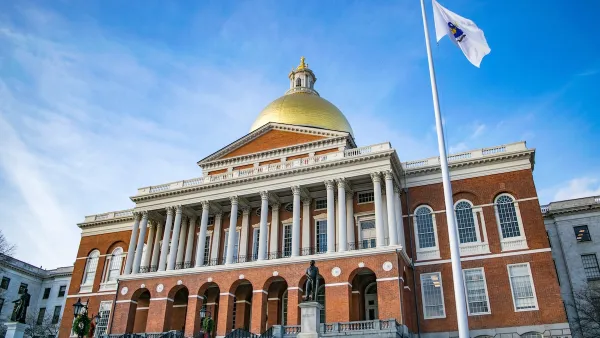
Massachusetts Gov. Makes Case for Road Funding Reforms
A package of proposed bills would change the state’s road funding formula to ensure more money flows to rural areas with limited resources.

Tampa Awarded Federal Transit Planning Grant
The city will use the money to open a new office aimed at guiding major transit projects in the region.

Planetizen Federal Action Tracker
A weekly monitor of how Trump’s orders and actions are impacting planners and planning in America.

The state-sanctioned urbicide of Austin
People don’t kill cities. Freeways do.

US to reduce Colorado River water deliveries to Mexico
A new Colorado Treaty amendment reduces Mexico’s Colorado River water allocation by 250,000 acre feet.

Mamdani overhauls NYC's Vision Zero plan with 100 new policy goals
The overhaul aims to reduce traffic deaths and make streets safer for pedestrians, cyclists and drivers through lower speed limits, new safety infrastructure and more.

Amtrak not solely to blame for New Jersey commuter rail's unreliability, report finds
A new study from the Garden State Initiative found that NJ Transit’s budget grew 20% across a 4 year period, but reliability declined significantly over the same period.

EPA erases limits on planet-warming pollution from power plants
Under Monday’s plan, power plants would still have some limits on how much mercury, arsenic and other contaminants they can emit.

FREE Course: Walkable City 1: Why Walkability?
After describing his path towards focusing on walkability as the essence of good planning, Jeff Speck marches through his five principal reasons for making more walkable places.
Reinventing Malls: Planning Alchemy—Turning Gray Fields Into Gold
The course focuses on the opportunities and imperatives that shape reinvention of mall sites.

Eagle County Government
Harvard University Graduate School of Design
Nashville Planning Department
The Architects Foundation
University of Cincinnati Online
The Pocatello Development Authority
The Urban Renewal Agency of the City of Pocatello
Journal of the American Planning Association