Oil is now flowing through the southern leg of the controversial Keystone pipeline. The southern pipeline is still the subject of a number of lawsuits, and the northern portion of the pipeline is pending approval from the State Department.


“TransCanada will start shipping crude oil through the southern leg of the Keystone pipeline Wednesday,” reports Steven Mufson. The newly operational portion of the pipeline, known as the Gulf Coast Pipeline, connects Cushing, Oklahoma, with oil refineries in Texas. The southern portion is operational because it didn't require the same level of approvals as the northern portion of the line, requiring approval from the Army Corps of Engineers, but not the State Department.
Mufson also reports that the complete Keystone Pipeline is far from a sure thing. “[TransCanada] is still waiting for the State Department to decide whether to issue a permit for the 1,179-mile northern leg that would carry predominantly heavy oil from Canada’s oil sands, cross the border in Montana and run to the small town of Steele City, Neb.” Moreover, “Foes of the $5.3 billion project are still fighting TransCanada. They have filed a lawsuit in Nebraska and one in Texas, where they have appealed to the state Supreme Court.”
Further complicating the political realities of the pipeline are the recent explosions that have occurred via the alternative transportation method of rail.
Read the full story: Keystone pipeline’s southern leg to begin transporting oil to U.S. Gulf Coast

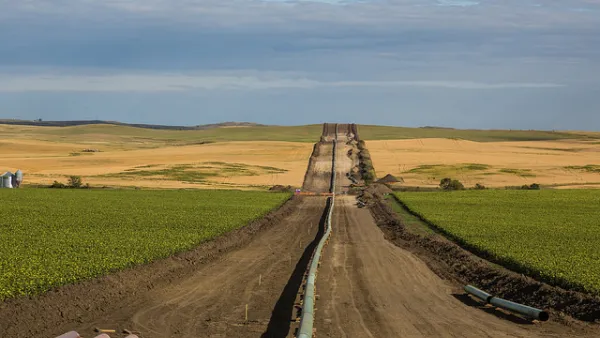
Keystone Pipeline Leaks Oil in Advance of Crucial Decision on Sister Pipeline
Thursday's massive oil spill in South Dakota is not a good omen for TransCanada for a favorable decision on Monday on an application before the Nebraska Public Service Commission on the routing of the controversial Keystone XL pipeline.

President Trump Approves Construction of Keystone XL Pipeline from Alberta to Nebraska
Following through on a January executive action, President Trump announced Friday that he was approving the oil pipeline that his predecessor had rejected over a year ago. Oil is already flowing from Steele City, Nebraska to Gulf Coast refineries.
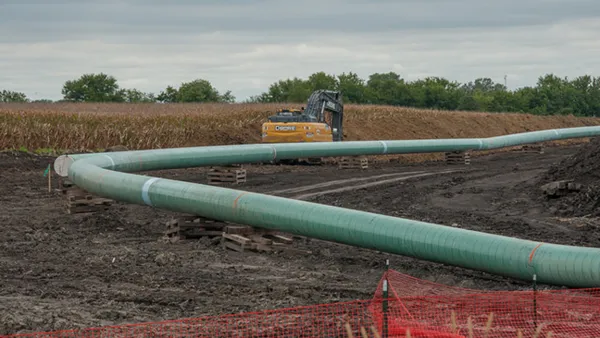
Nebraska Commission Authorizes Keystone XL Pipeline, But With a Major Twist
TransCanada got its second wish. Last March, President Trump reversed President Obama's rejection of the 1,136-mile pipeline to carry Alberta oil sands crude. On Monday, the Nebraska Public Service Commission OK'd a route, but not the one it wanted.

Planetizen Federal Action Tracker
A weekly monitor of how Trump’s orders and actions are impacting planners and planning in America.

California plans to bury El Niño’s downpour
If the state plays its cards right, it may be able to store a billion acre-feet of El Niño’s water in aquifers.

Chicago breaks ground on $3 billion megadevelopment
The new neighborhood, titled Foundry Park, will one day host 3,700 residences.

California High-Speed Rail Authority CEO resigns after $600,000 scandal
Under Ian Choudri, the authority used taxpayer dollars to fund first class flights and trips to nightclubs.

Want to study the Missouri River? Soon, you may need unanimous approval from 10 states
Legislation would require 10 governors’ permission to study or build projects moving water outside the basin.

Desperate measures: Advocates weigh draining Lake Powell to fill Colorado River
Draining the reservoir could reduce evaporation losses by a couple hundred thousand acre-feet.

FREE Course: Walkable City 1: Why Walkability?
After describing his path towards focusing on walkability as the essence of good planning, Jeff Speck marches through his five principal reasons for making more walkable places.
Reinventing Malls: Planning Alchemy—Turning Gray Fields Into Gold
The course focuses on the opportunities and imperatives that shape reinvention of mall sites.

City of Rosemead
Rutgers University, Edward J. Bloustein School of Planning and Public Policy
One Hundred Miles
Hunter College, City University of New York (CUNY)
The Architects Foundation
University of Cincinnati Online
City of Cambridge
Montrose County
The Pocatello Development Authority