With occupancy rates rising faster in urban than suburban locations, some suburbs are remaking themselves into mixed-use communities with hi-rise office and residential towers; Tysons Corner, Va. and Research Triangle Park, N.C. among them.


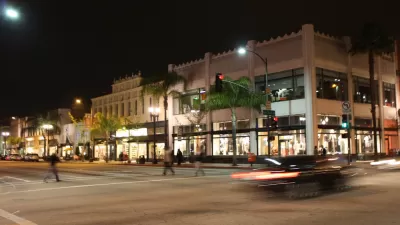
As noted here many times, demographic changes in the workforce are key to understanding the movement to create more urban environments.
In this article, Eliot Brown writes how some auto-oriented office parks are planning to convert to walkable, mixed-use job centers. While Tysons Corner may be the best example, Brown clears that it is part of a nation-wide urban planning movement.
"Planners in places like Bellevue, Wash., and White Flint, Md., also are engaging in large-scale makeovers with mixed-use towers as a response to a generation of young workers who like downtowns and employer preferences shifting away from suburban campuses.
Another bastion of isolated office parks, the 7,000-acre Research Triangle Park in North Carolina, recently revamped its future development plans to encourage retail and housing, which had been prohibited there until 2012.
Brown adds a cautionary note. "It's still too early to tell whether these transformations will succeed," he notes, about the plans that "try to convert sprawling areas built for car-dependent commuters and shoppers into 24-hour walkable communities." Ed McMahon, a senior fellow at the Urban Land Institute, a Washington-based real-estate think, elaborates:
"There's probably more plans for suburban development like [Tysons Corner] than there are going to be successful projects."
FULL STORY: Suburbia Looks to Grow Up

North Carolina’s Research Triangle Park Could Upzone for Mixed-Use, Housing
A new proposal reimagines the primarily industrial and office-oriented area to a ‘15-minute city.’
Bellevue Issues Curb Management Plan
The plan reorients the city’s priorities from vehicle throughput and parking to transit, bike infrastructure, and other public amenities.
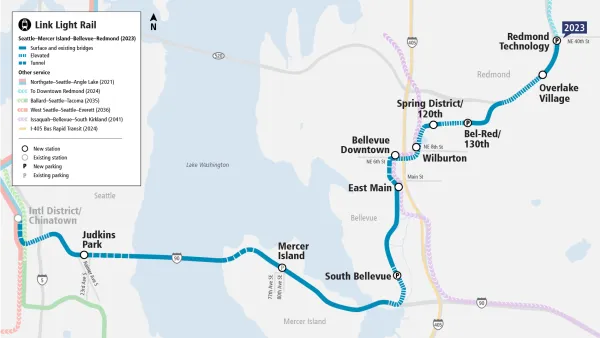
Sooner Rather Than Later: Support Builds for Eastside-Only Light Rail in Seattle
The Eastside Link light rail route, now known as Line 2, is delayed. A Sound Transit board officials is suggesting that some of the route can open soon, while the rest of the route is prepped to open later.

The state-sanctioned urbicide of Austin
People don’t kill cities. Freeways do.

US to reduce Colorado River water deliveries to Mexico
A new Colorado Treaty amendment reduces Mexico’s Colorado River water allocation by 250,000 acre feet.

New Jersey’s second-largest city bans standalone data centers
Jersey City will continue to allow co-location facilities, such as those meant for research institutions that store their own data.

Amtrak not solely to blame for New Jersey commuter rail's unreliability, report finds
A new study from the Garden State Initiative found that NJ Transit’s budget grew 20% across a 4 year period, but reliability declined significantly over the same period.

EPA erases limits on planet-warming pollution from power plants
Under Monday’s plan, power plants would still have some limits on how much mercury, arsenic and other contaminants they can emit.

Phoenix announces new on-demand transit service, more frequent RAPID buses
Both new services will launch in October, and are part of Phoenix's Project Effective Access Solutions for Easing Congestion.

FREE Course: Walkable City 1: Why Walkability?
After describing his path towards focusing on walkability as the essence of good planning, Jeff Speck marches through his five principal reasons for making more walkable places.
Reinventing Malls: Planning Alchemy—Turning Gray Fields Into Gold
The course focuses on the opportunities and imperatives that shape reinvention of mall sites.

Eagle County Government
Harvard University Graduate School of Design
Nashville Planning Department
The Architects Foundation
University of Cincinnati Online
The Pocatello Development Authority
The Urban Renewal Agency of the City of Pocatello
Journal of the American Planning Association