Three hundred thousand residents in nine counties in W.Va, including the state capital have gone without tap water since Thursday due to a massive chemical spill into the Elk River. All uses except flushing are off-limits. How much longer is unknown.


"State officials said the chemical 4-methylcyclohexane methanol, or MCHM, used in coal processing, seeped from the ruptured storage tank [at Freedom Industries] on Thursday [Jan. 9] into the Elk River, just upstream from the intake pipes for the regional water company," write Daniel Heyman and Emma G. Gitzsimmons.
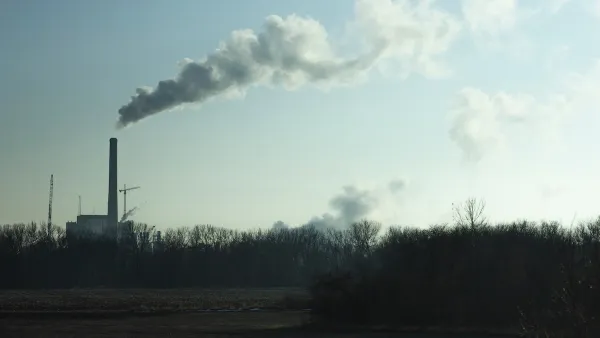
"The compound...is used to rid coal of impurities (including sulfur) before it is burned to generate power", according to staff writer the Christian Science Monitor.
The water company announced on Thursday that "its water supply had become contaminated," according to NBC News. The contamination "sent a strange licorice-like smell wafting through the streets in Charleston [pop. 51,400; metropolitan area: 304,214, per Wikipedia] the state capital."
David Gutman of the Charleston Gazette writes, "Smells from the spill were reported early Thursday morning, but Freedom mostly stonewalled media inquiries -- releasing only a bland news release through a public relations firm -- until a 10-minute news conference Friday evening." Gutman goes on to describe the company's apparent poor handling of the incident that has sent "at least 122 people to local hospitals reporting nausea and vomiting according to state officials on Saturday. [NYT]."
The water company has issued a series of alerts to advise customers not to use the water and to keep them updated as to what is being done to address the crisis. "The current acceptable uses of tap water are toilet flushing and firefighting," it warns.
At least three federal agencies and authorities have entered the scene since President Obama declared a federal emergency,
- Residents may have access to the 370,000 gallons of potable water that the Federal Emergency Management Agency brought to Charleston and nine surrounding counties.
- "A team from the Chemical Safety Board, an independent federal agency that investigates industrial chemical accidents, will arrive on Monday to begin looking into the spill, the board said on Saturday."
- "Booth Goodwin, the United States attorney for the Southern District of West Virginia, announced that his office and 'other federal law enforcement authorities have opened an investigation into the circumstances surrounding the release.” [Jan. 10, NYT]
As for state regulation, the Times notes that "(a)ccording to (W.Va) Department of Environmental Protection officials, Freedom Industries, which owns the chemical tank that ruptured, is exempt from Department of Environmental Protection inspections and permitting since it stores chemicals, and does not produce them."
As for the economic impact to the region, with all restaurants shut down due to the water restriction, the leader of the local chamber of commerce said that due to the uncertainty of when businesses could reopen, it would not be possible to estimate the economic impact of the spill yet, according to the AP.
W)ater emergency nears fifth day, with no end in sight."
Read the full story: The Wait Continues for Safe Tap Water in West Virginia


Taste Buds Don't Lie: Recycled Water Tastes as Good as Bottled Water
We're talking about toilet to tap. There, we said it.
Michigan Governor Finds Himself at Center of Flint Water Crisis
A case is made that Gov. Rick Snyder's handling of the lead-tainted water in Flint, Michigan is analogous to former President George W. Bush's bungling of the crisis resulting after Hurricane Katrina touched-down on the Gulf coast in August 2005.
The Political Foundation Behind America's Worst Tap Water Contamination
NPR host Linda Wertheimer interviews Evan Osnos about his current New Yorker piece on the Jan. chemical spill into W. Va.'s Elk River. His focus is less on the spill and more on the influence of Big Coal in government and how it contributed to it.

Planetizen Federal Action Tracker
A weekly monitor of how Trump’s orders and actions are impacting planners and planning in America.

Amtrak, CN end decades-long dispute with eight-year agreement
The new operating agreement establishes an updated framework for the companies to work together, including processes to resolve disputes.
Nation's most wind-powered state turns to coal as data centers increase energy demand
For the first time in decades, Iowa has increased its generation of coal power.

Alabama scores up to $2.5 billion federal loan for largest infrastructure project in state’s history
The Mobile River Bridge and Bayway Project aims to ease congestion at Alabama’s worst bottleneck.

Trump is considering data centers on 6 states' public land — some state officials say they had no idea
If the administration approves the proposed projects, data center and data center-related developments will cover 17,600 acres of public land.

Despite court ruling, Trump is keeping nearly all wind projects in the US on hold
At least 110 wind energy projects have not heard from the government since a federal judge ruled that the Trump administration's freeze on wind turbine clearances was likely illegal.

FREE Course: Walkable City 1: Why Walkability?
After describing his path towards focusing on walkability as the essence of good planning, Jeff Speck marches through his five principal reasons for making more walkable places.
Reinventing Malls: Planning Alchemy—Turning Gray Fields Into Gold
The course focuses on the opportunities and imperatives that shape reinvention of mall sites.

KFH Group Inc.
Greater Baltimore Committee
Eagle County Government
The Architects Foundation
University of Cincinnati Online
The Pocatello Development Authority
The Urban Renewal Agency of the City of Pocatello