Bridge-Gate just got a lot juicier. Despite Governor Christie’s denials, recently released emails suggest that his close aides helped orchestrate the closure of lanes to the George Washington Bridge as part of a politically-motivated vendetta.


"Private messages between Governor’s Christie’s deputy chief of staff and two of his top executives at the Port Authority reveal a vindictive effort to create 'traffic problems in Fort Lee' by shutting lanes to the George Washington Bridge and apparent pleasure at the resulting gridlock," reports Shawn Boburg.
The sudden closure of two of the three lanes that access the George Washington Bridge from Fort Lee last September stranded school buses and commuters for hours.
"The documents obtained by The Record raise serious doubts about months of claims by the Christie administration that the September closures of local access lanes to the George Washington Bridge were part of a traffic study initiated solely by the Port Authority," adds Boburg. "Instead, they show that one of the governor’s top aides was deeply involved in the decision to choke off the borough’s access to the bridge, and they provide the strongest indication yet that it was part of a politically-motivated vendetta—a notion that Christie has publicly denied."
Read the full story: Top Christie aide to Port Authority: 'Time for some traffic problems in Fort Lee'
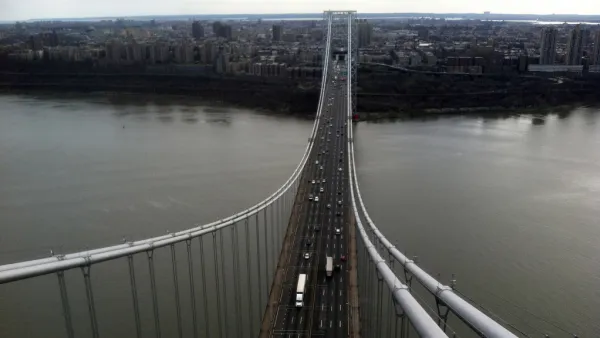
Bridgegate Winding Down
N.J. Gov. Chris Christie was never charged in the scandal that shut down access to the nation's busiest bridge for three days in September 2013 for political retribution. His aide and an appointment to the Port Authority were sentenced to prison.
Bridgegate Implications for New Jersey and Beyond
In The New York Times Sunday Review, Matt Katz, a political reporter for WNYC and New Jersey Public Radio, gives an update on the federal trial for 'Bridgegate' and also paints a bleak picture for New Jersey, and maybe the United States.
'Bridge-Gate' Attorneys Make Their Case: You Can't Sue Over Traffic
Attorneys representing the state of New Jersey responded to the allegations of a class action lawsuit rising from the "bridge-gate" scandal.

Desperate measures: Advocates weigh draining Lake Powell to fill Colorado River
Draining the reservoir could reduce evaporation losses by a couple hundred thousand acre-feet.

Eastern Nebraska is running out of electricity
Data centers and electrification are straining eastern Nebraska’s grid, throttling economic development.

Malls are becoming the midtowns of the future
Mall and office park redevelopments are a generational opportunity to create new nodes of urbanity.

NYC breaks ground on anti-flooding infrastructure project
New York City's new system will reduce stormwater flows to local sewers by 90%.

One Kentucky town’s secret to affordable housing
The Smoketown Community Land Trust has already built seven affordable homes for community members.

Houston gains petal-shaped cooling infrastructure to make streets more ‘delightful’
The city has installed the pavilions along 15 blocks in Houston.

FREE Course: Walkable City 1: Why Walkability?
After describing his path towards focusing on walkability as the essence of good planning, Jeff Speck marches through his five principal reasons for making more walkable places.
Reinventing Malls: Planning Alchemy—Turning Gray Fields Into Gold
The course focuses on the opportunities and imperatives that shape reinvention of mall sites.

City of Rosemead
Rutgers University, Edward J. Bloustein School of Planning and Public Policy
One Hundred Miles
University of Michigan School for Environment and Sustainability (SEAS)
Hunter College, City University of New York (CUNY)
The Architects Foundation
City of Cambridge
Montrose County
The Pocatello Development Authority