Michael Sorkin bemoans the trickle-down planning ethos of the Bloomberg era and sees the need to increase the city's resiliency as an opportunity to "return to the task of physical planning attuned to local desires".


"It's time to reintroduce communities into the planning process," urges Sorkin. "New York must move beyond the oppositional model of planning that has too long dominated, best exemplified by our beloved Manichean struggle between cardboard versions of Robert Moses and Jane Jacobs. Although there is no contradiction in planning both inductively and deductively, our process is too skewed toward money and away from people: the capacity of neighborhoods to meaningfully participate in planning their own destinies—and that of the larger realms we all share—is fundamental."
"Wisdom doesn't belong to any particular group (although needs are best assessed locally), and a mayor must empower everyone," he continues. "For this, we look to you [Bill de Blasio] with high hopes."
Read the full story: Bridge Over Troubled Waters

How Urban Form Impacts Housing Affordability
The way we design cities affects housing costs differently than you might think.
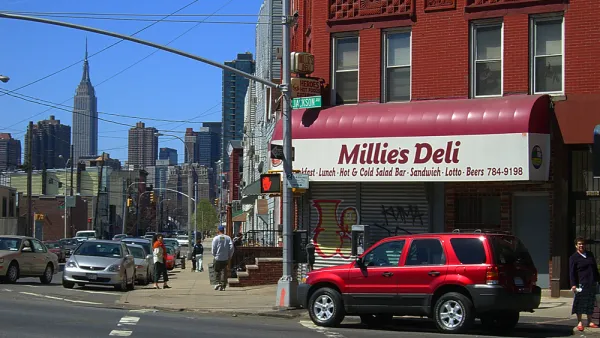
The Case for Bottom-Up Urban Planning and Design
The wisdom of a broad cross section of residents and stakeholders is an essential part of planning and designing livable, efficient, and authentic communities.
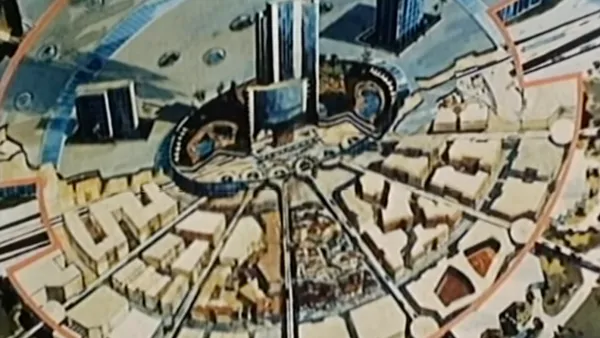
EPCOT: The Original 'Smart City'
What can today’s futurists learn from Disney’s unrealized utopia?

Planetizen Federal Action Tracker
A weekly monitor of how Trump’s orders and actions are impacting planners and planning in America.

California plans to bury El Niño’s downpour
If the state plays its cards right, it may be able to store a billion acre-feet of El Niño’s water in aquifers.

Desperate measures: Advocates weigh draining Lake Powell to fill Colorado River
Draining the reservoir could reduce evaporation losses by a couple hundred thousand acre-feet.

Los Angeles just elected an urban planner as its mayor
Transportation analysts are optimistic that Raman will be more aggressive in addressing transit issues than Bass.

Mamdani’s pied-à-terre tax survives legal challenge
A panel of judges found that the plaintiffs failed to demonstrate injury as a result of New York City's implementation of the tax.

Eastern Nebraska is running out of electricity
Data centers and electrification are straining eastern Nebraska’s grid, throttling economic development.

FREE Course: Walkable City 1: Why Walkability?
After describing his path towards focusing on walkability as the essence of good planning, Jeff Speck marches through his five principal reasons for making more walkable places.
Reinventing Malls: Planning Alchemy—Turning Gray Fields Into Gold
The course focuses on the opportunities and imperatives that shape reinvention of mall sites.

City of Rosemead
Rutgers University, Edward J. Bloustein School of Planning and Public Policy
One Hundred Miles
University of Michigan School for Environment and Sustainability (SEAS)
Hunter College, City University of New York (CUNY)
The Architects Foundation
City of Cambridge
Montrose County
The Pocatello Development Authority