For Americans growing up in the 1980s, the sight of a stand-alone restaurant with board-and-batten siding and a red-tile roof meant one thing: pizza ahead.


Pizza Hut’s signature architecture was the brainchild of founders Dan and Frank Carney and architect Richard D. Burke, Sarah Goodyear writes. Though the “Red Roof” style is no longer used by the brand, many of the structures still stand.
That’s where Mike Neilson’s blog, Used to Be a Pizza Hut, comes in. Neilson chronicles the second lives of former Pizza Huts with photographs from around the world. Whatever their current uses, the buildings aren’t hard to spot. “The effort made to establish an architectural symbol tied in with their brand is a great move until they start to close,” Neilson said. “They can’t really hide from their past.”
Read the full story: The Secret Second Lives of Pizza Huts

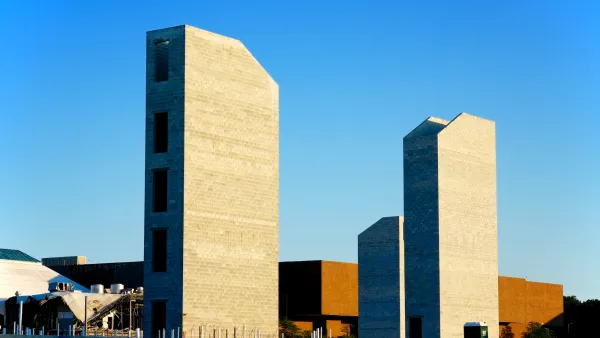
New Jersey affordable housing requirements spur infill development across the state
A 50-year-old law continues to reshape development around housing goals.
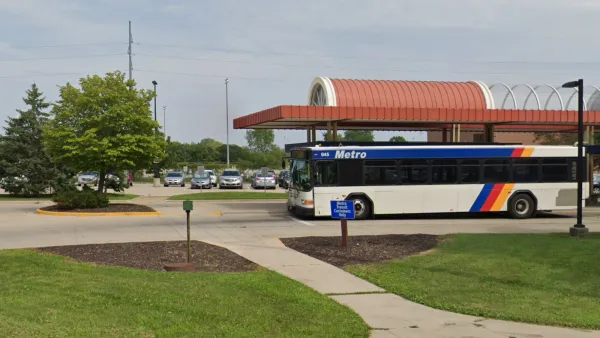
Madison approves hundreds of affordable apartments as deadline for federal funding looms
A recently approved project will bring 163 affordable units to the north side.
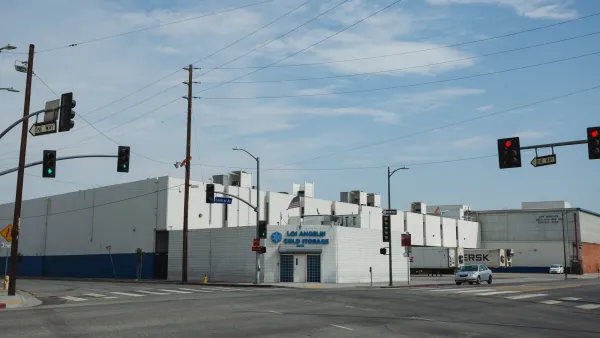
LA approves $2B 'urban village' plan for former cold storage facilities
The project promises an interconnected neighborhood with a focus on public space.

Planetizen Federal Action Tracker
A weekly monitor of how Trump’s orders and actions are impacting planners and planning in America.

Amtrak, CN end decades-long dispute with eight-year agreement
The new operating agreement establishes an updated framework for the companies to work together, including processes to resolve disputes.

Judges permit Denver to divert 77,000 acre feet from the Colorado River for reservoir expansion
Overuse and climate change have caused the Colorado River’s water levels to plummet.

NYC DOT wants faster, more permanent street upgrades
The city is examining ways to build more concrete infrastructure without getting entangled in 'decades-long' projects.

'Something we’ve never seen before:' rising utility rates could strain city finances nationwide
Data centers, climate change and other factors have caused utility rates in the United States to increase by 38% since 2020.

Trump to overrule local leaders, lease millions of acres of America’s Pacific Island territories’ seafloors to mining companies
International law says that the Indigenous people of America’s territories have a right to prior and informed consent regarding projects that impact their countries.

FREE Course: Walkable City 1: Why Walkability?
After describing his path towards focusing on walkability as the essence of good planning, Jeff Speck marches through his five principal reasons for making more walkable places.
Reinventing Malls: Planning Alchemy—Turning Gray Fields Into Gold
The course focuses on the opportunities and imperatives that shape reinvention of mall sites.

Harvard University Graduate School of Design
KFH Group Inc.
Greater Baltimore Committee
The Architects Foundation
University of Cincinnati Online
The Pocatello Development Authority
The Urban Renewal Agency of the City of Pocatello