Are failing cities like Camden, New Jersey, to blame for their own downfall? Or are they the victims of a regional exploitation in which the suburbs foist their problems onto the nearest urban center?


Stephen Danley asks these questions in response to the recent Rolling Stone article “Apocalypse, New Jersey.” While that article’s author, Matt Taibbi, characterized Camden as reliant on suburban “life support,” Danley sees the situation differently. “State subsidies are not signs of Camden’s failure, but of its exploitation,” he writes. “Camden’s story is one of the surrounding region dumping its waste, its trash, its drugs and, yes, its poor into a city and then looking the other way. Whose failure is that?”
Camden’s recent history, moreover, is more nuanced than articles like Taibbi’s suggest. “In addition to exploitation, Camden’s story is one of resilience,” Danley writes. “Left to rot in the city, its citizens find ways to make it a home and take pride in creating calm amid chaos.”
FULL STORY: Letter from Camden: Who Is to Blame for America's "Most Desperate Town"?

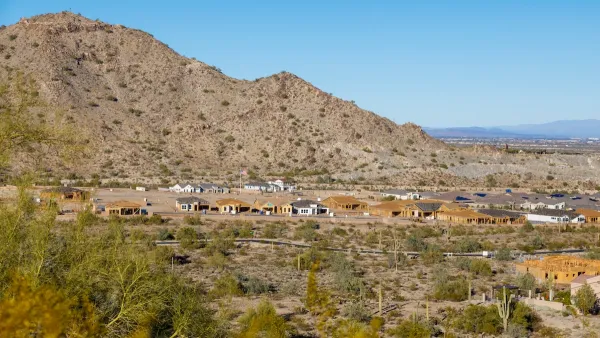
Arizona Overrides Moratorium Imposed due to Water Crisis, Approves up to 60K New Homes
A newly created legal process allows development to proceed if builders agree to bring in renewable water sources and reduce their groundwater use by 25%.
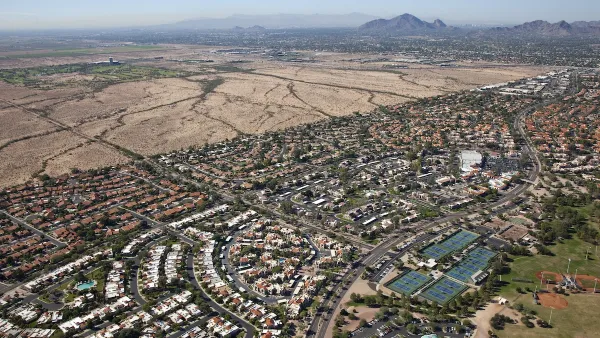
Nearly Half a Million New Arizona Homes Halted Due to Water Crisis
The Arizona Department of Water Resources has put a moratorium on new water supply permits, making the future of planned residential developments uncertain.
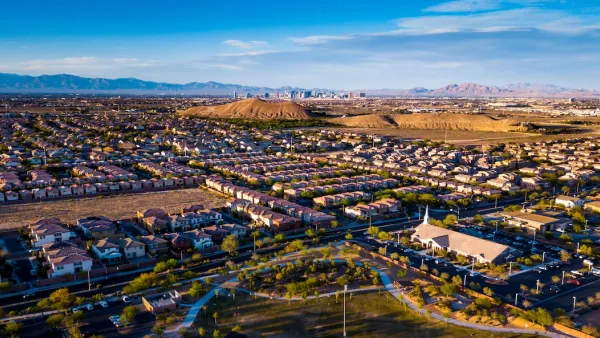
The Nation’s 40 Fastest-Growing Suburbs
Projected population growth will be concentrated in suburban communities around major metropolitan areas, with the Sunbelt experiencing the fastest growth.

Planetizen Federal Action Tracker
A weekly monitor of how Trump’s orders and actions are impacting planners and planning in America.

The state-sanctioned urbicide of Austin
People don’t kill cities. Freeways do.

US to reduce Colorado River water deliveries to Mexico
A new Colorado Treaty amendment reduces Mexico’s Colorado River water allocation by 250,000 acre feet.

5 New England states march closer to 800 megawatt wind energy project
Securing federal approval for the project may be complicated under the Trump administration, which has historically been hostile towards domestic wind power.

Baltimore to break ground on $50 million Transit Priority Project
The project will bring faster bus trips, safer streets and better bike connections to Baltimore.

Airbnb launches $250 million 'last-dollar financing' housing accelerator, makes first investment in Austin
The company will put $6.4 million towards affordable housing development in Texas’ capital.

FREE Course: Walkable City 1: Why Walkability?
After describing his path towards focusing on walkability as the essence of good planning, Jeff Speck marches through his five principal reasons for making more walkable places.
Reinventing Malls: Planning Alchemy—Turning Gray Fields Into Gold
The course focuses on the opportunities and imperatives that shape reinvention of mall sites.

Eagle County Government
Harvard University Graduate School of Design
Nashville Planning Department
The Architects Foundation
University of Cincinnati Online
The Pocatello Development Authority
The Urban Renewal Agency of the City of Pocatello
Journal of the American Planning Association