The unannounced lane closures on the George Washington Bridge in early September have brought down two Port Authority directors and now hold serious implications for popular N.J. Gov. Chris Christie (R), thought to be a 2016 presidential candidate.


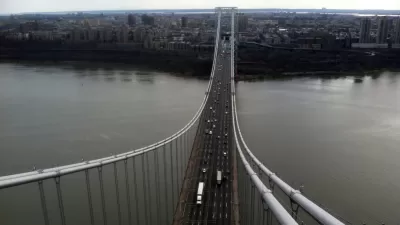
In his continuing coverage of what has become known as Bridge-Gate, Mark J. Magyar of NJ Spotlight writes, "Facing the first real political scandal of his administration, (New Jersey Gov.) Christie yesterday (Thursday) lashed out at the press and Democratic critics, dismissed the secret lane closures at the George Washington Bridge that snarled traffic in Fort Lee (N.J., population 3,393) as inconsequential, and stood up for his political appointees who were forced to resign their high-paying Port Authority (of New York and New Jersey) posts in the wake of Bridge-gate."
The governor dismissed allegations that David Wildstein, a former high school classmate who resigned two weeks ago as the Port Authority’s director of interstate capital projects, had closed two Fort Lee entry lanes leading into the George Washington Bridge as retaliation against Fort Lee Democratic Mayor Mark Sokolich for refusing to join more than 50 other Democratic officials in endorsing him for reelection.
Of course, to users of the world's busiest bridge, particularly those using the ramps to and from Fort Lee, the unannounced lane closures in early September were anything but inconsequential, as explained by Tom P. Ryan in a Times of Trenton guest opinion on Dec. 18:
Sept. 9, without warning, by order of the Port Authority of New York and New Jersey, two of the three lanes that grant access to the George Washington Bridge (GWB) from Fort Lee were shut down. The result was gridlock, not only on the on-ramps to the GWB, but also in Fort Lee itself. Thousands of commuters who travel through Fort Lee every day, including school buses and emergency vehicles, were impeded by the lane closures.
"The local-access lanes were ordered re-opened after four days by authority executive director Patrick Foye," reports CBS New York.
The lane closures will be investigated by the Commerce, Science and Transportation Committee upon the request of committee chairman Sen. Jay D. Rockefeller IV (D-W.Va.), as well as by the Port Authority of N.Y. and N.J. which operates the bridge.
Assembly Transportation Committee Chairman John Wisniewski (D-Middlesex), who has been chairing the New Jersey legislature's Bridge-gate investigation, is looking into whether the lane closures were "about the abuse of power and the effort to conceal that abuse of power by the governor’s two highest-level appointments to the Port Authority, who closed traffic lanes from Fort Lee leading into the George Washington Bridge and concealed it from the executive director of the Port Authority, the mayor of Fort Lee. and the chief of police," writes Magyar. A criminal investigation could be next.
Read the full story: THE POLITICS OF BRIDGE-GATE: CHRISTIE FIRES BACK

Bridgegate Winding Down
N.J. Gov. Chris Christie was never charged in the scandal that shut down access to the nation's busiest bridge for three days in September 2013 for political retribution. His aide and an appointment to the Port Authority were sentenced to prison.
Bridgegate Implications for New Jersey and Beyond
In The New York Times Sunday Review, Matt Katz, a political reporter for WNYC and New Jersey Public Radio, gives an update on the federal trial for 'Bridgegate' and also paints a bleak picture for New Jersey, and maybe the United States.
'Bridge-Gate' Attorneys Make Their Case: You Can't Sue Over Traffic
Attorneys representing the state of New Jersey responded to the allegations of a class action lawsuit rising from the "bridge-gate" scandal.

Planetizen Federal Action Tracker
A weekly monitor of how Trump’s orders and actions are impacting planners and planning in America.

Amtrak, CN end decades-long dispute with eight-year agreement
The new operating agreement establishes an updated framework for the companies to work together, including processes to resolve disputes.

Northwest rail fans eager for Sept. 30 debut of Amtrak’s Airo fleet
Get ready for that new train smell and more seats. But they won’t go faster or run more frequently on the Cascades route in Washington and Oregon.

St. Louis Metro to test if single-car trains can reduce operating costs, maintain rider satisfaction
The pilot program will run from October to spring 2027, and begin with one single-car train operating on Metrolink’s Red and Blue lines.

Pennsylvania is building data centers in abandoned mines
Housing data centers in mines provides an alternative to destroying local forests and may spare residents from data centers’ noise and air pollution.

If Corpus Christi can’t revive desalination plant project, it may owe Texas $235 million
Earlier this month, city officials declined to pursue developing the plant for the second time in a year.

FREE Course: Walkable City 1: Why Walkability?
After describing his path towards focusing on walkability as the essence of good planning, Jeff Speck marches through his five principal reasons for making more walkable places.
Reinventing Malls: Planning Alchemy—Turning Gray Fields Into Gold
The course focuses on the opportunities and imperatives that shape reinvention of mall sites.

City of Thousand Oaks
City of Wisconsin Rapids
Harvard University Graduate School of Design
The Architects Foundation
University of Cincinnati Online
The Pocatello Development Authority
The Urban Renewal Agency of the City of Pocatello