In a city known for luxuriously appointed and boldly designed single-family homes, an unlikely market for super-deluxe residences is growing. "Over-the-top" apartments attract residents who want an urban lifestyle without a long-term commitment.


"In a handful of pricey neighborhoods across the city, some apartments are beginning to resemble a cross between a $1-million home and a five-star resort," observes Roger Vincent. "The movement is turning on its head the long-held assumption that wealthy Los Angelenos buy, not rent, their residences."
"Such over-the-top apartments are a small but growing niche in Los Angeles. As recently as five years ago, developers calculated that rents could only go so high before affluent people would opt out and go buy a house instead, real estate broker Mauricio Umansky said." In fact, "super-deluxe" apartments have a heritage in the city, dating back to the "elite residential buildings" that once housed Hollywood's film stars.
"For the most part, people are looking for affordability when they rent," said Shaul Kuba, a principal at CIM Group, "but there are some people who are interested in experiencing that type of living without a long-term commitment."
FULL STORY: Demand grows for ultra-luxurious apartments in Los Angeles


LA needs $2 billion in Olympic Games transportation funding by Sept. 1, officials say
Congresspeople who serve the Los Angeles area met on Aug. 26 to urge the Trump administration to speed up funding.
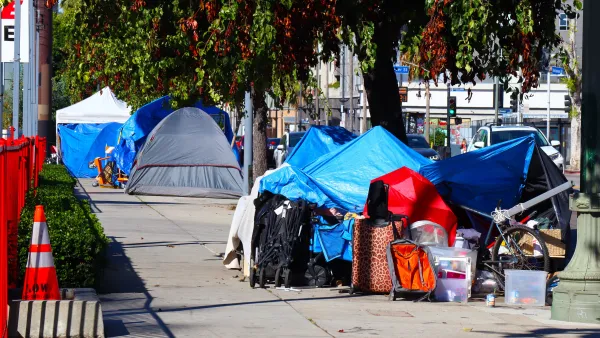
Los Angeles rescinds twelve 'anti-camping zones'
The zones previously prohibited unhoused people from camping in parts of Hollywood.
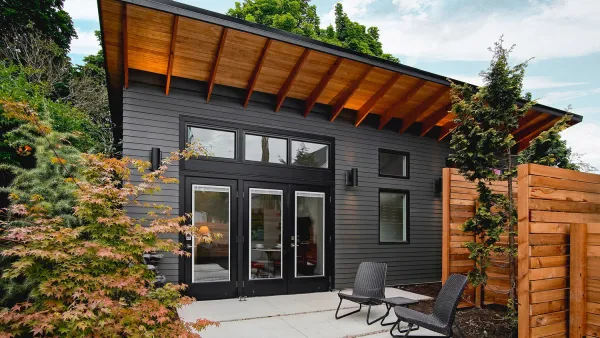
Los Angeles County gained more than 10,000 ADUs in 2025 — and barely made a dent in its housing goals
A new study warns that the burst in ADU development will not be enough to remedy Los Angeles’ affordable housing gap.

Planetizen Federal Action Tracker
A weekly monitor of how Trump’s orders and actions are impacting planners and planning in America.

The state-sanctioned urbicide of Austin
People don’t kill cities. Freeways do.

US to reduce Colorado River water deliveries to Mexico
A new Colorado Treaty amendment reduces Mexico’s Colorado River water allocation by 250,000 acre feet.

5 New England states march closer to 800 megawatt wind energy project
Securing federal approval for the project may be complicated under the Trump administration, which has historically been hostile towards domestic wind power.

Baltimore to break ground on $50 million Transit Priority Project
The project will bring faster bus trips, safer streets and better bike connections to Baltimore.

Airbnb launches $250 million 'last-dollar financing' housing accelerator, makes first investment in Austin
The company will put $6.4 million towards affordable housing development in Texas’ capital.

FREE Course: Walkable City 1: Why Walkability?
After describing his path towards focusing on walkability as the essence of good planning, Jeff Speck marches through his five principal reasons for making more walkable places.
Reinventing Malls: Planning Alchemy—Turning Gray Fields Into Gold
The course focuses on the opportunities and imperatives that shape reinvention of mall sites.

Eagle County Government
Harvard University Graduate School of Design
Nashville Planning Department
The Architects Foundation
University of Cincinnati Online
The Pocatello Development Authority
The Urban Renewal Agency of the City of Pocatello
Journal of the American Planning Association