Alison Prato speaks with architect Chris Downey, who lost his eyesight five years ago following surgery to remove a brain tumor, about how his approach to design and his experience of the city have changed.


"After 46 years of living with sight, waking up one day blind — and with no sense of smell, which he also lost in the surgery — was 'quite frankly, really terrifying,'” writes Prato. "Now, as one of the few blind architects in the world, Downey has taken a keen interest in multisensory design, which is important for visually impaired people who rely on touch, sound or smell to navigate."
"These days, he says, he designs with a tactile palette, not just a color palette, in mind. 'Blind people rely on acoustics to get around. I test materials with my cane to see how they feel. Instead of doing a ‘walk-through,’ we create a ‘tap-through,’ so you hear what it’s like when you tap your cane throughout the building.' He uses an embossing printer to print out drawings of the spaces he works on. (Recent projects include eye centers in California and at Duke University, and innovative transportation hubs in the Bay Area.)"
Read the full story: My City: Life as a blind architect in San Francisco

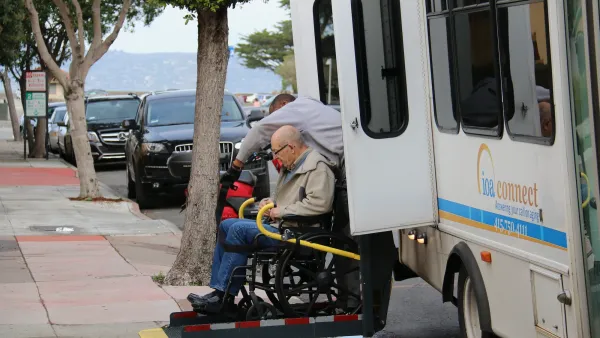
Seniors Account for 32% of Traffic Deaths in the Bay Area
Road safety interventions would help protect seniors and other vulnerable groups from traffic violence.
Knoxville Ranked Best US City for People With Disabilities
An analysis of accessibility, affordability, healthcare access, and other metrics reveals the most disability-friendly U.S. cities.
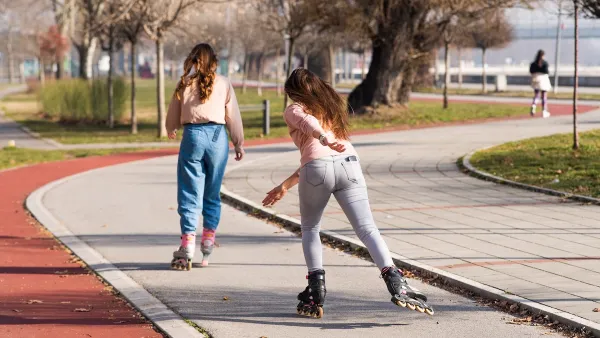
How Public Spaces Exclude Teen Girls
Adolescent girls face unique challenges and concerns when navigating public spaces. We can design cities with their needs in mind.

Planetizen Federal Action Tracker
A weekly monitor of how Trump’s orders and actions are impacting planners and planning in America.

Amtrak, CN end decades-long dispute with eight-year agreement
The new operating agreement establishes an updated framework for the companies to work together, including processes to resolve disputes.

Judges permit Denver to divert 77,000 acre feet from the Colorado River for reservoir expansion
Overuse and climate change have caused the Colorado River’s water levels to plummet.

NYC DOT wants faster, more permanent street upgrades
The city is examining ways to build more concrete infrastructure without getting entangled in 'decades-long' projects.

'Something we’ve never seen before:' rising utility rates could strain city finances nationwide
Data centers, climate change and other factors have caused utility rates in the United States to increase by 38% since 2020.

Trump to overrule local leaders, lease millions of acres of America’s Pacific Island territories’ seafloors to mining companies
International law says that the Indigenous people of America’s territories have a right to prior and informed consent regarding projects that impact their countries.

FREE Course: Walkable City 1: Why Walkability?
After describing his path towards focusing on walkability as the essence of good planning, Jeff Speck marches through his five principal reasons for making more walkable places.
Reinventing Malls: Planning Alchemy—Turning Gray Fields Into Gold
The course focuses on the opportunities and imperatives that shape reinvention of mall sites.

Harvard University Graduate School of Design
KFH Group Inc.
Greater Baltimore Committee
The Architects Foundation
University of Cincinnati Online
The Pocatello Development Authority
The Urban Renewal Agency of the City of Pocatello