In a dramatic 24-hour turnaround, the House voted to support Gov. Tom Corbett's proposal to lift the cap on the state's oil franchise tax that could potentially add 28 cents to gas prices. A prevailing wage issue caused the bill's defeat earlier.


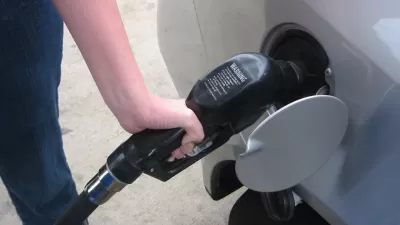
"Transportation Secretary Barry Schoch said he and other Corbett officials worked through the day to persuade some lawmakers to support the legislation," writes Amy Worden about the $2.3 billion transportation bill that had been rejected on a 98-103 vote on Monday.
"The proposal would increase motorists' fees - for drivers' licenses, registration, and moving violations - starting in 2015 and lift the decades-old cap on the oil franchise tax, which some say could mean an increase of as much as 28 cents per gallon at the pump based on wholesale prices in 2013," Worden writes.
The proposal - one of Gov. Corbett's top agenda initiatives - would increase gas taxes and motor vehicle license fees to raise $1.65 billion needed to repair aging bridges and roads and about $475 million for cash-strapped mass-transit systems.
The vote "blurred party lines" due to a provision affecting prevailing or union-scale wages on transportation projects. The bill would exempt lower cost transportation projects from the higher wage requirement.
Politico's Emily Schultheis, writing a day earlier about Monday's rejection of the bill, describes the non-partisan nature that transportation bills have the potential to take in state legislatures.
Transportation issues bring members of both parties together in a way few other issues do — and generally earn high marks from voters, who expect state government to fix their roads and improve their public transit. It’s an especially big deal in the crucial southeastern region of the state, where the need for transportation funding is dire.
Along those lines, Worden writes, "Most of the Philadelphia delegation - and many suburban Republicans and Democrats - supported the bill because of its dedicated transit funding. SEPTA officials applauded the vote, which would avert the adoption of the "doomsday budget" that could mean rail-line closures."
The bill now goes to the Senate which had passed a similar transportation funding bill last June as we previously posted here.
If the bill were to become law, Pennsylvania could have the highest gas tax after the tax cap was fully lifted, according to this chart (PDF) prepared earlier this year, warned the tax group, Citizens Alliance of Pennsylvania.
Corbett, a Republican, is up for reelection next year. This bill is among his highest priorities. His Facebook page praised the House for passing the bill.
UPDATE (11/21/2013): On a 43-7 vote, the Pennsylvania Senate passed the House transportation funding bill on Wednesday. It now returns to the House for a last ratification, anticipated today, "after which the bill is expected to be signed into law by Gov. Tom Corbett," writes Charles Thompson of The Patriot News.
FULL STORY: Pa. House OKs transportation bill it rejected a day earlier

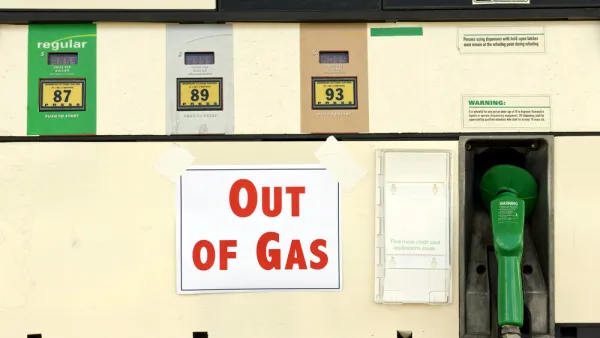
New Year's Day State Gas Tax Increases, Decreases, and What Lies Ahead
Pennsylvania, the state that had the highest gas tax last year, saw the highest gas tax increase of 7.9 cents per gallon, the final increment of a 2013 law. Michigan's 7.3 cents tax increase, signed into law in 2015, is the second largest increase.
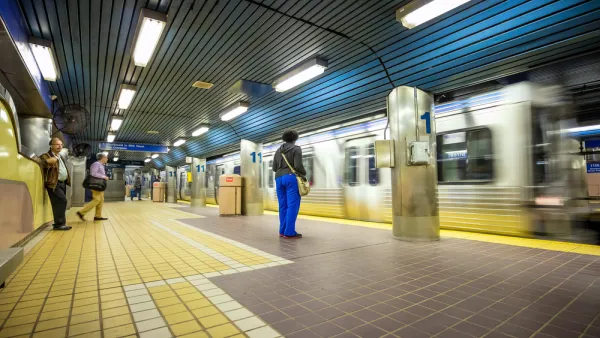
Could the Philadelphia Transit Strike Determine Who Becomes the Next President?
Hundreds of thousand of bus, trolley and subway riders (and potential voters) in Philadelphia have been left to find alternative means of transportation since Nov. 1 due to a strike by the local Transport Workers Union who work for SEPTA.
Effort Underway to Halt Pennsylvania's Gas Tax Increase
Pennsylvania has the nation's highest state gas and diesel taxes, 51.4 cents per gallon and 65.1 cents per gallon, respectively. Both are scheduled to increase up to 10 cents on Jan 1. A bill has been introduced to halt all future fuel tax increases.

The state-sanctioned urbicide of Austin
People don’t kill cities. Freeways do.

US to reduce Colorado River water deliveries to Mexico
A new Colorado Treaty amendment reduces Mexico’s Colorado River water allocation by 250,000 acre feet.

New Jersey’s second-largest city bans standalone data centers
Jersey City will continue to allow co-location facilities, such as those meant for research institutions that store their own data.

Amtrak not solely to blame for New Jersey commuter rail's unreliability, report finds
A new study from the Garden State Initiative found that NJ Transit’s budget grew 20% across a 4 year period, but reliability declined significantly over the same period.

EPA erases limits on planet-warming pollution from power plants
Under Monday’s plan, power plants would still have some limits on how much mercury, arsenic and other contaminants they can emit.

Phoenix announces new on-demand transit service, more frequent RAPID buses
Both new services will launch in October, and are part of Phoenix's Project Effective Access Solutions for Easing Congestion.

FREE Course: Walkable City 1: Why Walkability?
After describing his path towards focusing on walkability as the essence of good planning, Jeff Speck marches through his five principal reasons for making more walkable places.
Reinventing Malls: Planning Alchemy—Turning Gray Fields Into Gold
The course focuses on the opportunities and imperatives that shape reinvention of mall sites.

Eagle County Government
Harvard University Graduate School of Design
Nashville Planning Department
The Architects Foundation
University of Cincinnati Online
The Pocatello Development Authority
The Urban Renewal Agency of the City of Pocatello
Journal of the American Planning Association