Imagine being able to traverse a major city surrounded entirely by bikes, pedestrians, and green spaces. That vision is poised to become reality in Hamburg within the next two decades as the city pursues plans for a vast Grünes Netz (Green Network).


"Welcome to Hamburg, an environmental pioneer in the mould of its regional neighbour Copenhagen," writes Elisabeth Braw. "Its planned green network will cover 40% of the city's area."
"'It will connect parks, recreational areas, playgrounds, gardens and cemeteries through green paths', Angelika Fritsch, a spokeswoman for the city's department of urban planning and the environment, tells Guardian Sustainable Business. 'Other cities, including London, have green rings, but the green network will be unique in covering an area from the outskirts to the city centre. In 15 to 20 years you'll be able to explore the city exclusively on bike and foot.'"
"Perhaps more importantly, the network will absorb CO2 emissions and help prevent floods when inevitable superstorms strike," adds Braw.
Thanks to Fast Company Co.Exist
Read the full story: Hamburg's answer to climate change

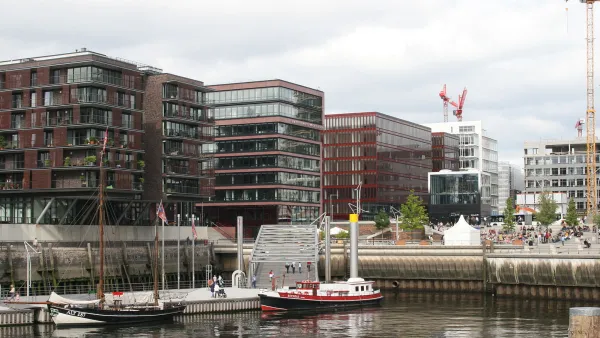
Living With Flooding in a German Port Town
A riverside neighborhood in Hamburg embraces flooding as part of its resilience planning, using old techniques to protect modern communities.
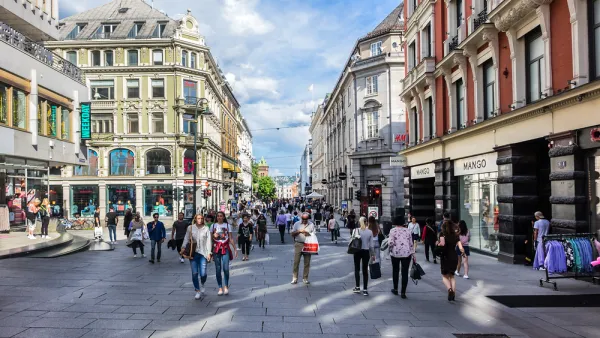
Watch: The Car-Free City Becomes Reality
The latest City Beautiful video shows off the fruits of car-free initiatives in European cities.

More Diesel Driving Bans Coming to German Cities
Germany's automotive industry and Chancellor Angela Merkel are increasingly worried about the economic effects of court-sanctioned diesel driving bans to improve air quality, as enacted in Hamburg last May. Four more cities are likely to enact bans.

Planetizen Federal Action Tracker
A weekly monitor of how Trump’s orders and actions are impacting planners and planning in America.

‘Going backwards:’ Baltimore mayor, students rally against state's transit funding plan
Maryland's proposed six-year plan provides no funding for Baltimore’s BMORE bus program and reduces its road maintenance funding.

Detroit to transform waterfront with $2.2 billion investment
Developers will convert about 18 acres of unused parking lot space into civic spaces.

U.S.-Iran war may have ‘devastating’ impact on cost to warm homes
Vermont and Maine residents may see a 76% increase in the cost of warming their homes this winter.

Senate bill would ‘overhaul’ environmental permitting laws
Under the proposed act, government agencies would also not be able to suspend or rescind permits after granting them.

Exemption applications for NYC’s pied-à-terre tax see 55% success rate
The city sent nearly 40% of its initial pied-à-terre tax warnings erroneously.

FREE Course: Walkable City 1: Why Walkability?
After describing his path towards focusing on walkability as the essence of good planning, Jeff Speck marches through his five principal reasons for making more walkable places.
Reinventing Malls: Planning Alchemy—Turning Gray Fields Into Gold
The course focuses on the opportunities and imperatives that shape reinvention of mall sites.

One Hundred Miles
County of Mendocino
planning NEXT
The Architects Foundation
University of Cincinnati Online
Montrose County
Northern Illinois Transit Authority (NITA)
The Pocatello Development Authority