Out of concern that L.A.'s downtown properties are not being put to the highest and best use, the City Councilman representing the district has "quietly authored" a motion to incentivize density and place a moratorium on low-rise development.


Is Los Angeles missing out on a golden opportunity to build a dense downtown? That's the motivation behind a motion filed by 14th District City Councilman José Huizar's last month "that would incentivize high-rise building and also put a moratorium on low-rise construction in key areas," reports Eddie Kim. Among the incentives proposed are expedited reviews and reduced parking requirements.
“If we’re looking at Downtown in terms of its longevity as an economic engine, it’s clear we need to build bigger hotels and residential projects,” said Huizar spokesman Rock Coca. “The problem we’re having right now is that if low-rises go up, they’re not getting maximum efficiency out of the space. And then they’re around for decades.”
"Most experts agree that upping density in Downtown, especially in light of growing public transportation and infrastructure, is the smartest plan for the long term," adds Kim. "However, some fear that outlawing certain types of construction, even temporarily, could turn off developers entirely instead of inspiring them."
Read the full story: Huizar Motion Would Prohibit Low-Rise Buildings in Parts of Downtown

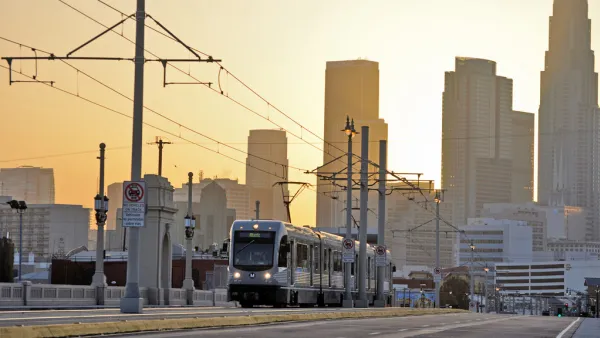
Where Los Angeles Equals San Francisco's Density
Though the Los Angeles region is very dense, significant barriers to transit-oriented planning remain. Based on this analysis, the lack of a central urban core shouldn't be one of them.
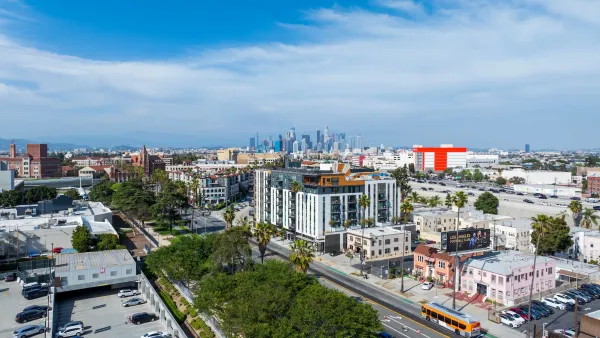
LA delays state housing mandate with 'low-rise ordinance'
The new ordinance allows the city to delay implementing SB 79, a state law requiring more density near transit.

LA Metro Opposes TOD Law, Fearing Backlash to Transit Expansion
Metro wants an exemption from California’s new housing law, despite the law’s potential to increase ridership by putting more housing near transit stations.

Amtrak, CN end decades-long dispute with eight-year agreement
The new operating agreement establishes an updated framework for the companies to work together, including processes to resolve disputes.

Judges permit Denver to divert 77,000 acre feet from the Colorado River for reservoir expansion
Overuse and climate change have caused the Colorado River’s water levels to plummet.

Nation's most wind-powered state turns to coal as data centers increase energy demand
For the first time in decades, Iowa has increased its generation of coal power.

Boston has spent millions making the Green Line more accessible — and there’s no end in sight
While the city has invested millions into expanding and adding platforms to the Green Line to make it more accessible, new train cars set to arrive next year will be too tall for disabled passengers to board without raising the current platforms.

Idaho may see an 18% drop in federal surface transit funding — the largest estimated cut in the US
Transit systems in rural communities are much more reliant on federal funding to provide their services.

How ‘post-disaster gentrification’ alters neighborhoods after natural calamities
After hurricanes, fires or other calamities, the original residents of a community are often replaced by younger, wealthier residents.

FREE Course: Walkable City 1: Why Walkability?
After describing his path towards focusing on walkability as the essence of good planning, Jeff Speck marches through his five principal reasons for making more walkable places.
Reinventing Malls: Planning Alchemy—Turning Gray Fields Into Gold
The course focuses on the opportunities and imperatives that shape reinvention of mall sites.

City of Wisconsin Rapids
Harvard University Graduate School of Design
KFH Group Inc.
The Architects Foundation
University of Cincinnati Online
The Pocatello Development Authority
The Urban Renewal Agency of the City of Pocatello