A new report by Danish firm Gehl Architects presents recommendations for transforming car-cluttered Moscow. A compact city center along with a strong desire for change are potential building blocks for a human-friendly and sustainable city.


“According to the team at Gehl, Moscow is currently undergoing a sweeping transformation in order to become more liveable and sustainable,” writes Stine Behrendtzen.
While the city has many assets, such as a compact center and generous parklands, Moscow is a long way from achieving the walkable, socially-thriving streets and squares found in many of its Western-European counterparts. The report ‘Moscow – Towards a great city for people,’ which was recently presented to Moscow mayor Sergey Sobyanin, makes a number of key recommendations for the city’s makeover, including the transformation of canal- and river-sides from parkways to parkland.
“According to Gehl Architects’ Project Manager, Solvejg Reigstad, the rivers and canals in Moscow hold great recreational potential,” notes Behrendtzen. “Unfortunately most of the waterfront near the city center is currently surrounded by heavy traffic. 93 percent of the space is allocated to cars, creating a barrier between the city and the river. The roaring traffic makes it a noisy place that discourages people from lingering and promenading.”
“By gradually improving the most vital parts of the city center – such as the waterfront, selected main-streets and parks – and using the same recipe on similarly challenged areas, a gradual improvement can occur – and spread.”
Read the full story: Towards a reinvigorated Moscow

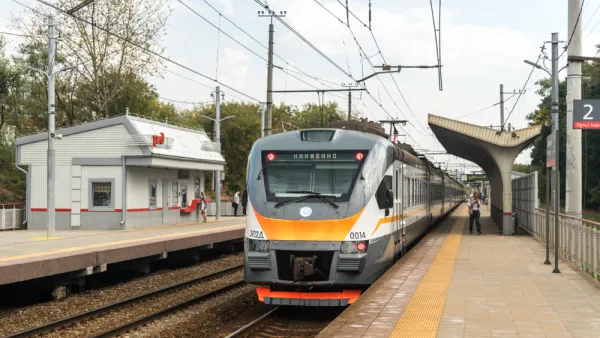
A New Suburban Rail System for Moscow
Two of a planned five new suburban rail routes, modeled on examples in Paris and Berlin, opened last week in Russia.

Muscovites Revolt Against Relocation Plan
Plans to decommission existing public housing blocks and replace them with newer high-rises has angered middle-class residents in Moscow who fear the loss of their homes and investments.
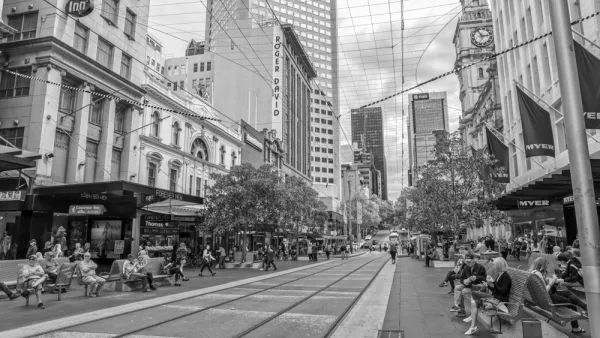
Jan Gehl on the Politics of Transforming Cities
Advancing the politics of public transportation and public spaces is not easy. Danish architect Jan Gehl and his firm Gehl Architects, however, have a track record of success with cities around the world.

Planetizen Federal Action Tracker
A weekly monitor of how Trump’s orders and actions are impacting planners and planning in America.

Amtrak, CN end decades-long dispute with eight-year agreement
The new operating agreement establishes an updated framework for the companies to work together, including processes to resolve disputes.

Judges permit Denver to divert 77,000 acre feet from the Colorado River for reservoir expansion
Overuse and climate change have caused the Colorado River’s water levels to plummet.

Northwest rail fans eager for Sept. 30 debut of Amtrak’s Airo fleet
Get ready for that new train smell and more seats. But they won’t go faster or run more frequently on the Cascades route in Washington and Oregon.

NYC DOT wants faster, more permanent street upgrades
The city is examining ways to build more concrete infrastructure without getting entangled in 'decades-long' projects.

'Something we’ve never seen before:' rising utility rates could strain city finances nationwide
Data centers, climate change and other factors have caused utility rates in the United States to increase by 38% since 2020.

FREE Course: Walkable City 1: Why Walkability?
After describing his path towards focusing on walkability as the essence of good planning, Jeff Speck marches through his five principal reasons for making more walkable places.
Reinventing Malls: Planning Alchemy—Turning Gray Fields Into Gold
The course focuses on the opportunities and imperatives that shape reinvention of mall sites.

Harvard University Graduate School of Design
KFH Group Inc.
Greater Baltimore Committee
The Architects Foundation
University of Cincinnati Online
The Pocatello Development Authority
The Urban Renewal Agency of the City of Pocatello