What does the "Happiest Place on Earth" have to teach the "Capital of the World"? How to better manage the flow of people, for one.


"For the first time since at least the era of token fares, the Metropolitan Transportation Authority is redecorating its stations, rethinking its systemwide network of turnstiles to match ridership trends amid wide-scale demographic shifts in the city," writes Matt Flegenheimer. And it's turning to Disneyland, and a detailed examination of passenger traffic flows, for lessons on where to locate station furniture.
"The authority has responded with a series of proposed tweaks culled from the Disneyland playbook of pedestrian funneling, using the location of turnstiles as cues to create a desired traffic flow," Flegenheimer explains. Such tweaks include relocating emergency gates and replacing high-entry turnstiles with low-entry ones.
"So far, fare areas in three stations have been adjusted: at Rector Street, and at Marcy Avenue and Nassau Avenue in Brooklyn. Ten more hubs have been flagged for the next round of renovations. After that, the authority plans to continue modifying fare areas at an average of 10 stations each year."
Read the full story: A Plan to Revamp Subway Entryways Has Elements of Disneyland and Feng Shui


New York Officials Back Down on Bus Lane Plans
Proposed bus improvements in the Bronx are the latest casualty of opposition.
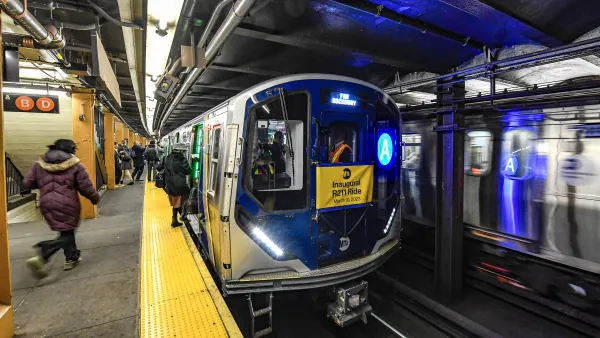
Fancy New Subway Cars Join the New York Subway System
New York has been planning on adding these new subway cars for years, finally achieving their goal in March 2023. More than a thousand of the new R211 trains will be running in New York within two years if all goes according to plan.
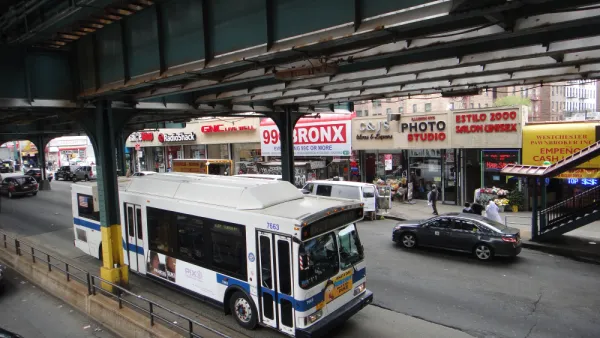
Changes to Local Service in the Bronx Benefit Bus Speeds, Ridership
Another example of how improving bus service design can benefit transit riders and transit systems emerges in New York City. More such local system redesigns are on the way soon in the Big Apple.

Planetizen Federal Action Tracker
A weekly monitor of how Trump’s orders and actions are impacting planners and planning in America.

‘Going backwards:’ Baltimore mayor, students rally against state's transit funding plan
Maryland's proposed six-year plan provides no funding for Baltimore’s BMORE bus program and reduces its road maintenance funding.

Detroit to transform waterfront with $2.2 billion investment
Developers will convert about 18 acres of unused parking lot space into civic spaces.

U.S.-Iran war may have ‘devastating’ impact on cost to warm homes
Vermont and Maine residents may see a 76% increase in the cost of warming their homes this winter.

Senate bill would ‘overhaul’ environmental permitting laws
Under the proposed act, government agencies would also not be able to suspend or rescind permits after granting them.

Exemption applications for NYC’s pied-à-terre tax see 55% success rate
The city sent nearly 40% of its initial pied-à-terre tax warnings erroneously.

FREE Course: Walkable City 1: Why Walkability?
After describing his path towards focusing on walkability as the essence of good planning, Jeff Speck marches through his five principal reasons for making more walkable places.
Reinventing Malls: Planning Alchemy—Turning Gray Fields Into Gold
The course focuses on the opportunities and imperatives that shape reinvention of mall sites.

One Hundred Miles
County of Mendocino
planning NEXT
The Architects Foundation
University of Cincinnati Online
Montrose County
Northern Illinois Transit Authority (NITA)
The Pocatello Development Authority