Well designed environments assist our economy, wellbeing and happiness, says Sarah Wigglesworth. Yet money equals power in controlling the shape of built environment. She asserts that designers must act as leaders rather than slaves to their clients.


"Design of the built environment is now a highly complex and contested arena. With no financial muscle, architects are small and insignificant players in this game. And despite its self-image of avant-garde creativity, the truth is that the production of architecture remains a game of patronage, one in which architects cultivate those with financial power in return for the favour of a job."
"So while architects usually do act as followers, concerned with our own interests by mirroring those of our clients, we really need to step out as leaders," Wigglesworth urges, "setting the agenda and arguing for why the quality of the built environment matters."
"Space must be reclaimed by all of us, and a good citizen architect should defend the rights of all of us to high-quality places, as we defend freedom of access, movement and activity," she continues. "We need to lead the resistance against the privatisation of public space, the poorly planned, the cheap and the undersized: all ways in which we are constantly told we need to design."
Read the full story: Power to the architects
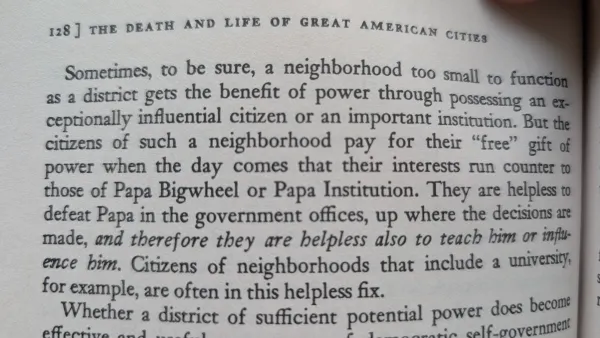
😈 The corruption track: Understanding power in a time of political sepsis
After nearly a decade working in urban planning, I've surmised that power, more than policy, lies at the heart of our deepest planning dysfunctions. Let's talk about it.
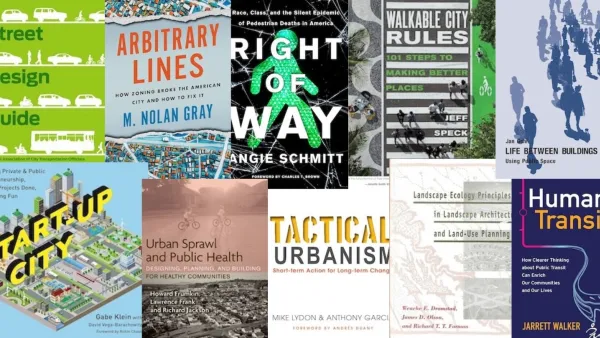
Top 10 Island Press Built Environment Books
From “Life Between Buildings” to “Human Transit,” Island Press has played a critical role in building the catalogue of literature that is foundational to urban planning.
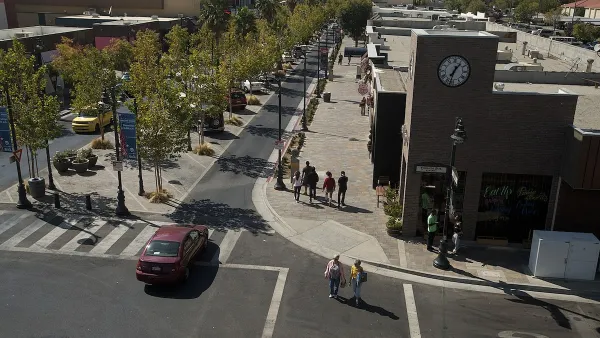
The Vast Potential of the Right-of-Way
One writer argues that the space between two building faces is the most important element of the built environment.

Planetizen Federal Action Tracker
A weekly monitor of how Trump’s orders and actions are impacting planners and planning in America.

Eastern Nebraska is running out of electricity
Data centers and electrification are straining eastern Nebraska’s grid, throttling economic development.

Study reveals best places in the U.S. for cycling, walking
New research from Streetlight Data examines bicycle and pedestrian miles per capita in the 100 largest U.S. cities by population.

Federal government nominates new FTA administrator
Mark Aesch is currently the founder and CEO of a transportation management consulting firm.

Developers reveal $10 billion stadium plan as ‘Hail Mary’ to keep Bears in Chicago
The plan would also boast a public park, high- and mid-rise buildings and a youth sports complex.

As Texas embraces carbon storage, a Black community questions the risks
Texas now issues permits for companies to store carbon dioxide underground. East Texas residents fear safety risks, and skeptics doubt the climate benefits.

FREE Course: Walkable City 1: Why Walkability?
After describing his path towards focusing on walkability as the essence of good planning, Jeff Speck marches through his five principal reasons for making more walkable places.
Reinventing Malls: Planning Alchemy—Turning Gray Fields Into Gold
The course focuses on the opportunities and imperatives that shape reinvention of mall sites.

City of Charlotte
City of Rosemead
Rutgers University, Edward J. Bloustein School of Planning and Public Policy
University of Michigan School for Environment and Sustainability (SEAS)
Hunter College, City University of New York (CUNY)
The Architects Foundation
City of Cambridge
The Pocatello Development Authority
The Urban Renewal Agency of the City of Pocatello