Carrying 2.3 billion passengers a year, London's buses are the most popular they've been in more than fifty years and 60 percent more utilized than in 2000. Is the city doing enough to plan for future demand and threats to service?


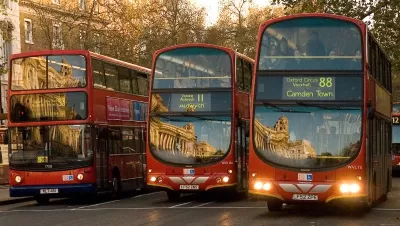
"So what next for London's bus service as demand for it increases and the number of Londoners soars?" asks Dave Hill. "It isn't very obvious. While rail transport has the glamour of Crossrail and the Mayor strives to persuade us that his 'cycling revolution' claims will, belatedly, be justified, there's no conspicuous plan for enabling the form of public transport that carries by far the greatest numbers of passengers in the capital to carry even more."
"The London Assembly's transport committee, which is investigating the bus service, notes [PDF] that while TfL predicts continuing growing demand its current business plan does not allow for the network to be increased to help meet it," adds Hill. "The best TfL thinks it can do is to make the most efficient use of the existing network. Nothing wrong with greater efficiency, but will refining what we have be enough to keep the London bus show as we have come to know it on the road?"
Read the full story: Where are London's buses going?

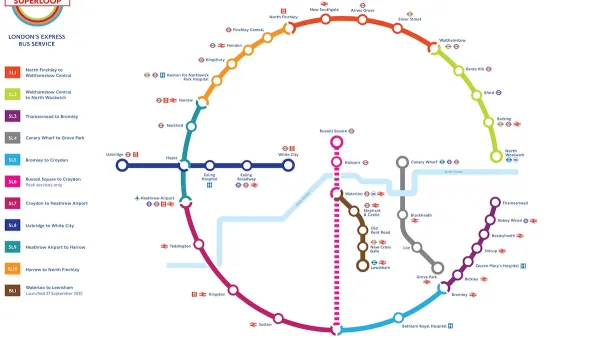
London’s Superloop BRT Ridership Grows by 20% While Other Bus Ridership Declines
The new rapid bus system launched its first suburban line, the first of 10 that will extend outside central London.

London Launches Electric Buses
The new buses can charge at either end of their route in minutes without returning to garages for charging.

This is How the British Started Cycling More
Cycling has never felt more relevant or encouraged in the UK. Since May, the London Councils have upgraded 60 km of bike lanes in the capital city, added 20,000 square metres of extra pavement space, and installed 1,500+ additional cycle parking.

Planetizen Federal Action Tracker
A weekly monitor of how Trump’s orders and actions are impacting planners and planning in America.

Colorado’s Largest Data Center Could Rise Next to Homes — Without a Public Hearing
The proposed campus would consume 11 times the power of Denver International Airport; as it has across the country, opposition mounts.

US to reduce Colorado River water deliveries to Mexico
A new Colorado Treaty amendment reduces Mexico’s Colorado River water allocation by 250,000 acre feet.

'This is going to be painful:’ Virginia stares down $1.7 billion funding gap for highway maintenance
The state may address the deficit by shifting $290 million from its construction budget to maintenance projects.

Judges permit Denver to divert 77,000 acre feet from the Colorado River for reservoir expansion
Overuse and climate change have caused the Colorado River’s water levels to plummet.
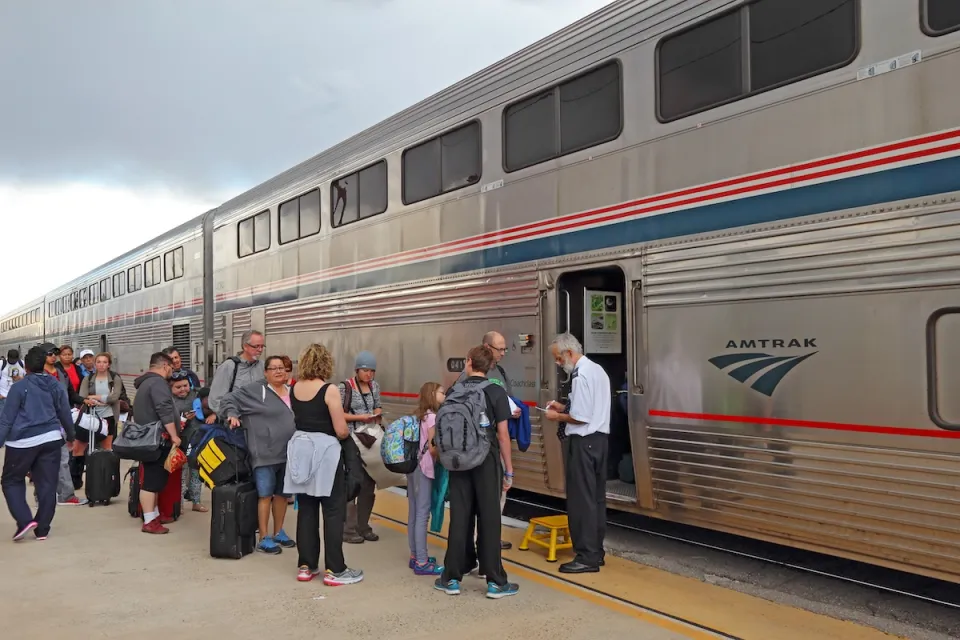
Amtrak, CN end decades-long dispute with eight-year agreement
The new operating agreement establishes an updated framework for the companies to work together, including processes to resolve disputes.

FREE Course: Walkable City 1: Why Walkability?
After describing his path towards focusing on walkability as the essence of good planning, Jeff Speck marches through his five principal reasons for making more walkable places.
Reinventing Malls: Planning Alchemy—Turning Gray Fields Into Gold
The course focuses on the opportunities and imperatives that shape reinvention of mall sites.

KFH Group Inc.
Greater Baltimore Committee
Eagle County Government
The Architects Foundation
University of Cincinnati Online
The Pocatello Development Authority
The Urban Renewal Agency of the City of Pocatello