Over the course of a year beginning in June 2008, a 'mysterious holding company' named Urban Assets bought 240 parcels across a five-mile swath of the north side of St. Louis. Since then, it's just let them decay.


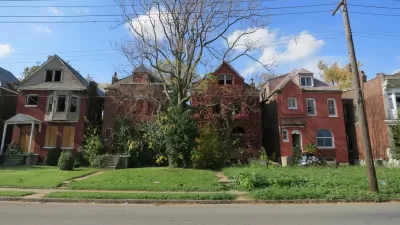
"Rotting vacant buildings and scofflaw speculators are nothing new on the city’s north side, where decades of population loss have left some blocks more than half-empty and thousands of once-grand brick homes to rot," observes Tim Logan. "But city officials and neighborhood activists say they’ve never seen anything like Urban Assets, which bought up property in a flurry in 2008 and 2009, made no improvements and left tax bills unpaid and court summonses unanswered. Now this summer, their properties have started to hit the auction block for the unpaid taxes, but buyers are few, and most appear bound for the city’s already-swollen bank of property no one wants."
"The whole situation highlights the struggle the city faces in maintaining its valuable, but too-often-vacant, century-old red-brick building stock, and of pushing owners to take care of their property without pushing so hard they walk away."
Read the full story: Mysterious firm bought more than 240 city properties, then did nothing

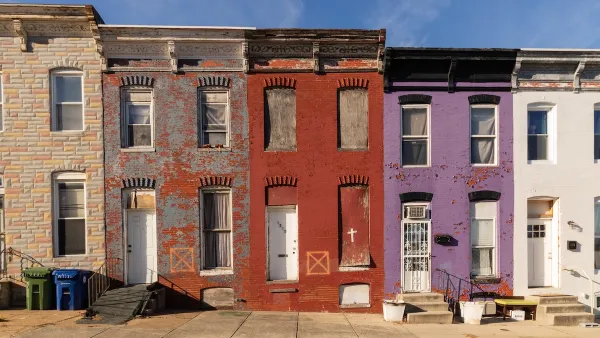
Baltimore Program Could Repurpose Thousands of Vacant Housing Units
The city and state are investing $3 billion in rescuing vacant residential properties to promote homeownership and reduce blight.
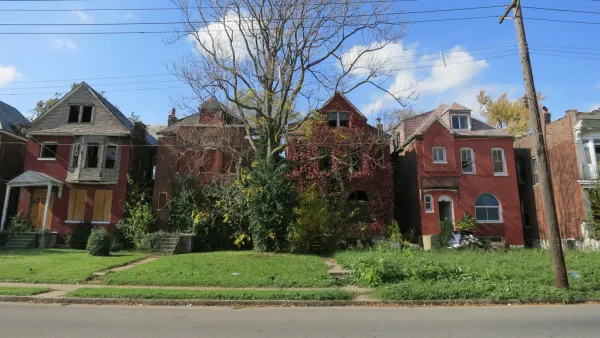
The Dark Side of the Rust Belt Revival
Cities in flyover country are facing new redevelopment challenges as companies relocate from costly coastal cities. In St. Louis, downtown revitalization has also brought plans to tackle blight, and the consequences for residents could be immense.
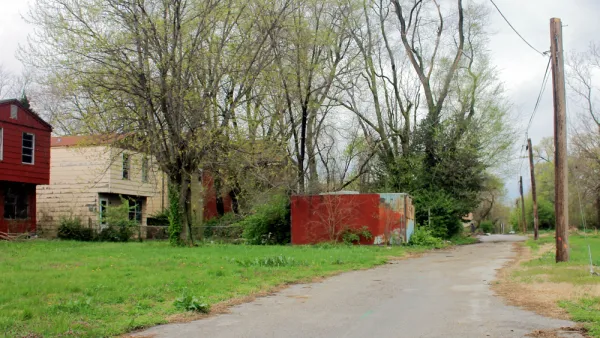
St. Louis Groups Come Together to Form Neighborhood Vacancy Coalition
Legal and community groups in St. Louis align to curb ill-effects of the city's many vacant properties.

Planetizen Federal Action Tracker
A weekly monitor of how Trump’s orders and actions are impacting planners and planning in America.

Amtrak, CN end decades-long dispute with eight-year agreement
The new operating agreement establishes an updated framework for the companies to work together, including processes to resolve disputes.

Judges permit Denver to divert 77,000 acre feet from the Colorado River for reservoir expansion
Overuse and climate change have caused the Colorado River’s water levels to plummet.

Atlanta City Council unanimously backs $3.5 billion Beltline light rail project
The resolution was drafted after Atlanta Mayor Andre Dickens pulled support for the Atlanta Streetcar extension last year.

SEPTA to bring nearby frequent transit to over 1 million new riders as part of decade-long plan
The agency's Accelerate plan will also bring frequent transit to twice the amount of jobs that are currently located near it.

NYC plants over 18,000 trees, the most new foliage in a decade
Many of the trees were planted in communities vulnerable to extreme heat.

FREE Course: Walkable City 1: Why Walkability?
After describing his path towards focusing on walkability as the essence of good planning, Jeff Speck marches through his five principal reasons for making more walkable places.
Reinventing Malls: Planning Alchemy—Turning Gray Fields Into Gold
The course focuses on the opportunities and imperatives that shape reinvention of mall sites.

City of Thousand Oaks
City of Wisconsin Rapids
Harvard University Graduate School of Design
The Architects Foundation
University of Cincinnati Online
The Pocatello Development Authority
The Urban Renewal Agency of the City of Pocatello