Somerville, a 4.2-square-mile city outside of Boston, has successfully attracted young, educated people, but many worry what an influx of 'hipsters' will do to the small city.


"[Daniel] Hadley, the director of SomerStat [the mayor's data analysis team], says the changes in Somerville actually started in the town next door. 'To me, the story really starts in back when rent control was abolished in Cambridge, in 1995,' he said. 'That's when you suddenly see a lot of people fleeing Cambridge and coming over the border,'" explains Beth Teitell.
"Dan Zevin, an author who moved to Somerville in 1984, a couple of years after the Davis Square Red Line station opened, recalled what the city was like before the immigration from Cambridge started. 'All that was there was Barnaby’s Tap, this old-man alcoholic bar with guys who would meet for their breakfast beer,' he said."
"Zevin spent 15 years in Somerville. 'Little by little, Barnaby’s became Redbones, the barbecue place, and then a coffee shop opened, and then the Somerville Theatre got revitalized, and suddenly this rundown theater became this cool indie theater.'"
Read the full story: Somerville worries it's growing too hip
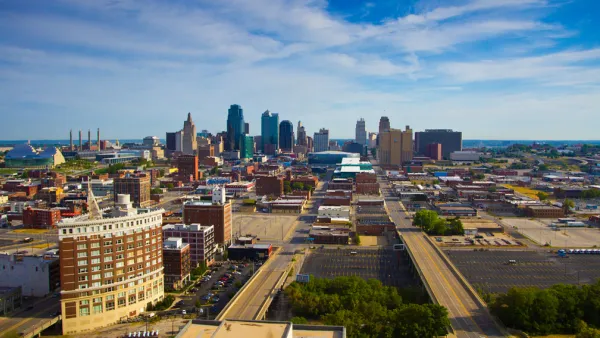
Kansas City Star Editorial Board Laments 'Denverization'
The Kansas City Star Editorial Board has concerns about gentrification and affordable housing.
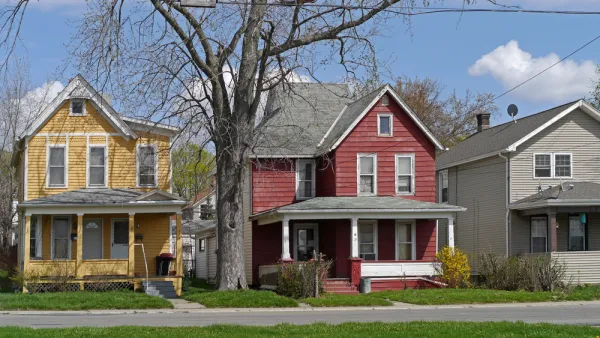
Inner Suburbs Face Identity Crisis
Places like Columbia Heights, an older suburb north of Minneapolis, lie at the focal point of conflict over development and gentrification. Can these places support a 21st-century urbanism?
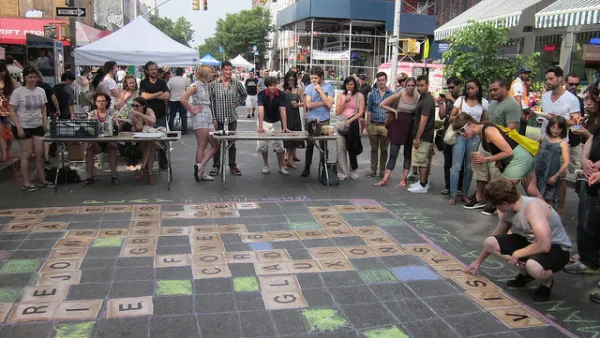
Friday Funny: Hipster Havens in All 50 States
Everyone has heard about Silver Lake, the Mission, and, of course, Brooklyn. But what about East Village, NuLu, Fondren, and Haymarket? Hipsters are everywhere! These are the top hipster neighborhoods—the Brooklyns, if you will—in all 50 states

Planetizen Federal Action Tracker
A weekly monitor of how Trump’s orders and actions are impacting planners and planning in America.

California plans to bury El Niño’s downpour
If the state plays its cards right, it may be able to store a billion acre-feet of El Niño’s water in aquifers.

Desperate measures: Advocates weigh draining Lake Powell to fill Colorado River
Draining the reservoir could reduce evaporation losses by a couple hundred thousand acre-feet.

Mamdani’s pied-à-terre tax survives legal challenge
A panel of judges found that the plaintiffs failed to demonstrate injury as a result of New York City's implementation of the tax.

Eastern Nebraska is running out of electricity
Data centers and electrification are straining eastern Nebraska’s grid, throttling economic development.

Seattle passes record-breaking transit services expansion
Proposition 1 will double the city’s transit tax to add 95,000 more bus trips and preserve 180,000 bus trips annually.

FREE Course: Walkable City 1: Why Walkability?
After describing his path towards focusing on walkability as the essence of good planning, Jeff Speck marches through his five principal reasons for making more walkable places.
Reinventing Malls: Planning Alchemy—Turning Gray Fields Into Gold
The course focuses on the opportunities and imperatives that shape reinvention of mall sites.

City of Rosemead
Rutgers University, Edward J. Bloustein School of Planning and Public Policy
One Hundred Miles
University of Michigan School for Environment and Sustainability (SEAS)
Hunter College, City University of New York (CUNY)
The Architects Foundation
City of Cambridge
Montrose County
The Pocatello Development Authority