In dizzying towers of dozens of monotonous, yet colorful, stories, Hong Kong residents make their homes in apartments that average 400 square feet. For photographer Michael Wolf the stark high-rise landscape provides powerful subject matter.


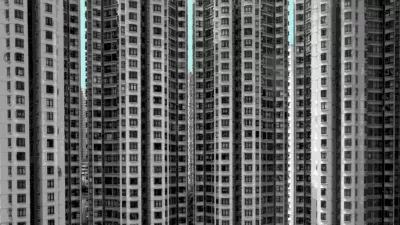
"When you first see Michael Wolf’s photography, it takes a second to realize what you’re looking at," writes Liz Stinson. "The multi-colored patterns look almost like an unidentifiable piece of technology, as though a chunk of plastic was plucked out of a motherboard and magnified."
"It’s only when you begin to notice the windows and balconies and even the occasional person punctuating his frame that you realize you’re staring at someone’s home. More specifically, you’re looking at Hong Kong’s colorful high-rises, the most prevalent form of housing in one of the most vertical cities on the planet. In his Architecture of Density project (now a book), Wolf transforms his adoptive home city’s ubiquitous architecture into stunning works of art."
Read the full story: Dizzying Pics of Hong Kong’s Massive High-Rise Neighborhoods
Better Planning Needed to Address Effects of Urban Heat Island in Hong Kong
A recent study reveals the detrimental impact of hot nights compared to hot days, with the region experiencing hotter summers and more hot days due to climate change and the heat island effect.
Train-sploitation
An interview with a photographer about his unflattering pictures of train riders in Tokyo's crowded subway.
Friday Eye Candy: A Photo Critique of Asia's Megacities
Michael Wolf is a 60-year-old German photojournalist living in Hong Kong. In a recent interview, he describes his various projects in capturing the lives of the millions who call Asian megacities home.

Planetizen Federal Action Tracker
A weekly monitor of how Trump’s orders and actions are impacting planners and planning in America.

California plans to bury El Niño’s downpour
If the state plays its cards right, it may be able to store a billion acre-feet of El Niño’s water in aquifers.

Desperate measures: Advocates weigh draining Lake Powell to fill Colorado River
Draining the reservoir could reduce evaporation losses by a couple hundred thousand acre-feet.

US buildings threatened, destroyed by fires set to triple by 2060
Researchers found a high fire risk for socioeconomically vulnerable neighborhoods in the American West.

LA residents may be allowed to paint their own crosswalks
Councilwoman Katy Yaroslavsky put out a motion instructing the Los Angeles Department of Public Transportation to study the feasibility of allowing volunteers to paint crosswalks.

Dallas moves to overhaul its zoning code
The city's zoning reform will allow more multi-family and mixed-use developments.

FREE Course: Walkable City 1: Why Walkability?
After describing his path towards focusing on walkability as the essence of good planning, Jeff Speck marches through his five principal reasons for making more walkable places.
Reinventing Malls: Planning Alchemy—Turning Gray Fields Into Gold
The course focuses on the opportunities and imperatives that shape reinvention of mall sites.

City of Rosemead
Rutgers University, Edward J. Bloustein School of Planning and Public Policy
One Hundred Miles
Hunter College, City University of New York (CUNY)
The Architects Foundation
University of Cincinnati Online
City of Cambridge
Montrose County
The Pocatello Development Authority