Michael Wolf is a 60-year-old German photojournalist living in Hong Kong. In a recent interview, he describes his various projects in capturing the lives of the millions who call Asian megacities home.


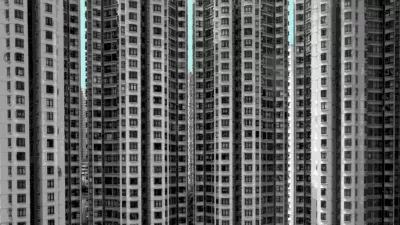
Describing Michael Wolf's photos as "both a fascinating glimpse of how humanity lives now as well as a sort of eternal ode to innovation," Julian Morgans interviews Wolf about the process and politics of his photos of megacities in Asia.
Wolf has produced images that capture the intimidating and frightening nature of megacities, as well as their almost shocking beauty. Among his projects are a photo series called The Architecture of Density, which creates a tapestry out of the overwhelming symmetry and repetition of Hong Kong residential high rises. Another project, 100x100, photographed 100 soon-to-be-demolished apartments in Hong Kong—each measuring ten feet by ten feet.
When asked whether he believes 25 million people should be living together in such tight urban quarters, Wolf replies: "if you talk to people superficially, they always say their apartment complexes are so convenient. You take the elevator and you have a shopping mall, a subway station, and a school. But if you get to know them and dig deeper, every single person would like to live on a smaller scale. Maybe in a smaller house in the countryside."
Read the full story: Photographic the Beauty and Inhumanity of Asia's Cramped Megacities
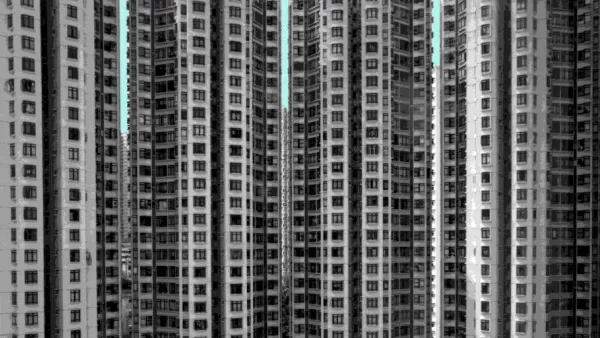
The Chilling Beauty of Hong Kong's High-Rise Residences
In dizzying towers of dozens of monotonous, yet colorful, stories, Hong Kong residents make their homes in apartments that average 400 square feet. For photographer Michael Wolf the stark high-rise landscape provides powerful subject matter.

Hong Kong Cab Hailing App Folds — and Uber Takes Over
HKTaxi launched a year before Uber came to town. Now, it’s shutting down. Lawmakers worry a monopoly looms.
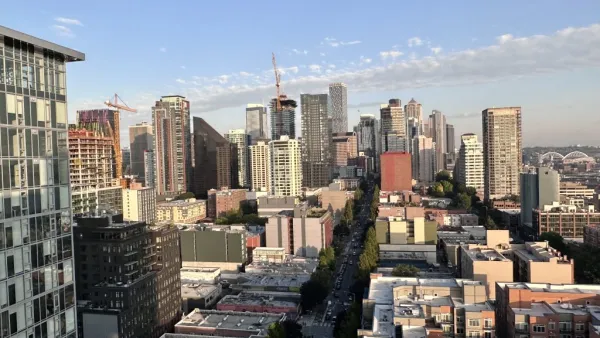
Capturing the Post-Pandemic City: The Power of 'Visual Prosecution'
Have you ever tried immersive photography to show how urban landscapes, with their ever-evolving stories, are changing post-pandemic? A three-time author of books about understanding the innate identities of urban places updates his perspective.

Planetizen Federal Action Tracker
A weekly monitor of how Trump’s orders and actions are impacting planners and planning in America.

California plans to bury El Niño’s downpour
If the state plays its cards right, it may be able to store a billion acre-feet of El Niño’s water in aquifers.

Desperate measures: Advocates weigh draining Lake Powell to fill Colorado River
Draining the reservoir could reduce evaporation losses by a couple hundred thousand acre-feet.

Los Angeles just elected an urban planner as its mayor
Transportation analysts are optimistic that Raman will be more aggressive in addressing transit issues than Bass.

Mamdani’s pied-à-terre tax survives legal challenge
A panel of judges found that the plaintiffs failed to demonstrate injury as a result of New York City's implementation of the tax.

Eastern Nebraska is running out of electricity
Data centers and electrification are straining eastern Nebraska’s grid, throttling economic development.

FREE Course: Walkable City 1: Why Walkability?
After describing his path towards focusing on walkability as the essence of good planning, Jeff Speck marches through his five principal reasons for making more walkable places.
Reinventing Malls: Planning Alchemy—Turning Gray Fields Into Gold
The course focuses on the opportunities and imperatives that shape reinvention of mall sites.

City of Rosemead
Rutgers University, Edward J. Bloustein School of Planning and Public Policy
One Hundred Miles
University of Michigan School for Environment and Sustainability (SEAS)
Hunter College, City University of New York (CUNY)
The Architects Foundation
City of Cambridge
Montrose County
The Pocatello Development Authority