Just south of Chicago, the city of Gary is suffering from post-industrial blight, decaying infrastructure, and declining finances - an all too common trajectory in the Rust Belt. A program selling vacant homes for $1 hopes to stabilize neighborhoods.


"Officials say that a third of the houses in Gary are unoccupied, hollowed dwellings spread across a city that, like other former industrial powerhouses, has lost more than half its population in the last half-century," writes Steven Yaccino. "While some of those homes will be demolished, Gary is exploring a more affordable way to lift its haggard tax base and reduce the excess of empty structures: sell them for $1."
"The program, announced in June, will offer Gary residents a chance to pay less for a house than for their morning coffee, as long as they meet a minimum income threshold (starting at $35,250 for one person) and demonstrate the financial ability to bring the neglected property up to code within six months. Those selected would have to live in the home for five years before receiving full ownership."
Read the full story: A Chance to Own a Home for $1 in a City on the Ropes

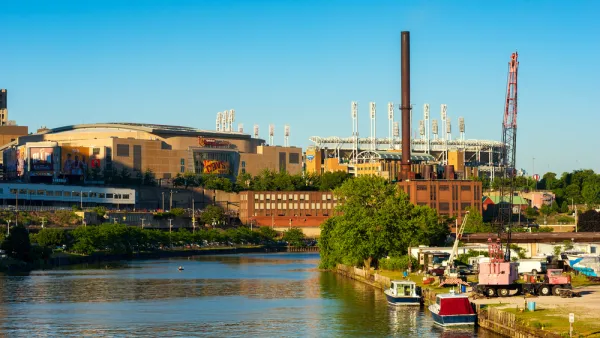
How Legacy Cities Can Support Equitable Development
A new report outlines seven strategies for balancing economic development and equity specifically aimed at smaller, post-industrial cities.

Rust Belt Revival: Pittsburgh's New Economy
When Uber announced this month that it would test-run its fleet of self-driving cars in the Steel City, many probably asked, "why Pittsburgh?" Unlike other post-industrial places, it's been incubating a 21st-century economy.
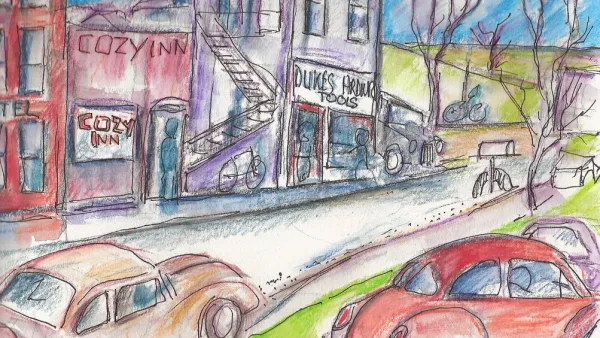
Artists Breathe New Life Into Pennsylvania Town
Long suffering Rust Belt woes and lacking the name recognition of a Pittsburgh or Detroit, York opened its doors to another overlooked group: artists. The results so far are impressive.

Planetizen Federal Action Tracker
A weekly monitor of how Trump’s orders and actions are impacting planners and planning in America.

California plans to bury El Niño’s downpour
If the state plays its cards right, it may be able to store a billion acre-feet of El Niño’s water in aquifers.

Chicago breaks ground on $3 billion megadevelopment
The new neighborhood, titled Foundry Park, will one day host 3,700 residences.

California High-Speed Rail Authority CEO resigns after $600,000 scandal
Under Ian Choudri, the authority used taxpayer dollars to fund first class flights and trips to nightclubs.

Want to study the Missouri River? Soon, you may need unanimous approval from 10 states
Legislation would require 10 governors’ permission to study or build projects moving water outside the basin.

Desperate measures: Advocates weigh draining Lake Powell to fill Colorado River
Draining the reservoir could reduce evaporation losses by a couple hundred thousand acre-feet.

FREE Course: Walkable City 1: Why Walkability?
After describing his path towards focusing on walkability as the essence of good planning, Jeff Speck marches through his five principal reasons for making more walkable places.
Reinventing Malls: Planning Alchemy—Turning Gray Fields Into Gold
The course focuses on the opportunities and imperatives that shape reinvention of mall sites.

City of Rosemead
Rutgers University, Edward J. Bloustein School of Planning and Public Policy
One Hundred Miles
Hunter College, City University of New York (CUNY)
The Architects Foundation
University of Cincinnati Online
City of Cambridge
Montrose County
The Pocatello Development Authority