The deaths of hundreds of pelicans, dolphins and manatees across Florida's Indian River estuary - 'one of the richest marine ecosystems in the continental United States' - have scientists concerned, and wondering if rapid urbanization is to blame.


"The cause [for the hundreds of pelican, dolphin and manatee deaths] continues to evade easy explanation," writes Michael Wines. "But a central question is whether the deaths are symptoms of something more ominous: the collapse of the natural balance that sustains the 156-mile estuary’s northern reaches."
“'We may have reached a tipping point,' said Troy Rice, who directs the Indian River Lagoon National Estuary Program, a federal, state and local government partnership at the St. Johns River Water Management District."
"Mr. Rice’s fear, widely shared, is that an ecosystem that supports more than 4,300 species of wildlife — and commercial fisheries, tourism and other businesses generating nearly $4 billion annually — is buckling under the strain of decades of pollution generated by coastal Florida’s explosive development."
Read the full story: Deaths of Manatees, Dolphins and Pelicans Point to Estuary at Risk

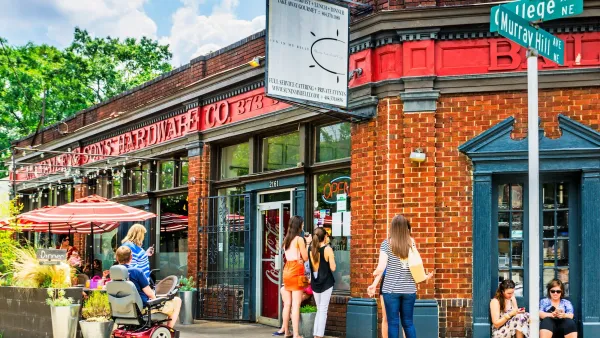
The Superstar Metro Argument... And Why It Fails
One argument against solving the housing shortage in large, expensive cities is that growth in those cities will drain people and wealth from declining areas. Data does not agree.
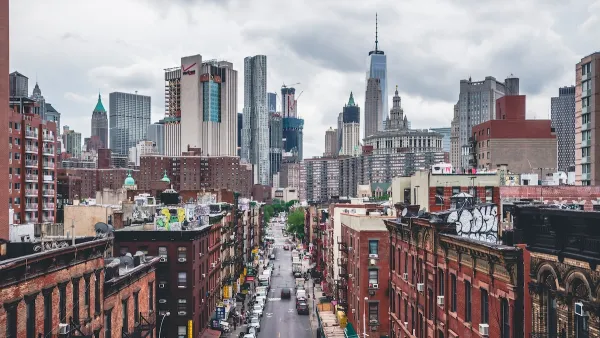
Is the Urban Form Sustainable?
One author offers a framework for resilience that rethinks common assumptions about the inevitability of cities as we know them.
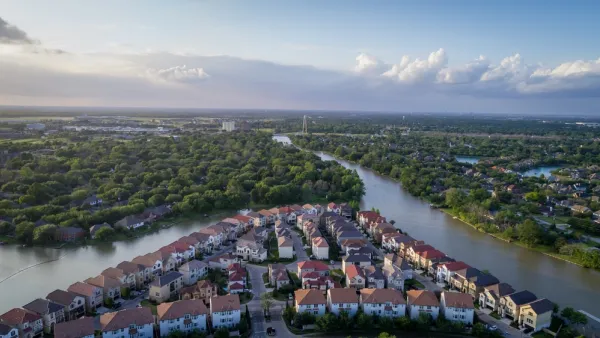
A Rapidly Urbanizing Texas County Gets in Touch With its Agricultural Roots
Developers in Fort Bend County are drawing inspiration from ‘agrihoods’ to build car-light communities in one of the nation’s fastest-growing areas.

Planetizen Federal Action Tracker
A weekly monitor of how Trump’s orders and actions are impacting planners and planning in America.

Chicago breaks ground on $3 billion megadevelopment
The new neighborhood, titled Foundry Park, will one day host 3,700 residences.

This MA town is drowning in its own sewage — and residents like it that way
Susan Murcott, a waste water expert, said if Carlisle didn't address their leaking sewage, the problem could turn “deadly.”

With no reauthorization bill in sight, Texas slashes $6.6 billion from transportation budget
An official said the program may receive additional funding when a federal reauthorization bill passes.

Chicago’s new transit authority has ‘unprecedented’ land development power
The Northern Illinois Transit Authority is allowed to buy and develop land for reasons unrelated to transit, a power that is fairly unique among transit authorities.

Iowa taxpayers are paying thousands to clean manure out of their water
While the Clean Water Act makes states responsible for regulating factory farms that discharge pollutants, Iowa has turned a blind eye to the polluting farms.

FREE Course: Walkable City 1: Why Walkability?
After describing his path towards focusing on walkability as the essence of good planning, Jeff Speck marches through his five principal reasons for making more walkable places.
Reinventing Malls: Planning Alchemy—Turning Gray Fields Into Gold
The course focuses on the opportunities and imperatives that shape reinvention of mall sites.

City of Rosemead
Rutgers University, Edward J. Bloustein School of Planning and Public Policy
One Hundred Miles
The Architects Foundation
University of Cincinnati Online
Montrose County
The Pocatello Development Authority
The Urban Renewal Agency of the City of Pocatello