A 'toxic tour' of Los Angeles raises awareness of the harmful effects the city's industrial infrastructure brings to adjacent, often minority, communities. Stops include a battery recycling plant, rendering plant, oil refinery, and scrap yards.


"You won't find any homes of the stars on this tour bus as it shuttles rubber-necking sightseers through Los Angeles," writes Tony Barboza. "You may not even see the Hollywood sign through the haze from the smokestacks, rail yards and refineries along this 'toxic tour' through neighborhoods southeast of Los Angeles."
"The half-day excursions by the advocacy group Communities for a Better Environment were begun in 1994 as a way to show a handful of government officials the consequences of their decisions in low-income and predominantly Latino communities."
"Increased demand for the tour from universities, school groups and families now has the Huntington Park-based organization hosting hundreds of visitors on dozens of bus trips a year."
Read the full story: Trash talk and the real dirt on a 'toxic tour' of Los Angeles

Bioremediation for Environmental Justice
Bioremediation uses plants, fungi, and microbes to clean up polluted land in place, offering a nature-based option for restoring contaminated sites in overburdened communities.
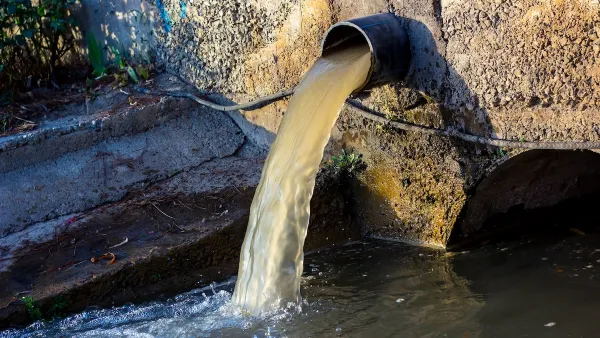
Alabama: Trump Terminates Settlements for Black Communities Harmed By Raw Sewage
Trump deemed the landmark civil rights agreement “illegal DEI and environmental justice policy.”
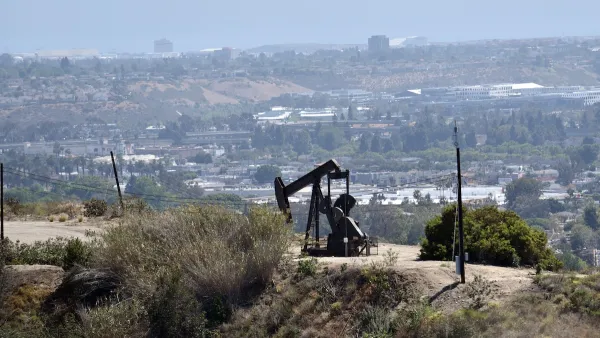
Tracking the Invisible: Methane Leaks From LA’s Neighborhood Oil Sites
Environmental advocates are using infrared technology to monitor and document methane leaks from neighborhood oil sites, filling regulatory gaps and pushing for stronger protections to safeguard community health and the climate.

Planetizen Federal Action Tracker
A weekly monitor of how Trump’s orders and actions are impacting planners and planning in America.

California plans to bury El Niño’s downpour
If the state plays its cards right, it may be able to store a billion acre-feet of El Niño’s water in aquifers.

Desperate measures: Advocates weigh draining Lake Powell to fill Colorado River
Draining the reservoir could reduce evaporation losses by a couple hundred thousand acre-feet.

Los Angeles just elected an urban planner as its mayor
Transportation analysts are optimistic that Raman will be more aggressive in addressing transit issues than Bass.

Mamdani’s pied-à-terre tax survives legal challenge
A panel of judges found that the plaintiffs failed to demonstrate injury as a result of New York City's implementation of the tax.

Eastern Nebraska is running out of electricity
Data centers and electrification are straining eastern Nebraska’s grid, throttling economic development.

FREE Course: Walkable City 1: Why Walkability?
After describing his path towards focusing on walkability as the essence of good planning, Jeff Speck marches through his five principal reasons for making more walkable places.
Reinventing Malls: Planning Alchemy—Turning Gray Fields Into Gold
The course focuses on the opportunities and imperatives that shape reinvention of mall sites.

City of Rosemead
Rutgers University, Edward J. Bloustein School of Planning and Public Policy
One Hundred Miles
University of Michigan School for Environment and Sustainability (SEAS)
Hunter College, City University of New York (CUNY)
The Architects Foundation
City of Cambridge
Montrose County
The Pocatello Development Authority