A report published this week by the U.S. Department of Housing and Urban Development concludes that although it is less blatant than in the past, discrimination against minorities persists in the selling, buying and renting of homes.


“Fewer minorities today may be getting the door slammed in their faces, but we continue to see evidence of housing discrimination that can limit a family’s housing, economic and educational opportunities,” said Shaun Donovan, secretary of Housing and Urban Development, of the report's findings.
According to Katerina Sokou, "The nationwide HUD survey [PDF] of 28 metropolitan areas showed that real estate agents and rental housing providers recommend and show fewer available homes and apartments to minority families, not only restricting their options but also increasing their costs to rent or buy."
"As housing bias becomes more subtle, 'the forms of discrimination documented by this study are very difficult for victims to detect,' said Margery Turner of the Urban Institute."
Read the full story: Housing discrimination persists in U.S. in more subtle ways, HUD report says
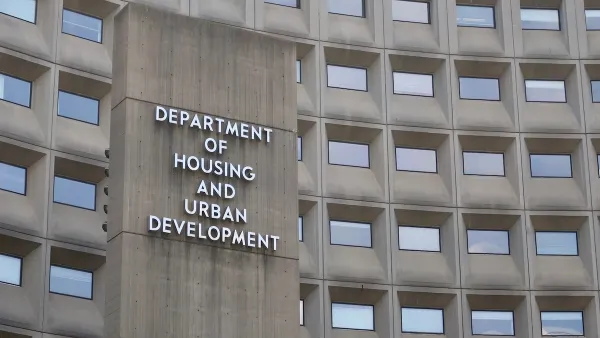
HUD Whistleblowers: Agency is ‘Systematically Undermining’ Fair Housing Laws
HUD employees say the agency has decimated the Office of Fair Housing, reducing staff by 70 percent, and forced a gag order that prevents them from effectively enforcing fair housing and civil rights laws.
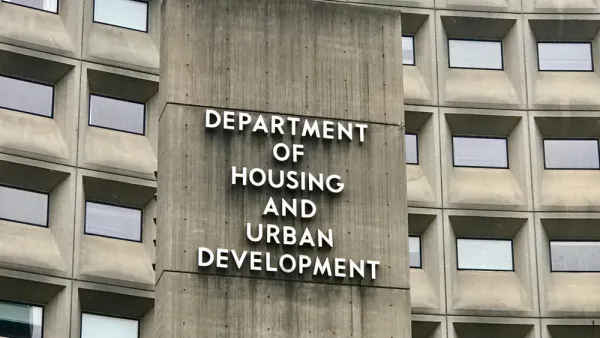
HUD Plans to Revive Fair Housing Rule
The department is proposing an updated version of the Affirmatively Furthering Fair Housing rule, which requires local governments to take action to end residential segregation.

How to Fix Racist Housing Policies: Sue the Suburbs
Strengthening U.S. Department of Housing and Urban Development's civil rights enforcement could send a powerful signal to communities resistant to changing discriminatory housing rules.

Desperate measures: Advocates weigh draining Lake Powell to fill Colorado River
Draining the reservoir could reduce evaporation losses by a couple hundred thousand acre-feet.

Eastern Nebraska is running out of electricity
Data centers and electrification are straining eastern Nebraska’s grid, throttling economic development.

Move over, LA: St. Louis gears up for Olympics, invests millions in downtown redevelopment
The Missouri city will host the 2028 Olympic soccer group stage and knockout matches.

MTA sends Dem leaders a wish list to mend Trump’s damages
Requests include exempting new train and bus components from tariffs and increasing transit security funding.

Mass. votes against statewide minimum lot size for single-family homes
Over 2 million residents voted on Question 7; it was decided by just over 30,000 votes.

Maryland’s $15 billion bridge project gains key approval
The Maryland Transit Authority said the project will create over 60,000 jobs and add $23 billion to the local economy.

FREE Course: Walkable City 1: Why Walkability?
After describing his path towards focusing on walkability as the essence of good planning, Jeff Speck marches through his five principal reasons for making more walkable places.
Reinventing Malls: Planning Alchemy—Turning Gray Fields Into Gold
The course focuses on the opportunities and imperatives that shape reinvention of mall sites.

City of Rosemead
Rutgers University, Edward J. Bloustein School of Planning and Public Policy
One Hundred Miles
University of Michigan School for Environment and Sustainability (SEAS)
Hunter College, City University of New York (CUNY)
The Architects Foundation
City of Cambridge
The Pocatello Development Authority
The Urban Renewal Agency of the City of Pocatello