While much of the current discussion in planning centers on decreasing road capacity to promote greater pedestrian mobility, Eric Jaffe wonders if we are thinking enough about the critical and complex task of moving freight.


Though it’s long been essential to their prosperity, the efficient movement of cargo poses a significant challenge to many major cities. This challenge has only intensified with globalization and urban densification. In response, cities such as Paris and London are pioneering approaches to alleviate traffic, congestion and the environmental impacts of freight traffic through municipal planning and regulation.
In the United States, however, where decisions concerning interstate trade come under the jurisdiction of federal law, cities may be better served pursuing partnership and incentive programs, says Genevieve Giuliano, scholar at the University of Southern California.
"As states we can't impose regulations because of protection, so the next best thing is to have these negotiations to see what we can accomplish by providing incentives," says Giuliano. "The models we see in Europe, they're always initiated by government, but essentially they're partnerships: 'We have a problem, let's figure out how we're going to solve it.' "
Read the full story: The Forgotten Urban Transportation Problem We Should Be Trying to Fix

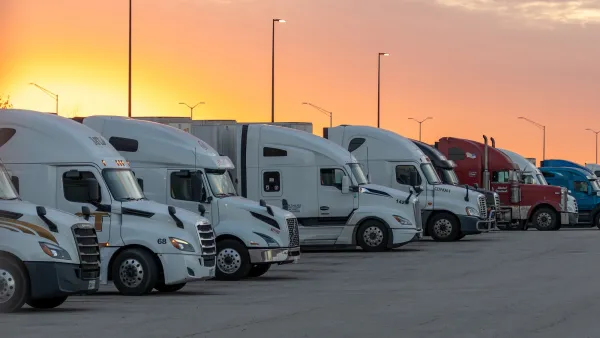
New Federal Rules Require Comprehensive State Plans for Truck Parking
States will now have to inventory and account for truck parking facilities on freight corridors.
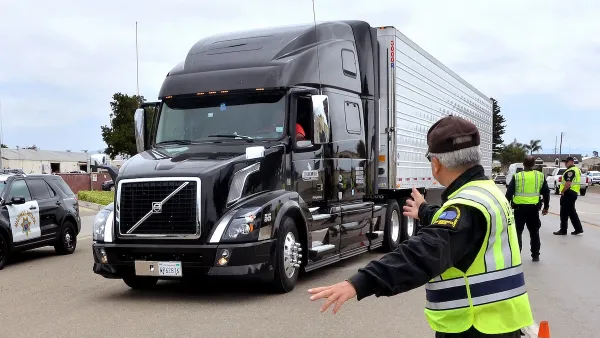
USDOT Threatens to Bar California From Issuing Trucking Licenses
In the wake of three fatal crashes involving immigrant truck drivers, Transportation Secretary Duffy says the department could pull $160 million in funding and bar the state from issuing new licenses.

Trump Approves Futuristic Automated Texas-Mexico Cargo Corridor
The project could remove tens of thousands of commercial trucks from roadways.

Planetizen Federal Action Tracker
A weekly monitor of how Trump’s orders and actions are impacting planners and planning in America.

‘Going backwards:’ Baltimore mayor, students rally against state's transit funding plan
Maryland's proposed six-year plan provides no funding for Baltimore’s BMORE bus program and reduces its road maintenance funding.

Mamdani sent nearly 6,000 pied-à-terre tax warnings to homes that didn’t qualify
A judge has ordered the administration to cancel thousands of pied-à-terre tax notices after it sent 35% of them erroneously.

Newsom vetoes high-speed rail supervision bill after agency receives condemnatory audit
The audit found the CHSRA approved almost $600,000 in unallowable travel expenses.

Nation sees first electric plane-boat hybrid take off in public demo
The Viceroy Seaglider can fly at speeds of 180mph for up to 180 miles.

One of nation’s poorest counties to receive $6 billion data center
The developers estimate the project will create 200 permanent jobs and 1,000 temporary construction jobs.

FREE Course: Walkable City 1: Why Walkability?
After describing his path towards focusing on walkability as the essence of good planning, Jeff Speck marches through his five principal reasons for making more walkable places.
Reinventing Malls: Planning Alchemy—Turning Gray Fields Into Gold
The course focuses on the opportunities and imperatives that shape reinvention of mall sites.

City of Thousand Oaks
City of Wisconsin Rapids
Harvard University Graduate School of Design
The Architects Foundation
University of Cincinnati Online
Northern Illinois Transit Authority (NITA)
The Pocatello Development Authority
The Urban Renewal Agency of the City of Pocatello