A recent report from the Centers for Disease Control analyzing America's last decade of traffic-related pedestrian deaths reveals the inequitable impacts of the country's "public health epidemic."



In addition to the sobering finding that 47,392 pedestrians were killed on American roadways between 2000-2010, the CDC found that in 2010, "the per capita pedestrian fatality rate in America was more than double the rate in the UK and Germany."
Perhaps the most interesting insight from the report, however, is on "the social dimensions of this public health epidemic."
"Not everyone is affected equally by dangerous walking conditions in America," says Angie Schmitt, in summarizing the report's findings. "Elderly and minority populations are at the greatest risk, researchers found, while men of all demographics were two-and-a-half times more likely than women to be killed by a car while walking."
Read the full story: The Inequitable Toll of Pedestrian Deaths

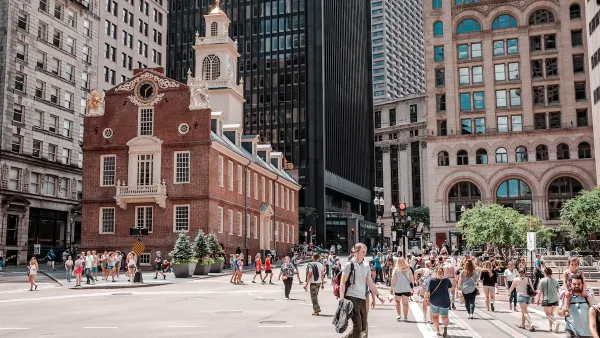
Report: Top US Cities for Pedestrian Safety
The East Coast takes the top three spots, while the South and Southwest dominate the bottom of the list.
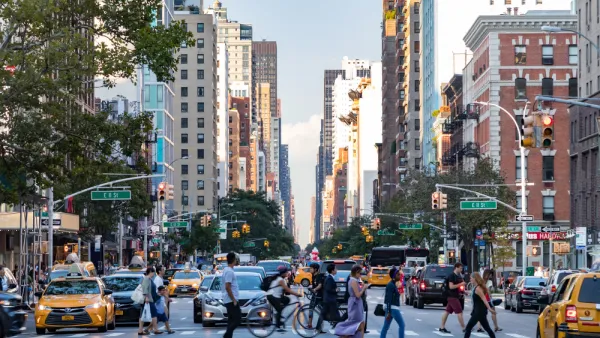
Study: Streets With High Foot Traffic Also See High Driving Speeds
A detailed study of where people walk reveals that driving speeds on many of the streets most used by pedestrians in U.S. cities are higher than recommended speeds, putting pedestrians at higher risk for serious injuries and death.
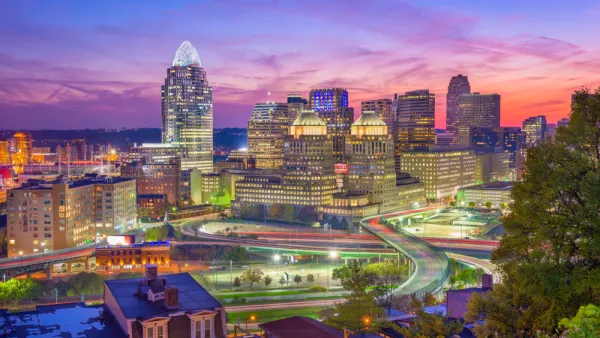
Cincinnati Gets Serious About Pedestrian Safety
A new in-house team dedicated to pedestrian safety at Cincinnati City Hall and a new complete streets ordinance are some of the changes underway in Cincinnati.

Planetizen Federal Action Tracker
A weekly monitor of how Trump’s orders and actions are impacting planners and planning in America.

Amtrak, CN end decades-long dispute with eight-year agreement
The new operating agreement establishes an updated framework for the companies to work together, including processes to resolve disputes.

Judges permit Denver to divert 77,000 acre feet from the Colorado River for reservoir expansion
Overuse and climate change have caused the Colorado River’s water levels to plummet.

Philadelphia to invest $2 billion into upgrading city airports as PHL places last in customer satisfaction
Modernizations to Philadelphia's airports will include baggage system upgrades and a new automated parking garage guidance system.

The LA housing policies making developers turn away from the city
Despite LA’s housing shortage, developers say the city’s "mansion-tax" and pandemic-era policies make it an unappealing place to build housing.

New density bill would require 7 California cities to establish regional transit hubs
The bill would also require major cities in California to permit high-rise residential buildings.

FREE Course: Walkable City 1: Why Walkability?
After describing his path towards focusing on walkability as the essence of good planning, Jeff Speck marches through his five principal reasons for making more walkable places.
Reinventing Malls: Planning Alchemy—Turning Gray Fields Into Gold
The course focuses on the opportunities and imperatives that shape reinvention of mall sites.

City of Wisconsin Rapids
Harvard University Graduate School of Design
KFH Group Inc.
The Architects Foundation
University of Cincinnati Online
The Pocatello Development Authority
The Urban Renewal Agency of the City of Pocatello