Outdoor seating is a sign of a vibrant city. But in Toronto, neighbor complaints and conflicting regulations conspire to constrain the construction and operation of such spaces along city sidewalks, explains Valerie Hauch.


"Last year, the City of Toronto recorded 270 complaints related to outdoor patios, some dealing with noise," notes Hauch. "And then there’s the loss of precious sidewalk space, squeezing out pedestrians, moms with strollers, seniors on mobility scooters or parents with children in tow."
"Vibrant patios are one of the drawing cards of 'leading cities’ around the world, says Richard Gabriele, chair of the Beach Business Improvement Area." Yet in some areas of the city getting approval for such spaces is "almost impossible," due to neighbor opposition.
“We need to have as many patios as possible," adds Gabriele. "They’re important. When you’re inside for six months of the year, you just want to go outside for a few hours and sit.’’
Read the full story: Restaurant patios spark clashes over noise and loss of sidewalk space
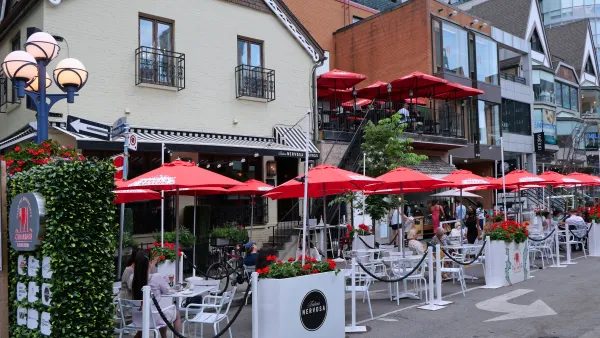
Opinion: Toronto is Stifling its Outdoor Dining Program
New regulations and fees for outdoor dining patios, extended from a pandemic-era program, are making the process overly complicated and expensive for business owners.
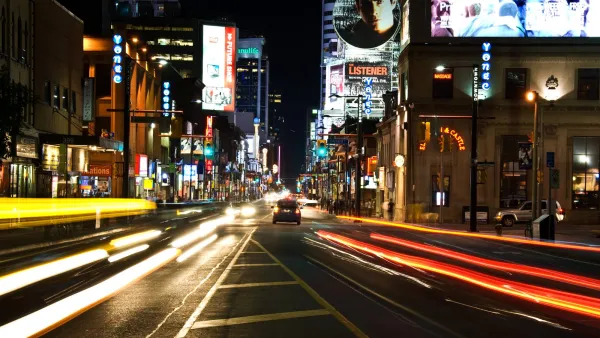
A Pedestrian-Forward Vision for Toronto Roadway
Toronto’s iconic Yonge Street is heavily used by pedestrians, and, according to this article, it's time for a revamp that acknowledges all of the street's users.
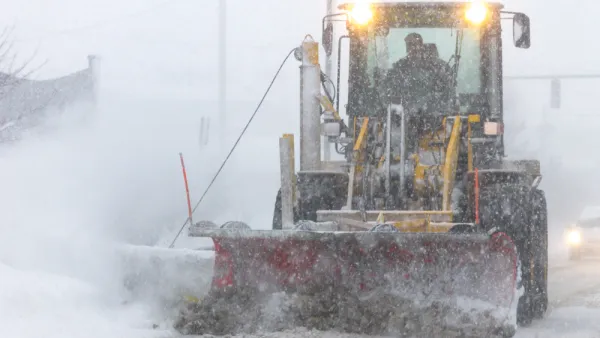
Editorial: Toronto’s Snow Clearing Plan Isn’t Fair
The city’s plan for dealing with snow and ice on sidewalks this winter doesn't address past problems and won't meet the needs of residents, say critics.

Planetizen Federal Action Tracker
A weekly monitor of how Trump’s orders and actions are impacting planners and planning in America.

California plans to bury El Niño’s downpour
If the state plays its cards right, it may be able to store a billion acre-feet of El Niño’s water in aquifers.

Desperate measures: Advocates weigh draining Lake Powell to fill Colorado River
Draining the reservoir could reduce evaporation losses by a couple hundred thousand acre-feet.

Los Angeles just elected an urban planner as its mayor
Transportation analysts are optimistic that Raman will be more aggressive in addressing transit issues than Bass.

Mamdani’s pied-à-terre tax survives legal challenge
A panel of judges found that the plaintiffs failed to demonstrate injury as a result of New York City's implementation of the tax.

Eastern Nebraska is running out of electricity
Data centers and electrification are straining eastern Nebraska’s grid, throttling economic development.

FREE Course: Walkable City 1: Why Walkability?
After describing his path towards focusing on walkability as the essence of good planning, Jeff Speck marches through his five principal reasons for making more walkable places.
Reinventing Malls: Planning Alchemy—Turning Gray Fields Into Gold
The course focuses on the opportunities and imperatives that shape reinvention of mall sites.

City of Rosemead
Rutgers University, Edward J. Bloustein School of Planning and Public Policy
One Hundred Miles
University of Michigan School for Environment and Sustainability (SEAS)
Hunter College, City University of New York (CUNY)
The Architects Foundation
City of Cambridge
Montrose County
The Pocatello Development Authority