Toronto’s iconic Yonge Street is heavily used by pedestrians, and, according to this article, it's time for a revamp that acknowledges all of the street's users.


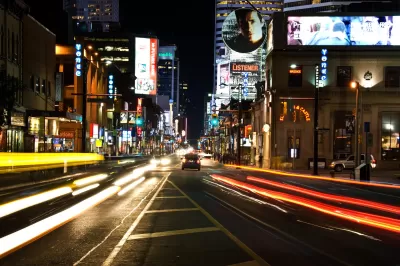
Matt Elliott makes the case for redesigning Yonge Street in Toronto to better accommodate pedestrians. "For a street so full of people — no street in Canada sees more daily pedestrian traffic than downtown Yonge Street — it feels hostile to pedestrians. It’s all narrow sidewalks and backed-up intersections."
As the population of the area is expected to grow in coming years, the street needs a design strategy that will account for increased foot traffic, says Elliott. "At all intersections in the core area, pedestrians make up between 50 per cent and 75 per cent of all traffic, but get less than 25 per cent of the road space."
The city of Toronto is hosting a series of public events, part of a study called yongeTOmorrow, to gather feedback about design options for Yonge Street. Two of the design options would narrow the roadway and increase pedestrian space. The third option, however, would ban most vehicles. "For much of the day, it would turn the entire street over to pedestrians. No cars and no trucks. Just people," notes Elliott.
Read the full story: Give downtown Yonge St. to pedestrians

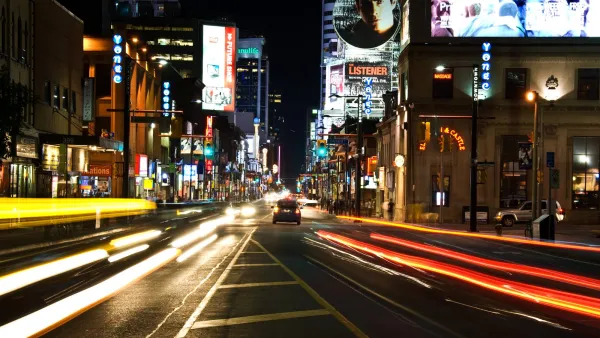
Pedestrian-Friendly Makeover of a Busy Toronto Street Stops Short of the Car-Free Ideal
The yongeTOmorrrow project is heading toward the finish line with widespread support from advocates, but a few want the plan to go one step further.
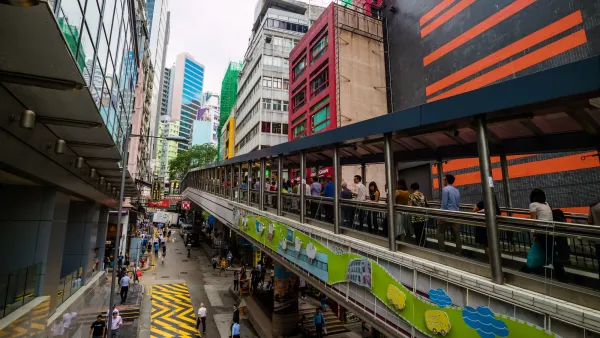
How cars killed the dream of the moving sidewalk
At the turn of the 20th century, moving sidewalks promised efficient, comfortable movement of pedestrians. Then cars took over.
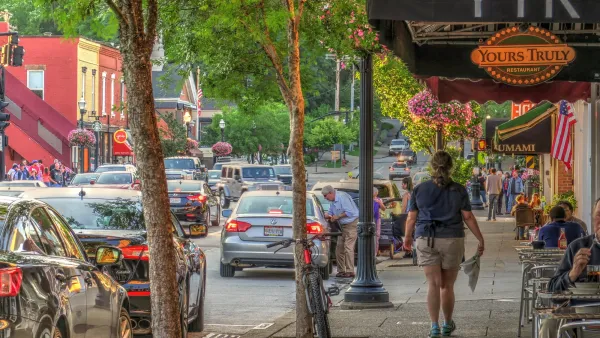
Why Walk Scores Don’t Tell the Whole Story
A popular measure of walkability only measures proximity, not safety or comfort.

Planetizen Federal Action Tracker
A weekly monitor of how Trump’s orders and actions are impacting planners and planning in America.

California plans to bury El Niño’s downpour
If the state plays its cards right, it may be able to store a billion acre-feet of El Niño’s water in aquifers.

Chicago breaks ground on $3 billion megadevelopment
The new neighborhood, titled Foundry Park, will one day host 3,700 residences.

Satanic Place Names
From streams and lakes to valleys and canyons, I mapped more than 1,000 places named after the Devil.

California High-Speed Rail Authority CEO resigns after $600,000 scandal
Under Ian Choudri, the authority used taxpayer dollars to fund first class flights and trips to nightclubs.

Want to study the Missouri River? Soon, you may need unanimous approval from 10 states
Legislation would require 10 governors’ permission to study or build projects moving water outside the basin.

FREE Course: Walkable City 1: Why Walkability?
After describing his path towards focusing on walkability as the essence of good planning, Jeff Speck marches through his five principal reasons for making more walkable places.
Reinventing Malls: Planning Alchemy—Turning Gray Fields Into Gold
The course focuses on the opportunities and imperatives that shape reinvention of mall sites.

City of Rosemead
Rutgers University, Edward J. Bloustein School of Planning and Public Policy
One Hundred Miles
Hunter College, City University of New York (CUNY)
The Architects Foundation
University of Cincinnati Online
City of Cambridge
Montrose County
The Pocatello Development Authority