Just 12 years after it opened to critical acclaim, the American Folk Art Museum will be demolished by MoMA, its new owner. The irony of it being razed by an institution committed to preserving important pieces of modern design isn't lost on many.


Robin Pogrebin reports on the Museum of Modern Art's newly announced plans to demolish the acclaimed American Folk Art Museum. "In its place the adjacent Museum of Modern Art, which bought the building in 2011, will put up an expansion, which will connect to a new tower with floors for the Modern on the other side of the former museum. And the folk museum building, designed by Tod Williams and Billie Tsien, will take a dubious place in history as having had one of the shortest lives of an architecturally ambitious project in Manhattan."
“It’s very rare that a building that recent comes down, especially a building that was such a major design and that got so much publicity when it opened for its design — mostly very positive,” said Andrew S. Dolkart, the director of Columbia University’s historic preservation program. “The building is so solid looking on the street, and then it becomes a disposable artifact. It’s unusual and it’s tragic because it’s a notable work of 21st century architecture by noteworthy architects who haven’t done that much work in the city, and it’s a beautiful work with the look of a handcrafted facade.”
"Ms. Tsien said she and Mr. Williams, her husband, wished the Modern had found a way to reuse what they designed and to realize its value," adds Pogrebin.
“It’s a building that kids study in architecture school,” she said. “They study it as a kind of precedent to understand how buildings are made and to understand the kind of space it is because it is a complex and interesting building in a very small site.”
"But, she added, 'it doesn’t seem to make sense to second-guess how they might have used it.'”
Read the full story: 12-Year-Old Building at MoMA Is Doomed


Planetizen Federal Action Tracker
A weekly monitor of how Trump’s orders and actions are impacting planners and planning in America.

Amtrak, CN end decades-long dispute with eight-year agreement
The new operating agreement establishes an updated framework for the companies to work together, including processes to resolve disputes.
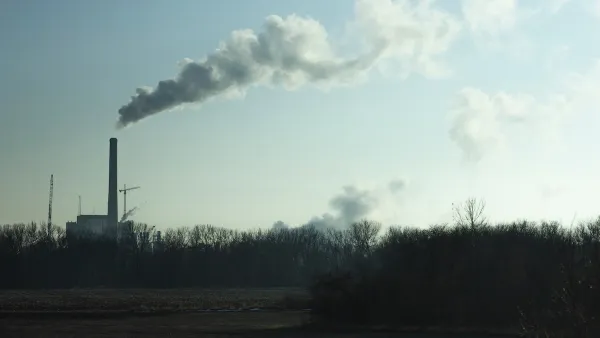
Nation's most wind-powered state turns to coal as data centers increase energy demand
For the first time in decades, Iowa has increased its generation of coal power.

Alabama scores up to $2.5 billion federal loan for largest infrastructure project in state’s history
The Mobile River Bridge and Bayway Project aims to ease congestion at Alabama’s worst bottleneck.

Trump is considering data centers on 6 states' public land — some state officials say they had no idea
If the administration approves the proposed projects, data center and data center-related developments will cover 17,600 acres of public land.

Despite court ruling, Trump is keeping nearly all wind projects in the US on hold
At least 110 wind energy projects have not heard from the government since a federal judge ruled that the Trump administration's freeze on wind turbine clearances was likely illegal.

FREE Course: Walkable City 1: Why Walkability?
After describing his path towards focusing on walkability as the essence of good planning, Jeff Speck marches through his five principal reasons for making more walkable places.
Reinventing Malls: Planning Alchemy—Turning Gray Fields Into Gold
The course focuses on the opportunities and imperatives that shape reinvention of mall sites.

KFH Group Inc.
Greater Baltimore Committee
Eagle County Government
The Architects Foundation
University of Cincinnati Online
The Pocatello Development Authority
The Urban Renewal Agency of the City of Pocatello