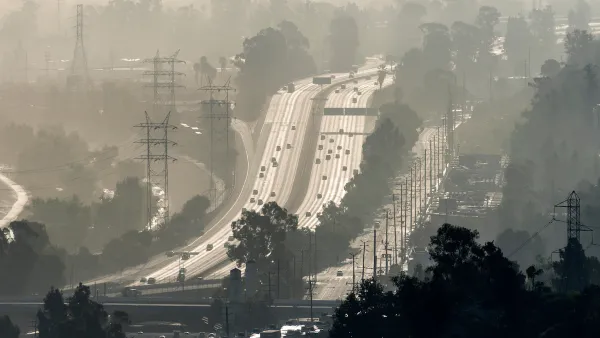
While pollution from vehicle exhausts has been known for some time to exacerbate the symptoms of asthma, a new study published in the European Respiratory Journal establishes for the first time the direct causal link between the two.


"Traffic pollution is a known trigger of asthma symptoms, but a new study suggests a much more direct link: European researchers say that traffic pollution may cause 14 percent of childhood asthma, putting it on par with second-hand smoke," writes
As the study's lead author, Dr Laura Perez, explained to the European Lung Foundation:
Air pollution has previously been seen to trigger symptoms but this is the first time we have estimated the percentage of cases that might not have occurred if Europeans had not been exposed to road traffic pollution. In light of all the existing epidemiological studies showing that road-traffic contributes to the onset of the disease in children, we must consider these results to improve policy making and urban planning.
Read the full story: Does Traffic Pollution Cause Asthma?


Opinion: Supporting Electric School Buses is the Right Thing to Do — and Fiscally Conservative
Why switching school bus fleets to electric vehicles is good for students, the environment, and school districts’ finances.

Baltimore Bans Gas Leafblowers
The devices release as much air pollution as driving 1,100 miles and have been banned in over 100 U.S. cities.
Study: Air Pollution Disproportionately Impacts Communities of Color
The negative effects of poor air quality occur at higher rates in low-income neighborhoods and communities of color, according to new research.

Planetizen Federal Action Tracker
A weekly monitor of how Trump’s orders and actions are impacting planners and planning in America.

California plans to bury El Niño’s downpour
If the state plays its cards right, it may be able to store a billion acre-feet of El Niño’s water in aquifers.

Chicago breaks ground on $3 billion megadevelopment
The new neighborhood, titled Foundry Park, will one day host 3,700 residences.

Want to study the Missouri River? Soon, you may need unanimous approval from 10 states
Legislation would require 10 governors’ permission to study or build projects moving water outside the basin.

Desperate measures: Advocates weigh draining Lake Powell to fill Colorado River
Draining the reservoir could reduce evaporation losses by a couple hundred thousand acre-feet.

This road in NYC is infamously dangerous — and Mamdani can't fix it
New York City's Ocean Parkway is known for reckless driving, but the power to implement safety measures lies with the state rather than the city.

FREE Course: Walkable City 1: Why Walkability?
After describing his path towards focusing on walkability as the essence of good planning, Jeff Speck marches through his five principal reasons for making more walkable places.
Reinventing Malls: Planning Alchemy—Turning Gray Fields Into Gold
The course focuses on the opportunities and imperatives that shape reinvention of mall sites.

City of Rosemead
Rutgers University, Edward J. Bloustein School of Planning and Public Policy
One Hundred Miles
Hunter College, City University of New York (CUNY)
The Architects Foundation
University of Cincinnati Online
City of Cambridge
Montrose County
The Pocatello Development Authority