The devices release as much air pollution as driving 1,100 miles and have been banned in over 100 U.S. cities.



The Baltimore city council voted to outlaw gas-powered leaf blowers in the city, citing pollution concerns, reports Alyssa Ochs for The Cool Down. “The new ban will reduce air and noise pollution in local neighborhoods as these items of lawn care equipment are phased out citywide.” City contractors will stop using gas blowers after December 15 of this year, while residents and landscaping companies have until 2025 and 2026, respectively, to end their use.
According to council member Lisa Rodvien, leaf blowers and other gas-powered lawn care equipment account for 4 to 5 percent of greenhouse gas emissions in the United States.
Ochs notes that over 100 other cities around the country have banned the devices to reduce localized air pollution and noise. The devices release four times as much air pollution as lawnmowers and are linked to health problems including cancer, reproductive harm, and asthma.
FULL STORY: Major US city lawmakers propose law to ban common household item: 'These are very high-emissions devices'


NYC Congestion Pricing Revenue Will Fund up to 1,000 Hybrid Refrigerated Trucks
Traffic to the Hunts Point Produce Market causes increased rates of asthma in surrounding neighborhoods.
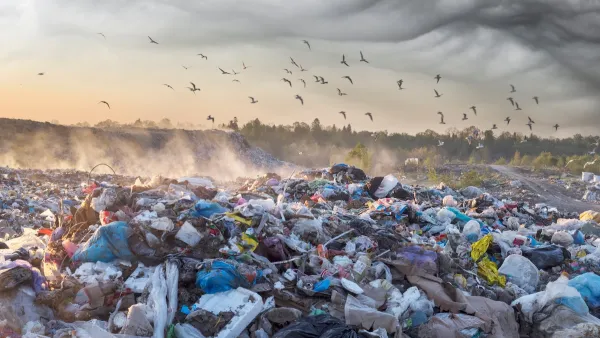
Colorado Landfills Emit as Much Pollution as 1M Cars
Landfills are the third-largest source of methane pollution in Colorado, after agriculture and fossil fuel extraction.

Driving Equity and Clean Air: California Invests in Greener School Transportation
California has awarded $500 million to fund 1,000 zero-emission school buses and chargers for educational agencies as part of its effort to reduce pollution, improve student health, and accelerate the transition to clean transportation.

Planetizen Federal Action Tracker
A weekly monitor of how Trump’s orders and actions are impacting planners and planning in America.

The state-sanctioned urbicide of Austin
People don’t kill cities. Freeways do.

US to reduce Colorado River water deliveries to Mexico
A new Colorado Treaty amendment reduces Mexico’s Colorado River water allocation by 250,000 acre feet.

5 New England states march closer to 800 megawatt wind energy project
Securing federal approval for the project may be complicated under the Trump administration, which has historically been hostile towards domestic wind power.

Baltimore to break ground on $50 million Transit Priority Project
The project will bring faster bus trips, safer streets and better bike connections to Baltimore.

Airbnb launches $250 million 'last-dollar financing' housing accelerator, makes first investment in Austin
The company will put $6.4 million towards affordable housing development in Texas’ capital.

FREE Course: Walkable City 1: Why Walkability?
After describing his path towards focusing on walkability as the essence of good planning, Jeff Speck marches through his five principal reasons for making more walkable places.
Reinventing Malls: Planning Alchemy—Turning Gray Fields Into Gold
The course focuses on the opportunities and imperatives that shape reinvention of mall sites.

Eagle County Government
Harvard University Graduate School of Design
Nashville Planning Department
The Architects Foundation
University of Cincinnati Online
The Pocatello Development Authority
The Urban Renewal Agency of the City of Pocatello
Journal of the American Planning Association