Chicagoans sure take their urban agriculture seriously. While the city focuses on converting vacant land to farms in some of the city's struggling neighborhoods, entrepreneurs are doing the same indoors.


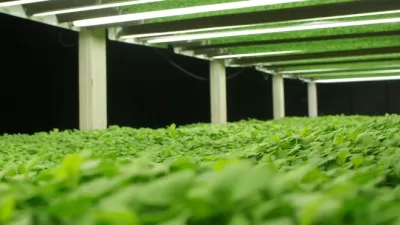
Utilizing a soil-free, aquaponic process, FarmedHere has just opened the largest indoor vertical farm in the United States in "a formerly abandoned suburban Chicago warehouse."
"The facility hopes to produce an anticipated 1 million pounds of chemical-, herbicide- and pesticide-free leafy greens -- including basil, arugula, mints and other greens -- to the Chicago area once it hits full production," says an article in the Huffington Post. "In addition, the facility says by 2014 it will be providing about 200 jobs to the community, many of them via a partnership with Windy City Harvest, a Chicago Botanic Garden-led urban agriculture training program targeted to underserved local youths."
"The Bedford Park facility is FarmedHere's third farm, joining a 10,000-square-foot facility in downstate Flanagan and a 4,000-square-foot one in Englewood. Whole Foods, which sells the company's greens in its Chicago stores, helped finance the new facility with a $100,000 loan, Crain's previously reported."
FULL STORY: FarmedHere, Nation's Largest Indoor Vertical Farm, Opens In Chicago Area

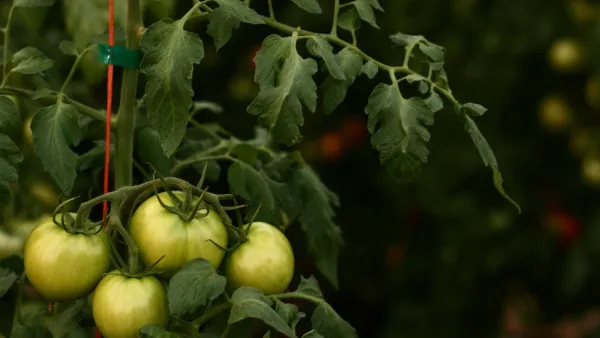
Is This Chicago Indoor Vertical Farm the Future of Agriculture?
A new indoor vertical farming venture in Chicago seeks to change agricultural production by harnessing technology.
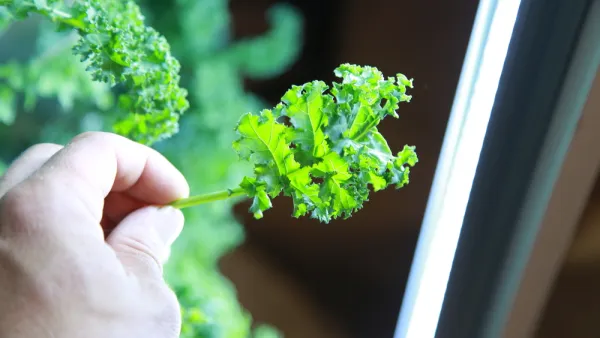
Vertical Farms, Fad or Feast?
Hydroponic indoor farmers hope to charge a premium for plants grown out of season in indoor farms. The notion has generated attention from big investors, but whether or not consumers will follow is an open question.
Urban Agriculture Projects in Chicago Show the Way
Successful Chicago urban agriculture projects on rooftop, in edible lawn, and at a school reviewed by resilience consultant Dave Hampton.

Planetizen Federal Action Tracker
A weekly monitor of how Trump’s orders and actions are impacting planners and planning in America.

The state-sanctioned urbicide of Austin
People don’t kill cities. Freeways do.

US to reduce Colorado River water deliveries to Mexico
A new Colorado Treaty amendment reduces Mexico’s Colorado River water allocation by 250,000 acre feet.

5 New England states march closer to 800 megawatt wind energy project
Securing federal approval for the project may be complicated under the Trump administration, which has historically been hostile towards domestic wind power.

Baltimore to break ground on $50 million Transit Priority Project
The project will bring faster bus trips, safer streets and better bike connections to Baltimore.

Airbnb launches $250 million 'last-dollar financing' housing accelerator, makes first investment in Austin
The company will put $6.4 million towards affordable housing development in Texas’ capital.

FREE Course: Walkable City 1: Why Walkability?
After describing his path towards focusing on walkability as the essence of good planning, Jeff Speck marches through his five principal reasons for making more walkable places.
Reinventing Malls: Planning Alchemy—Turning Gray Fields Into Gold
The course focuses on the opportunities and imperatives that shape reinvention of mall sites.

Eagle County Government
Harvard University Graduate School of Design
Nashville Planning Department
The Architects Foundation
University of Cincinnati Online
The Pocatello Development Authority
The Urban Renewal Agency of the City of Pocatello
Journal of the American Planning Association