Engineering marvel, polluted sewer, magnet for development - the Chicago River has worn many hats in its day. For its next role, can it become an "example of environmental innovation and ecological stewardship"?


Matthew Power looks at the competing visions for the future of the Chicago River, the key node in the city's enduring water problems. "Myriad threats, from water pollution to flooding and invasive species, have made the question of what to do about the Chicago River one of the most important questions facing the city. And simply by asking it, Chicagoans are acknowledging a basic existential struggle."
"That struggle is between two competing visions," he explains. "One is remedial and pragmatic, the province of engineers and bureaucrats. In their eyes, the river can and should be cleaned up only to the point where it can operate as a safe, functional waterway that exists to meet the demands placed on it by commerce, flood control, and the dispersal of wastewater."
"In the alternate vision, however, the river meets all of these demands — and more. Its proponents seek nothing less than to turn the Chicago River into a civic treasure, its newly cleaned banks lined with parks and homes and restored ecosystems, its very presence a clear and shimmering symbol of a great city built on making, trading, connecting: a symbol of American history’s inexorable flow toward progress. And in the bargain, they seek to make the river a living — and flourishing — example of environmental innovation and ecological stewardship, one that generations of Chicagoans will cherish."
Read the full story: Cry Us a River

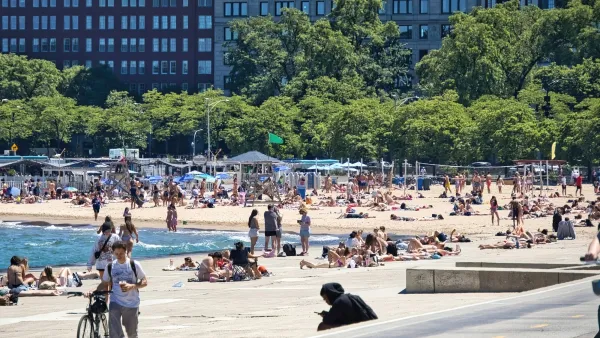
Chicago residents love their 'concrete beach'
A concrete seawall is a popular swimming and sunbathing location for locals.
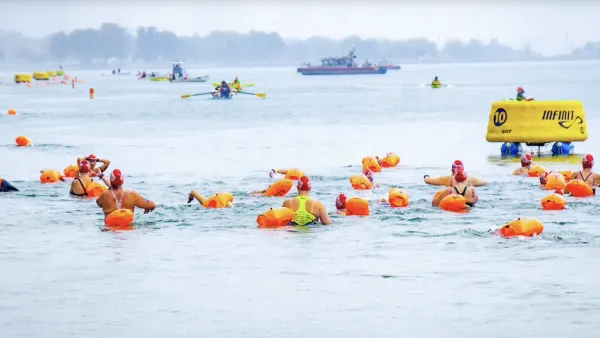
Chicago River Clean Enough for Swimming for the First Time in 98 Years
A historic two-mile river race through downtown highlighted the success of decades-long efforts to clean up the city’s river.
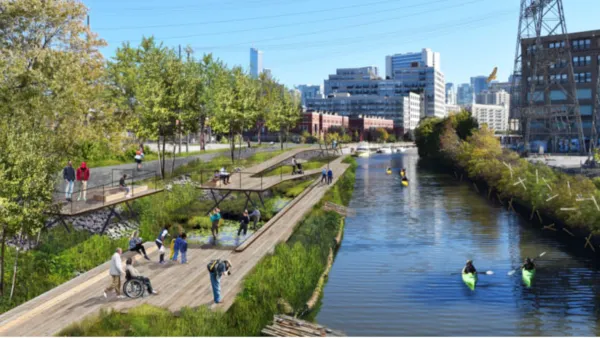
North Branch of the Chicago River Transforming Into a ‘Wild Mile’
A remarkable transformation is underway along the North Branch of the Chicago River, after being channelized and brutalized for well over a century.

Planetizen Federal Action Tracker
A weekly monitor of how Trump’s orders and actions are impacting planners and planning in America.

Amtrak, CN end decades-long dispute with eight-year agreement
The new operating agreement establishes an updated framework for the companies to work together, including processes to resolve disputes.

Judges permit Denver to divert 77,000 acre feet from the Colorado River for reservoir expansion
Overuse and climate change have caused the Colorado River’s water levels to plummet.

NYC DOT wants faster, more permanent street upgrades
The city is examining ways to build more concrete infrastructure without getting entangled in 'decades-long' projects.

'Something we’ve never seen before:' rising utility rates could strain city finances nationwide
Data centers, climate change and other factors have caused utility rates in the United States to increase by 38% since 2020.

Trump to overrule local leaders, lease millions of acres of America’s Pacific Island territories’ seafloors to mining companies
International law says that the Indigenous people of America’s territories have a right to prior and informed consent regarding projects that impact their countries.

FREE Course: Walkable City 1: Why Walkability?
After describing his path towards focusing on walkability as the essence of good planning, Jeff Speck marches through his five principal reasons for making more walkable places.
Reinventing Malls: Planning Alchemy—Turning Gray Fields Into Gold
The course focuses on the opportunities and imperatives that shape reinvention of mall sites.

Harvard University Graduate School of Design
KFH Group Inc.
Greater Baltimore Committee
The Architects Foundation
University of Cincinnati Online
The Pocatello Development Authority
The Urban Renewal Agency of the City of Pocatello