Montgomery County wants to be the life of the party. To do so, it's establishing a special taskforce to boost its nighttime economy and attract millenials, reports Bill Turque.



Montgomery County, Maryland, home to several affluent Washington, D.C. suburbs, wants to attract millenials. It spends over $180,000 educating its young from kindergarten to grade 12 only to lose them to urban settings when they graduate college.
Overshadowed by nearby D.C. in urban amenities, lacking an urban-style transportation network and aging faster than any other county in the metro area, Montgomery's share in the 24-35 age bracket is at 19 percent, while its elderly population grew by nearly 40 percent in the last decade.
A new county has to take root along the old, said County Executive Isaiah Leggett, emphasizing the need to grow the tax base to support the aging population.
Legislative measures under consideration include loosening liquor laws and noise ordinances and developing urban features like outdoor movies and cafes in the hopes that young people will want to live, work and play locally. A new Taskforce on the Nighttime Economy will study how to improve nightlife offerings through more live music venues, bars and restaurants.
New urban-style developments along mass transit in Silver Spring and White Flint (Rockville) will provide both high-end and moderately-priced housing, retail, entertainment and open space for newcomers, but the County still needs to fight the perception that it's a good place to move to after age 35.
Read the full story: Montgomery County looks to get hip
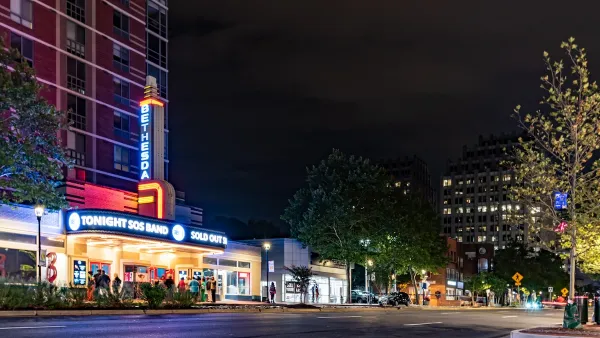
Opinion: Montgomery County Regulations Stifle Nightlife
The county hasn’t acted on the recommendations of its own Nighttime Economy Task Force, which suggested ways to improve the business climate for restaurants and nightclubs to draw younger residents to the region.
Can Later Bar Hours and 'Noise Areas' Make a D.C. Suburb Hip?
As urban areas across the country compete for those coveted young professionals, "unhip" suburbs have a particularly tough challenge. In Montgomery County, MD, a taskforce has issued its recommendations for addressing this challenge.
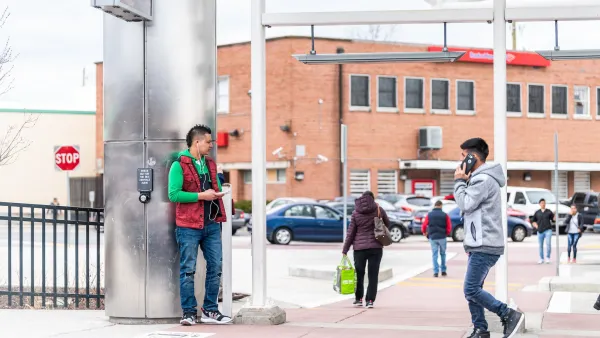
Montgomery County Residents Reject New Sidewalks, Citing Flooding and ‘Stranger Danger’
County officials nixed a proposal from MCDOT to build new sidewalks on streets near a future transit station.

Planetizen Federal Action Tracker
A weekly monitor of how Trump’s orders and actions are impacting planners and planning in America.

California plans to bury El Niño’s downpour
If the state plays its cards right, it may be able to store a billion acre-feet of El Niño’s water in aquifers.

Desperate measures: Advocates weigh draining Lake Powell to fill Colorado River
Draining the reservoir could reduce evaporation losses by a couple hundred thousand acre-feet.

Los Angeles just elected an urban planner as its mayor
Transportation analysts are optimistic that Raman will be more aggressive in addressing transit issues than Bass.

Mamdani’s pied-à-terre tax survives legal challenge
A panel of judges found that the plaintiffs failed to demonstrate injury as a result of New York City's implementation of the tax.

Eastern Nebraska is running out of electricity
Data centers and electrification are straining eastern Nebraska’s grid, throttling economic development.

FREE Course: Walkable City 1: Why Walkability?
After describing his path towards focusing on walkability as the essence of good planning, Jeff Speck marches through his five principal reasons for making more walkable places.
Reinventing Malls: Planning Alchemy—Turning Gray Fields Into Gold
The course focuses on the opportunities and imperatives that shape reinvention of mall sites.

City of Rosemead
Rutgers University, Edward J. Bloustein School of Planning and Public Policy
One Hundred Miles
University of Michigan School for Environment and Sustainability (SEAS)
Hunter College, City University of New York (CUNY)
The Architects Foundation
City of Cambridge
Montrose County
The Pocatello Development Authority