A $110 million mixed-use development being built in the center of Kent, Ohio is being touted as the gateway to a new economic era, and is helping the city's major institutions put a four-decade-old tragedy behind them, reports Keith Schneider.


Five years after the tragic killing of four Kent State students during a Vietnam War protest created a cultural gulf between the university and town, a five-lane downtown bypass that cut off the campus from Kent’s center completed the divorce. Now, after four decades of strained relations, a $110 million mixed-use development in the city's center is providing the impetus for a "tight collaboration among the city, the university and private developers [that] is...helping heal the psychic wounds from a previous era that has hindered Kent’s development," writes Schneider.
"The project — a melding of more than 500,000 square feet of office, retail, residential and public spaces — is unfolding across a four-block, four-acre section of downtown. City and university leaders said the development, the largest downtown construction project in Kent’s 208-year history, will outfit the city with new destinations that suit contemporary lifestyles and spending patterns."
"The project will also shift the entertainment and business center a few blocks south from the city’s aging core and closer to Kent State University," adds Schneider. "The new office, retail, entertainment and residential spaces under construction are seen here as essential ingredients in a civic formula for attracting students and educated professionals, defining spending habits and rebranding Kent as a flourishing 21st-century college town."
Read the full story: A Partnership Seeks to Transform Kent State and Kent

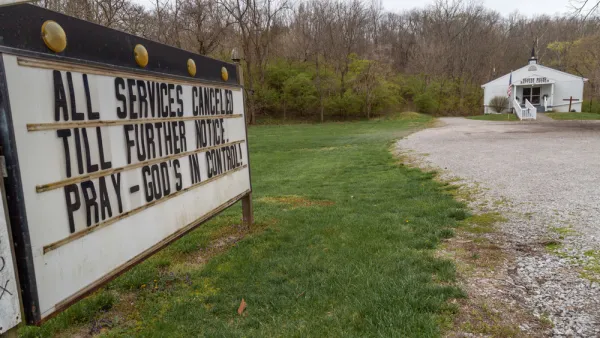
Religion in the Pandemic: First Amendment vs. Public Health and Safety
Conflicts between church and state are being decided in state and federal courts as governors act to protect their constituents from the coronavirus while religious institutions and their supporters seek exceptions from social gathering restrictions.
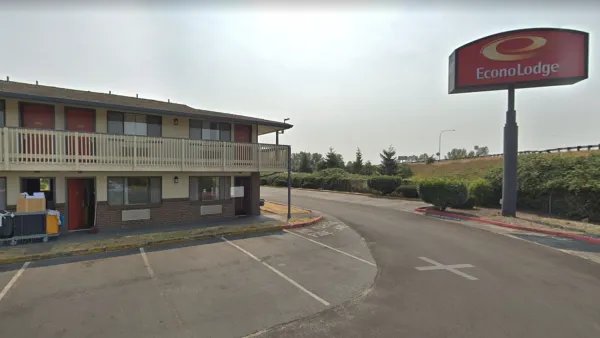
Dispute Over Siting of Coronavirus Quarantine Facility in Washington State
The Seattle area is ground zero for the coronavirus in the U.S., where 10 of the 11 deaths as of March 5 have occurred. King County's decision to purchase a motel in Kent for use as a quarantine facility is being met with protests by city officials.
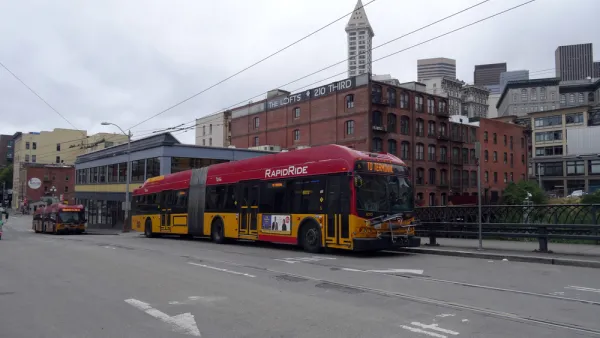
Express Bus Service Coming to the Suburbs South of Seattle
New intercity bus transit service is in the works in King County, Washington.

Planetizen Federal Action Tracker
A weekly monitor of how Trump’s orders and actions are impacting planners and planning in America.

The state-sanctioned urbicide of Austin
People don’t kill cities. Freeways do.

US to reduce Colorado River water deliveries to Mexico
A new Colorado Treaty amendment reduces Mexico’s Colorado River water allocation by 250,000 acre feet.

Nation's most wind-powered state turns to coal as data centers increase energy demand
For the first time in decades, Iowa has increased its generation of coal power.

NYC cools commuters with city's first rain garden above a bus stop
New York City officials say the plants in the rain garden can absorb 16 gallons of rainwater during heavy storms.

Brightline West’s future may rely on $6 billion federal loan
The company has until Nov. 2 to make a $400 million equity investment into its proposed high-speed rail line.

FREE Course: Walkable City 1: Why Walkability?
After describing his path towards focusing on walkability as the essence of good planning, Jeff Speck marches through his five principal reasons for making more walkable places.
Reinventing Malls: Planning Alchemy—Turning Gray Fields Into Gold
The course focuses on the opportunities and imperatives that shape reinvention of mall sites.

Greater Baltimore Committee
Eagle County Government
Harvard University Graduate School of Design
The Architects Foundation
University of Cincinnati Online
The Pocatello Development Authority
The Urban Renewal Agency of the City of Pocatello
Journal of the American Planning Association